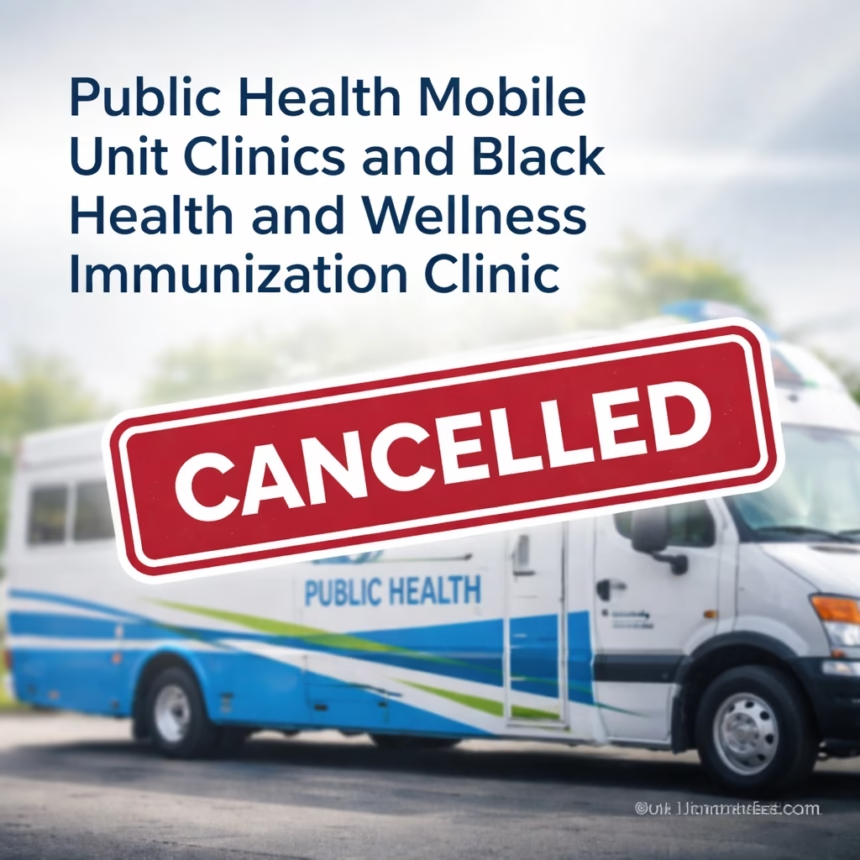
Community Health Shockwave: Mobile Clinics and Black Wellness Hub Vanish Overnight!
A significant blow has been dealt to community health access across [Specific Province/Region] following the abrupt cancellation of all Public Health Mobile Unit (PHMU) clinics and the dedicated Black Health and Wellness Immunization Clinic. Effective [Specific Date, e.g., October 15, 2023], these vital services, which served as cornerstones of accessible healthcare for thousands, ceased operations, leaving a substantial void in local health provision and sparking widespread concern among residents and advocacy groups.
Background: A Pillar of Accessible Care
The Public Health Mobile Units were initially launched in [Specific Year, e.g., early 2020] as a critical component of the province's rapid response to the COVID-19 pandemic. Their primary mission was to bring essential health services directly to communities, particularly those in rural, remote, or underserved urban areas where access to traditional healthcare facilities was limited. These units quickly expanded their scope beyond pandemic-related testing and vaccinations, offering a broad spectrum of services including routine immunizations, blood pressure screenings, diabetes checks, flu shots, and general health navigation advice.
Over the past three years, PHMUs became a familiar and trusted sight in countless communities, from bustling urban parks to quiet village squares. They were instrumental in reaching populations that often faced barriers to care, such as lack of transportation, childcare issues, or inflexible work schedules. Data from the [Provincial Health Authority Name] indicated that PHMUs collectively administered hundreds of thousands of vaccines and conducted tens of thousands of health screenings, significantly contributing to public health outcomes and reducing the burden on emergency departments for non-urgent care.
Alongside the general PHMUs, the Black Health and Wellness Immunization Clinic emerged as a pioneering initiative. Established in [Specific Year, e.g., late 2021], this clinic was specifically designed to address long-standing health inequities and build trust within the Black community, which has historically faced systemic barriers and discrimination in healthcare. Operating with a culturally sensitive approach, it provided a safe and welcoming environment for immunizations and health discussions, fostering a sense of belonging and ensuring care was delivered with an understanding of specific cultural contexts and needs. This clinic was a direct response to community advocacy and represented a significant step forward in culturally competent health service delivery.
More Read

Key Developments: The Cancellation Unveiled
The announcement of the cancellations came swiftly and, for many, unexpectedly. On [Specific Date, e.g., September 29, 2023], the [Provincial Department of Health Name] released a brief statement confirming the cessation of all Public Health Mobile Unit operations and the specialized Black Health and Wellness Immunization Clinic. The statement cited a "re-evaluation of resource allocation" and a "strategic shift towards integrated primary care models" as the primary drivers behind the decision.
According to the official communication, the province is transitioning away from the pandemic-era mobile outreach strategy. Officials suggested that the resources previously dedicated to these mobile units would be redirected to bolster existing fixed-site clinics and support the expansion of primary care teams. However, specific details regarding this redirection, including timelines for new service implementation or enhanced capacity at existing facilities, remain largely undefined.
The cancellation impacts all [Number, e.g., 12] active Public Health Mobile Units that served various regions across the province, from the northern tip to the southern coast. Crucially, the Black Health and Wellness Immunization Clinic, a unique and highly valued service, was also included in this sweeping discontinuation. Community leaders and organizations involved in the establishment of the Black Health and Wellness Clinic expressed profound disappointment, noting that there was little to no prior consultation with the communities directly served by these specialized units before the decision was finalized.
More Read

The suddenness of the announcement, coupled with the immediate effective date, has left many communities scrambling to understand how they will access the services that were once conveniently delivered to their doorsteps. Critics argue that the stated reasons for cancellation lack sufficient detail and fail to address the immediate and foreseeable gaps in healthcare access that will inevitably arise from this strategic pivot.
Impact: Widening Gaps in Health Equity
The immediate impact of these cancellations is profound, particularly for the most vulnerable populations across [Specific Province/Region]. Rural residents, who relied heavily on the PHMUs for convenient access to immunizations and basic health screenings, now face increased travel times and costs to reach fixed-site clinics, which are often located in larger urban centers. Many individuals without a family doctor, a growing demographic in the province, utilized these mobile units as their primary point of contact for preventive care and health advice, and now find themselves with fewer options.
The discontinuation of the Black Health and Wellness Immunization Clinic represents a significant setback for health equity initiatives. This clinic was not merely an immunization point; it was a culturally safe space that actively worked to dismantle barriers rooted in historical mistrust and systemic racism within the healthcare system. Its absence means the loss of a vital service that understood and catered to the unique needs and concerns of the Black community, potentially eroding years of painstaking work dedicated to building trust and improving health outcomes.
Experts warn that these cancellations could exacerbate existing health disparities. Without easy access to preventive care, there is a heightened risk of delayed diagnoses for chronic conditions, lower immunization rates, and increased reliance on already strained emergency rooms for non-urgent issues. Community health advocates point out that the cost savings from discontinuing the mobile units might be offset by the downstream costs associated with poorer public health and increased demands on more expensive forms of care.
Furthermore, the psychological impact on communities that felt seen and supported by these services cannot be underestimated. The perception of a withdrawal of accessible public health services can lead to feelings of abandonment and further disengagement from the healthcare system, particularly among marginalized groups who have historically struggled to access equitable care.

What Next: Community Outcry and Calls for Reconsideration
The cancellations have ignited a wave of public outcry and advocacy efforts across [Specific Province/Region]. Community leaders, local politicians, and health equity organizations have swiftly condemned the decision, calling for its immediate reversal or, at minimum, a comprehensive and transparent plan for alternative service delivery that genuinely meets community needs.
The [Provincial Health Authority Name] and the [Provincial Department of Health Name] have faced mounting pressure to provide more detailed explanations and assurances. While officials reiterate their commitment to "equitable healthcare," specific proposals for how the province plans to replace the unique accessibility and trust-building functions of the cancelled clinics remain vague. There are suggestions of enhanced funding for community health centers and primary care networks, but critics argue that these existing infrastructures are already overwhelmed and lack the mobility and specialized outreach capabilities of the units they are meant to replace.
Advocacy groups, including the [Name of Specific Advocacy Group, e.g., Coalition for Health Equity] and the [Name of Another Group, e.g., Rural Health Alliance], are mobilizing to collect testimonials from affected residents and are planning public forums and petitions to highlight the detrimental impact of the cancellations. They are urging the provincial government to reconsider its decision, emphasizing that a robust public health system requires diverse and accessible service models, not a reduction in outreach.
The coming months will likely see continued debate over public health priorities and funding. Communities are demanding not only the restoration of essential mobile services but also a more inclusive and consultative approach to healthcare planning that genuinely engages those most impacted by policy decisions. The future of accessible, equitable healthcare in [Specific Province/Region] now hangs in the balance, with residents and advocates waiting to see if their voices will lead to a change in strategy or if the gaps in care will only continue to widen.