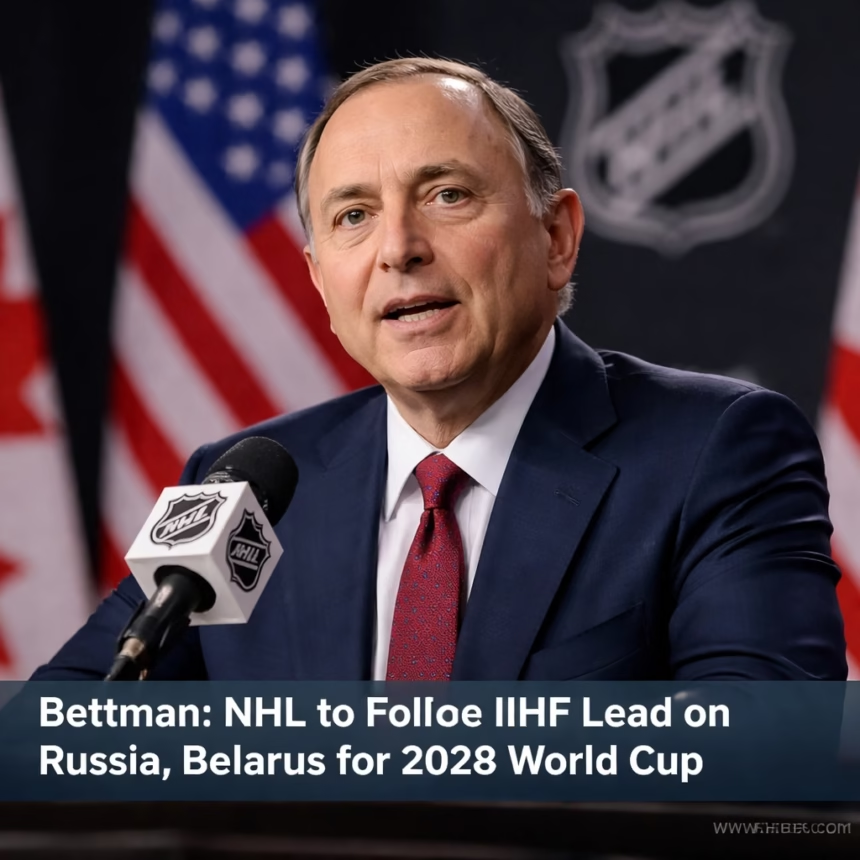
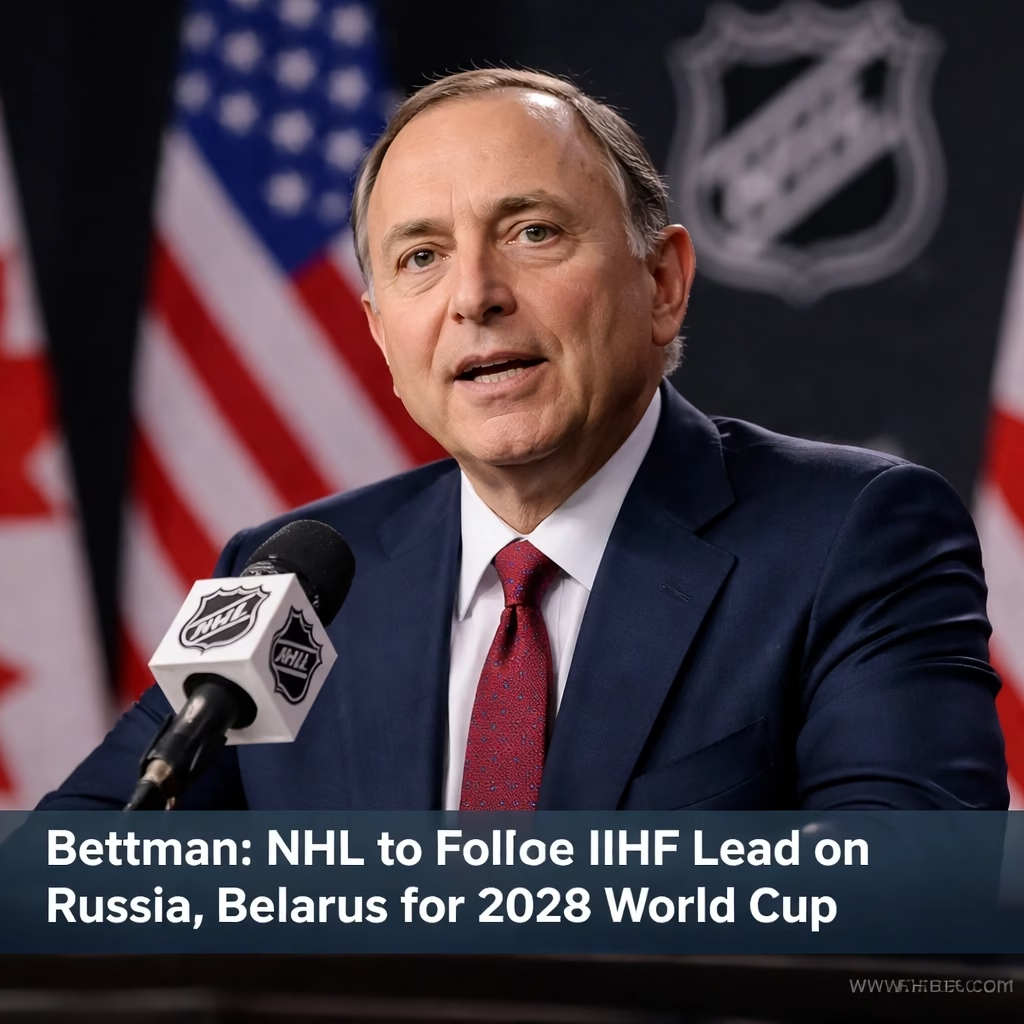
NHL Commissioner Gary Bettman announced a significant policy alignment regarding the participation of Russia and Belarus in the planned 2028 World Cup of Hockey. Speaking at a recent media availability, Bettman stated that the league would defer to the International Ice Hockey Federation (IIHF) on the eligibility of these nations, effectively tying the future of their national teams in the prestigious tournament to the global governing body's ongoing sanctions. This declaration sets a clear precedent for the NHL's approach to international events involving these countries in the coming years.
Background: A World Divided
The decision to defer to the IIHF stems from a complex geopolitical landscape that has reshaped international sports. Following the full-scale invasion of Ukraine in February 2022, the IIHF swiftly implemented a ban on all Russian and Belarusian national and club teams from participating in its competitions. This unprecedented move cited concerns over the safety and well-being of players, officials, and fans, as well as the integrity of the competitions themselves.
The IIHF’s Initial Sanctions
The IIHF Council’s initial decision in February 2022 indefinitely suspended Russia and Belarus from all IIHF competitions, including the World Championship and Olympic qualification tournaments. This ban has been reviewed and extended annually, with the most recent extension confirming their exclusion for the 2024-2025 season. The IIHF has maintained that the conditions for lifting the ban have not yet been met, emphasizing the need for a safe and secure environment for international sport.
NHL’s Past Stance and International Play
The National Hockey League, while home to a significant number of Russian and Belarusian players, has largely maintained its internal operations without directly penalizing individual athletes based on their nationality. Players from both countries have continued to compete for their respective NHL clubs. However, the league has also navigated a cautious path regarding international tournaments. The NHL previously withdrew its players from the 2022 Beijing Winter Olympics, citing pandemic-related concerns, but the broader geopolitical climate has since overshadowed such decisions. The World Cup of Hockey, a marquee event organized and largely funded by the NHL and NHLPA, last took place in 2016, with plans for its return in 2028 generating considerable anticipation.
More Read

Key Developments: Deferral and Precedent
Commissioner Bettman’s recent statement marks a pivotal moment, signaling the NHL’s intent to align with the IIHF’s broader policy framework for international hockey. This contrasts with some other professional sports leagues that have taken more independent stances regarding the participation of athletes from sanctioned nations.
Bettman’s Specific Mandate
During his address, Bett Bettman articulated the league’s position clearly: “We will follow the IIHF’s lead on Russia and Belarus for the 2028 World Cup of Hockey.” This indicates a strategic choice by the NHL to avoid creating a separate policy for its own international tournament, opting instead for uniformity within the global hockey community. The decision effectively places the onus on the IIHF to determine when, and under what conditions, these nations might return to international competition.
The 4 Nations Face-Off Precedent
Before the 2028 World Cup, the NHL is planning a “4 Nations Face-Off” tournament in February 2025, featuring Canada, the United States, Sweden, and Finland. This event is intended as a precursor to the larger World Cup. Notably, Russia and Belarus are not included in the 4 Nations Face-Off, which implicitly sets a precedent for their exclusion from NHL-backed international events while the IIHF ban remains in effect. This smaller tournament allows the NHL to test the waters for its return to best-on-best international play without immediately confronting the contentious issue of Russia and Belarus.
More Read
Impact: Players, Fans, and Global Hockey
The implications of Bettman’s announcement resonate across various facets of the hockey world, from star players to the very structure of global tournaments.
Star Players in Limbo
A significant number of elite Russian and Belarusian players currently star in the NHL. Names like Alexander Ovechkin, Nikita Kucherov, Andrei Vasilevskiy, Kirill Kaprizov, and Igor Shesterkin from Russia, and Artemi Panarin and Ilya Sorokin, along with Belarus’s Yegor Sharangovich, are among the league’s most recognizable talents. Their potential exclusion from the 2028 World Cup would deprive them of a rare opportunity to represent their countries on a global stage, an honor highly coveted by professional athletes. It also means the tournament would proceed without some of the world’s best players, potentially diminishing the overall competitive spectacle.
Competitive Landscape and Fan Engagement
The absence of Russia, historically a hockey powerhouse, and Belarus would undoubtedly alter the competitive dynamics of the World Cup. These teams consistently challenge for medals and bring a unique style of play. For fans in Russia and Belarus, the exclusion of their national teams would be a profound disappointment, potentially impacting viewership and engagement with the tournament. Globally, some fans might view the tournament as incomplete without these traditional hockey nations, while others might support the stance on ethical grounds.
Reinforcing IIHF Authority
Bettman’s decision significantly reinforces the IIHF’s authority as the ultimate governing body for international ice hockey, even when it comes to NHL-organized events. By aligning with the IIHF’s sanctions, the NHL avoids a potential conflict that could undermine the unity of the sport’s global governance. This move suggests a desire for a unified front in addressing complex geopolitical issues within hockey.
What Next: The Road to 2028
While the 2028 World Cup of Hockey is still several years away, Bettman’s statement initiates a critical countdown for the IIHF and sets the stage for future decisions.
IIHF’s Ongoing Review Process
The IIHF Council typically reviews the status of Russia and Belarus annually, usually in March or April, to determine their eligibility for the following season’s competitions. For the 2028 World Cup, the crucial decision point for their participation will likely occur closer to 2027, giving the IIHF time to assess the evolving geopolitical situation. Any lifting of the ban would require a significant shift in global affairs and a consensus among the IIHF’s member federations.
NHL’s Contingency Planning
The NHL will proceed with its planning for the 2028 World Cup, likely with contingency plans for various scenarios regarding the number of participating teams. Should Russia and Belarus remain excluded, the tournament might feature a different lineup of nations or an adjusted format to ensure a robust and competitive event. The success of the 2025 4 Nations Face-Off will also provide valuable insights into managing a best-on-best tournament without the full slate of traditional hockey powers.
Geopolitical Shifts and Player Voices
The decision-making process will remain heavily influenced by ongoing diplomatic and political developments. Any significant de-escalation of the conflict in Ukraine could prompt the IIHF to reconsider its stance. Additionally, the voices of prominent players, both Russian/Belarusian and from other nations, could play a role in shaping public opinion and influencing future discussions within both the NHL and IIHF. The coming years will be crucial in determining whether the global hockey community can find a path to reintegration or if the current divisions will persist.