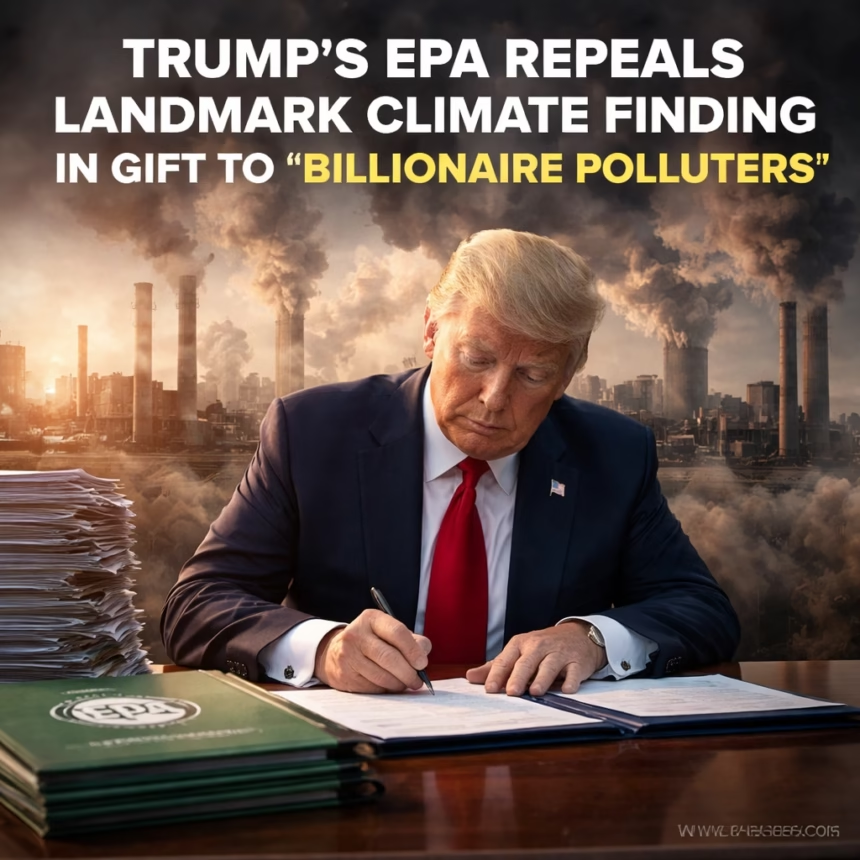
The U.S. Environmental Protection Agency (EPA) under the Trump administration has significantly altered federal climate policy by dismantling key regulatory actions stemming from a landmark finding that greenhouse gases endanger public health and welfare. These profound policy shifts, enacted across various sectors, have drawn both praise from industry groups and sharp criticism from environmental advocates and public health organizations. The moves represent a fundamental departure from previous federal climate strategies, reshaping environmental governance in the United States.
Background: The Endangerment Finding and Its Legacy
The foundation of much of the EPA’s authority to regulate greenhouse gases dates back to the Supreme Court’s 2007 decision in Massachusetts v. EPA. In this landmark case, the Court ruled that carbon dioxide and other greenhouse gases fit the definition of “air pollutants” under the Clean Air Act, obligating the EPA to determine whether they endanger public health and welfare.
The 2009 Endangerment Finding
Following the Supreme Court’s directive, the EPA under the Obama administration issued its “Endangerment Finding” in December 2009. This scientific determination concluded that six greenhouse gases—carbon dioxide, methane, nitrous oxide, hydrofluorocarbons, perfluorocarbons, and sulfur hexafluoride—threaten the public health and welfare of current and future generations. The finding was based on extensive scientific evidence indicating these gases contribute to global warming, leading to impacts such as sea-level rise, more intense heat waves, and changes in precipitation patterns.
Regulatory Framework Built on the Finding
The Endangerment Finding provided the legal basis for the EPA to regulate greenhouse gas emissions from various sources. This led to the development of several significant policies:
- Vehicle Emissions Standards: New emissions standards for cars and light trucks, implemented in collaboration with the Department of Transportation.
- Clean Power Plan (CPP): Introduced in 2015, the CPP aimed to reduce carbon emissions from existing power plants, setting state-specific targets and allowing flexibility in how states met those goals.
- Methane Regulations: Rules targeting methane emissions from new and modified oil and gas facilities, a potent greenhouse gas.
These regulations represented a concerted federal effort to address climate change by leveraging the Clean Air Act’s provisions, establishing the United States as a leader in global climate action.
More Read

Key Developments: Trump EPA’s Reversal
Upon taking office in 2017, the Trump administration initiated a broad effort to roll back environmental regulations, citing economic burdens and overreach. While the 2009 Endangerment Finding itself was not formally rescinded, the EPA under Administrators Scott Pruitt and later Andrew Wheeler took decisive actions that effectively dismantled the regulatory framework built upon it, severely curtailing its practical impact.
Repeal of the Clean Power Plan
One of the most significant actions was the repeal of the Clean Power Plan. In October 2017, the EPA proposed repealing the CPP, arguing it exceeded the agency’s legal authority. This was finalized in June 2019. In its place, the EPA introduced the Affordable Clean Energy (ACE) rule, which became effective in September 2019. The ACE rule significantly narrowed the scope of federal regulation, focusing only on efficiency improvements at individual power plants rather than broader grid-wide emissions reductions. Critics argued the ACE rule would result in minimal emissions reductions, or potentially even increases, compared to the CPP.
Rollback of Vehicle Emissions Standards
In August 2018, the EPA and the National Highway Traffic Safety Administration (NHTSA) proposed the “Safer Affordable Fuel-Efficient” (SAFE) Vehicles Rule. This rule sought to freeze fuel economy and emissions standards for model years 2021-2026 at 2020 levels, a substantial rollback from the Obama-era standards that aimed for stricter reductions. The final rule, issued in March 2020, required only 1.5% annual efficiency improvements, significantly less than the 5% annual increase under the previous standards. Concurrently, the EPA revoked California’s long-standing waiver under the Clean Air Act, which had allowed the state to set its own more stringent vehicle emissions standards, effectively challenging the authority of California and other states to pursue independent climate policies.
More Read

Weakening Methane Regulations
In August 2020, the EPA finalized a rule to significantly weaken regulations on methane emissions from new and existing oil and gas facilities. The new rule removed requirements for companies to install technology to detect and fix methane leaks from pipelines, storage tanks, and other equipment. The administration argued these regulations were burdensome and duplicative, while environmental groups condemned the move as a major setback for climate action and public health.
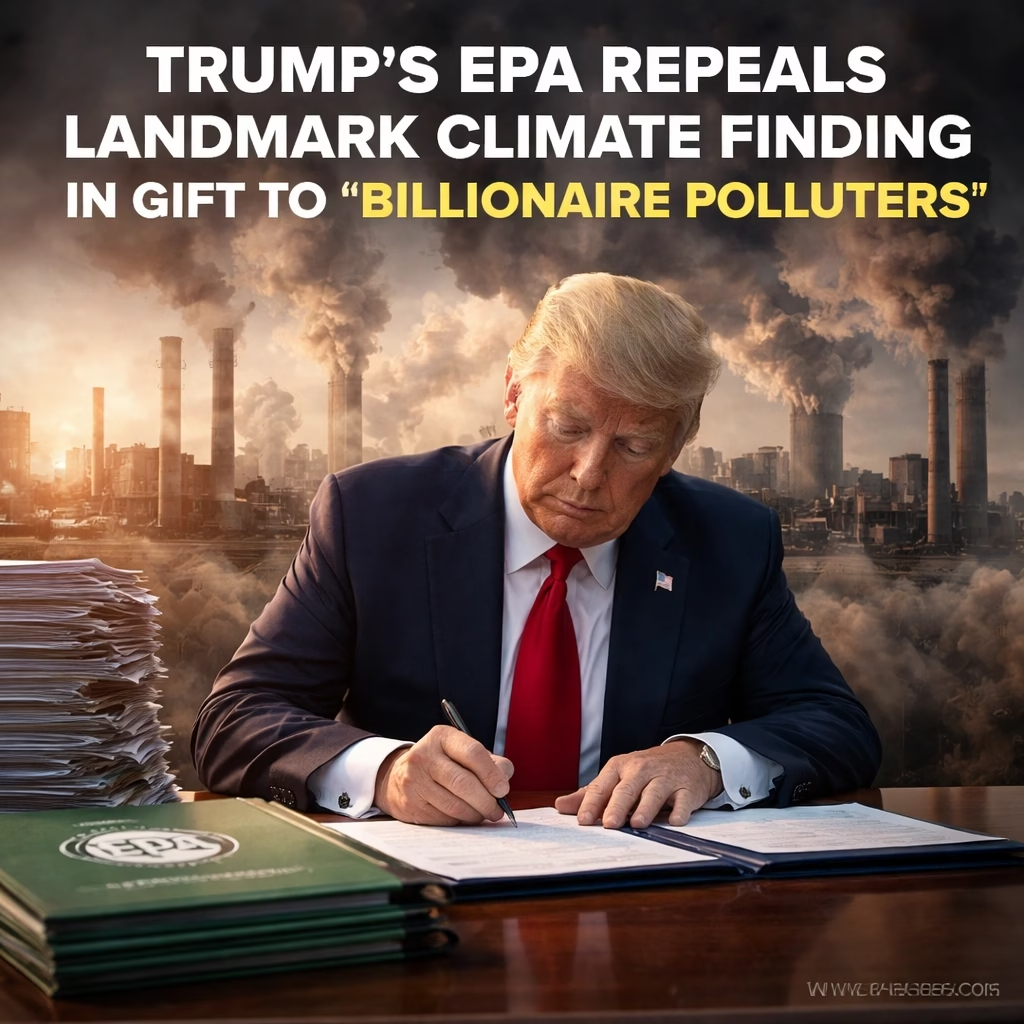
Impact: Environment, Industry, and Public Health
The cumulative effect of these regulatory rollbacks is far-reaching, influencing environmental quality, industrial operations, public health, and the nation’s standing on global climate issues.
Environmental Consequences
Environmental organizations predict that these actions will lead to increased greenhouse gas emissions, accelerating climate change impacts. The weakened regulations on power plants, vehicles, and oil and gas operations are expected to allow more carbon dioxide and methane into the atmosphere, making it harder for the U.S. to meet any future climate targets. Scientists warn this could exacerbate extreme weather events, contribute to biodiversity loss, and further stress natural ecosystems.
Benefits for Industrial Sectors
For key industrial sectors, particularly fossil fuel producers, utilities, and auto manufacturers, the policy changes have been largely welcomed. Companies are expected to face fewer compliance costs associated with emissions reductions technologies, reporting, and regulatory oversight. The administration’s rationale often highlighted the economic benefits of deregulation, projecting job growth and reduced energy costs, particularly for the coal industry and oil and gas companies.
Public Health Concerns
Public health advocates have voiced serious concerns. Increased emissions of greenhouse gases are often accompanied by higher levels of other air pollutants, such as particulate matter and ozone, which are known to cause respiratory and cardiovascular diseases. Vulnerable populations, including children, the elderly, and communities near industrial facilities, are disproportionately affected by poorer air quality. The rollbacks are seen as potentially reversing progress made in reducing air pollution-related illnesses.

Legal and International Ramifications
The EPA’s actions have immediately triggered a flurry of legal challenges from states, environmental groups, and public health organizations, setting the stage for protracted court battles. Internationally, the reversals have signaled a diminished U.S. commitment to global climate action, further isolating the nation after its withdrawal from the Paris Agreement. This stance has complicated international diplomatic efforts to address climate change and could influence trade relations and geopolitical alliances.
What Next: Litigation, Reversals, and State Action
The future of these environmental policies remains highly uncertain, subject to ongoing legal challenges and the shifting political landscape.
Imminent Legal Battles
Numerous lawsuits have been filed against the EPA’s repeal of the Clean Power Plan, the ACE rule, the vehicle emissions rollbacks, and the methane deregulation. These cases are proceeding through various federal courts, with environmental groups and state attorneys general arguing the EPA acted arbitrarily and capriciously, or exceeded its statutory authority. The outcomes of these legal challenges could significantly alter the implementation or even the existence of the new rules.
Potential for Future Administrative Reversals
A change in presidential administration could lead to a swift reversal of many of these policies. A new administration committed to climate action could seek to reinstate stricter emissions standards, develop new regulations, or rejoin international climate agreements. However, such reversals would likely involve lengthy regulatory processes and could also face legal challenges from opposing industry groups.
Continued State-Level Climate Action
Despite federal rollbacks, many states, particularly California and those in the Northeast, continue to pursue aggressive climate policies. These states are implementing their own renewable energy mandates, emissions standards, and cap-and-trade programs. While federal actions can complicate these efforts, state-level initiatives are expected to remain a critical front in the broader fight against climate change, potentially creating a patchwork of environmental regulations across the country.
The long-term implications of the Trump EPA’s policy shifts will depend heavily on the outcomes of these legal battles, future political developments, and the ongoing scientific understanding of climate change and its impacts.