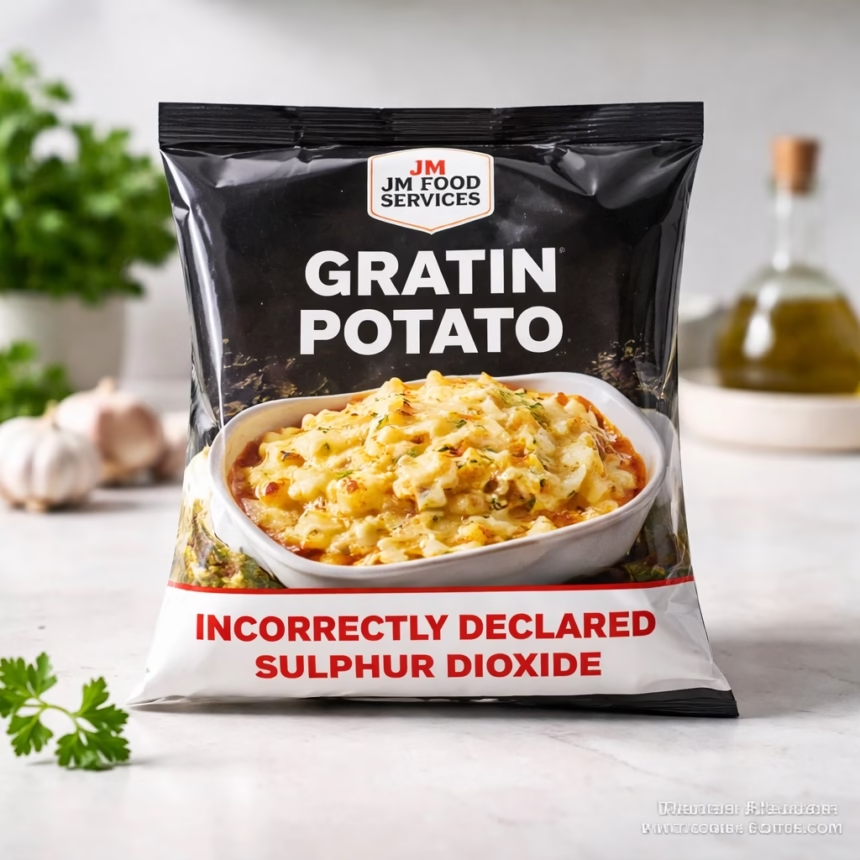
Food Safety Firestorm: JM Food Services Gratin Potato Recall Over Undeclared Sulphites
Food Safety Firestorm: JM Food Services Gratin Potato Recall Over Undeclared Sulphites
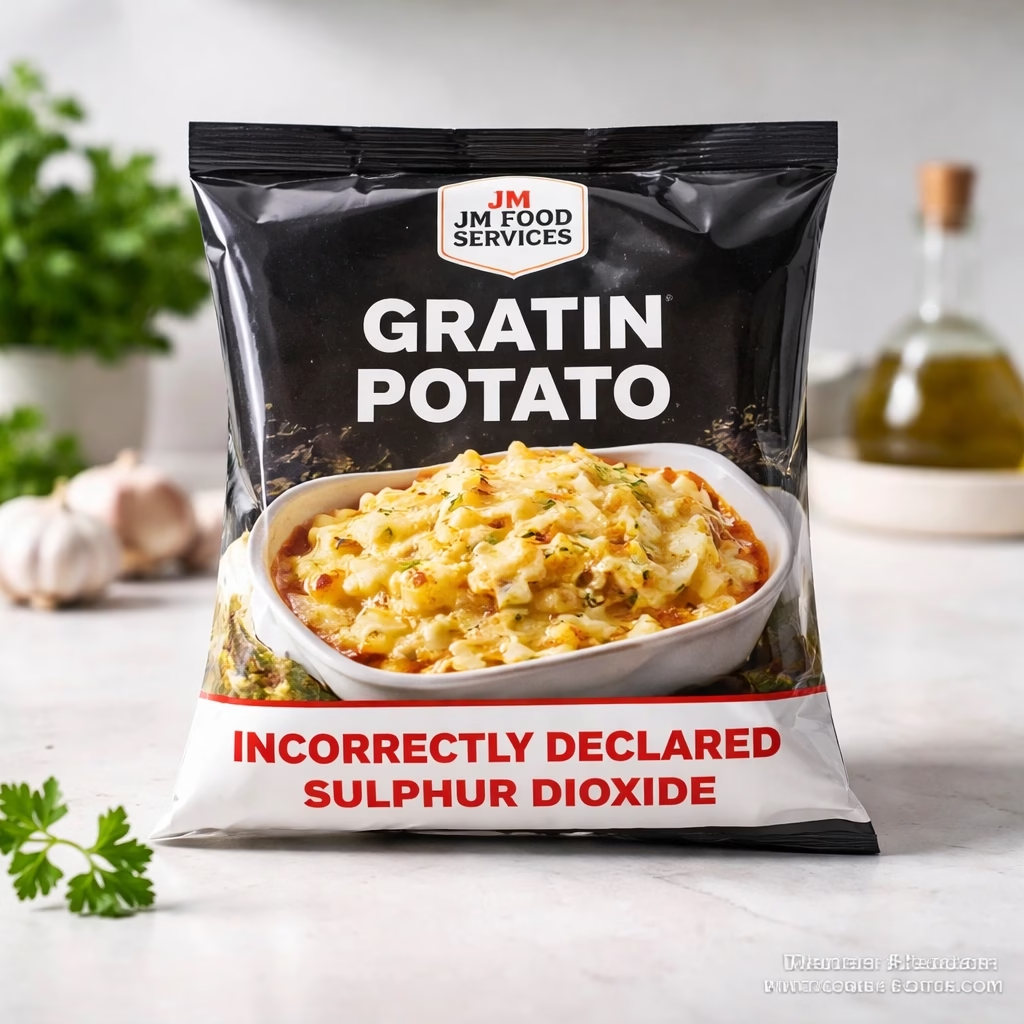
JM Food Services has initiated an urgent, nationwide recall of a specific batch of its popular Gratin Potato product after discovering critical levels of incorrectly declared sulphur dioxide. The prominent food service distributor, headquartered in Manchester, UK, issued the immediate alert on November 7, 2023, impacting catering establishments and consumers across the United Kingdom.
This swift action underscores a serious food safety concern, primarily aimed at safeguarding individuals with sensitivities or allergies to sulphites, an allergen that was present but not adequately highlighted on the product's labelling.
Background: The Silent Allergen and Regulatory Landscape
Sulphur dioxide and sulphites (often denoted as E220-E228) are widely used in the food industry as preservatives, particularly valued for their ability to prevent enzymatic browning and inhibit microbial growth. They are commonly found in products such as dried fruits, wines, ciders, and various potato preparations, including dehydrated potato flakes or granules.
While generally harmless to most, sulphites can trigger adverse reactions in sensitive individuals, especially those with asthma. Symptoms can range from mild effects like hives, itching, and abdominal pain to more severe respiratory distress, angioedema (swelling), and in rare cases, life-threatening anaphylactic shock.
Under UK food law, which retains the principles of EU Regulation (EU) No 1169/2011 on the provision of food information to consumers, sulphites must be clearly declared on product labels when present at concentrations exceeding 10 milligrams per kilogram (mg/kg) or 10 milligrams per litre (mg/L). This threshold applies to the total sulphur dioxide content, ensuring that consumers are fully informed about potential allergens.
JM Food Services, established in 1998, has grown to become a key supplier of prepared and frozen food items to a vast network of hotels, restaurants, schools, and catering companies throughout the UK. Renowned for its convenience and quality, the company typically maintains stringent quality control protocols across its product lines.
The discovery of the misdeclaration occurred during a routine internal quality assurance audit at JM Food Services' Leeds production facility on November 3, 2023. A batch of the Gratin Potato product, identified with batch code GP231103 and a best-before date of May 3, 2025, showed elevated sulphite levels that were not reflected in the ingredient declaration. Upon verification, the Food Standards Agency (FSA) was immediately notified, triggering the subsequent recall.
More Read

Key Developments: Unravelling the Misdeclaration
Following the internal discovery, JM Food Services acted decisively. The official recall notice was disseminated on November 7, 2023, through the Food Standards Agency's public alerts system and directly to the company's extensive customer base. The recall specifically targets the 2kg catering packs of JM Food Services Gratin Potato, batch code GP231103, with a best-before date of May 3, 2025.
The company employed a multi-channel communication strategy, sending direct emails, issuing phone calls, and publishing alerts on its corporate website and social media platforms. This proactive approach aimed to ensure that all affected businesses could promptly identify and remove the product from their inventories and kitchens.
Initial investigations into the root cause suggest that the misdeclaration stemmed from a recent change in a raw ingredient supplier. Specifically, the potato flakes or granules used in the Gratin Potato recipe were sourced from a new vendor. While the previous supplier's specification for sulphite content was negligible or within declared limits, the new supplier's raw material contained higher, undeclared levels of sulphites.
A critical lapse in JM Food Services' internal ingredient vetting process meant that the updated specification from the new supplier was not adequately cross-referenced or updated in the company's master ingredient database and labelling system. This oversight led directly to the production of Gratin Potato batches with non-compliant allergen information.
In response, JM Food Services has immediately halted all production of the Gratin Potato product across all batches. Remaining stock of the affected batch has been quarantined at the company's central distribution centre in Coventry, awaiting safe disposal. The company has also launched a comprehensive internal review of all its ingredient specifications, supplier onboarding protocols, and allergen management procedures to prevent any recurrence.
Impact: Far-Reaching Consequences for Stakeholders
The recall carries significant implications across various stakeholders, from vulnerable consumers to the entire food service supply chain.
For consumers, particularly those with sulphite sensitivities or allergies, the misdeclaration poses a direct and potentially severe health risk. While no serious adverse reactions directly linked to this specific batch have been reported to date, the possibility remains. Individuals who have consumed the product unknowingly could experience allergic symptoms, requiring medical attention. Public health bodies have reiterated the importance of checking food labels and responding to recall notices.
Food service businesses – including restaurants, hotels, schools, and caterers – that purchased the affected Gratin Potato batch face immediate operational and financial challenges. They must promptly remove the product from their kitchens, leading to financial losses from wasted inventory. Furthermore, menu disruptions may occur if the Gratin Potato was a staple offering, requiring swift adjustments or alternative sourcing. The administrative burden of handling the recall, including staff time dedicated to checking stock and liaising with JM Food Services, also adds to their costs. There's also the potential for reputational damage if their customers perceive a lapse in their own food safety practices.
For JM Food Services, the financial ramifications are substantial. Costs associated with the recall include retrieving the product from the market, safe disposal of affected batches, conducting the internal investigation, and potentially re-formulating and re-labelling the product. Beyond the immediate financial strain, the company faces potential regulatory fines from the Food Standards Agency if significant breaches of food safety regulations are formally identified. Crucially, the incident poses a considerable threat to JM Food Services' brand reputation, potentially eroding customer trust and impacting future contracts within the highly competitive food service industry.
The incident also reverberates through the broader supply chain. It places increased scrutiny on the raw ingredient supplier involved and serves as a stark reminder for all food manufacturers about the absolute necessity of rigorous allergen management, continuous verification, and robust communication throughout the entire supply chain, especially when ingredient sourcing or product formulations undergo changes.
What Next: Towards Enhanced Food Safety Protocols
The immediate focus remains on ensuring the complete removal of the affected Gratin Potato batch from circulation and supporting affected customers. JM Food Services has established a dedicated customer helpline and email support channel, offering full refunds or product replacements for businesses holding the recalled item.
The Food Standards Agency will continue its vigilant oversight of JM Food Services' handling of the recall and its subsequent internal investigation. The FSA possesses the authority to issue enforcement notices, mandate further corrective actions, or impose fines if significant non-compliance with food safety legislation is confirmed. Their role is pivotal in ensuring public safety and maintaining industry standards.
Internally, JM Food Services anticipates completing its comprehensive audit of ingredient specifications, supplier vetting processes, and allergen management protocols within the next three to four weeks. This audit is expected to lead to the implementation of revised Standard Operating Procedures (SOPs), enhanced staff training on allergen awareness, and the adoption of more robust verification steps for all incoming raw materials. The company has publicly committed to investing in advanced analytical testing capabilities to routinely verify allergen declarations from its suppliers.
JM Food Services aims to reintroduce its Gratin Potato product to the market with fully compliant and transparent labelling by early 2024. This relaunch will follow extensive re-testing and verification processes, designed to restore consumer and customer confidence in the product's safety and accuracy.
This incident serves as a critical reminder for the entire food manufacturing sector about the dynamic nature of food safety and the absolute necessity of continuous vigilance. The thorough management of allergens, from sourcing to final labelling, is paramount to protecting public health and maintaining the integrity of the food supply chain.