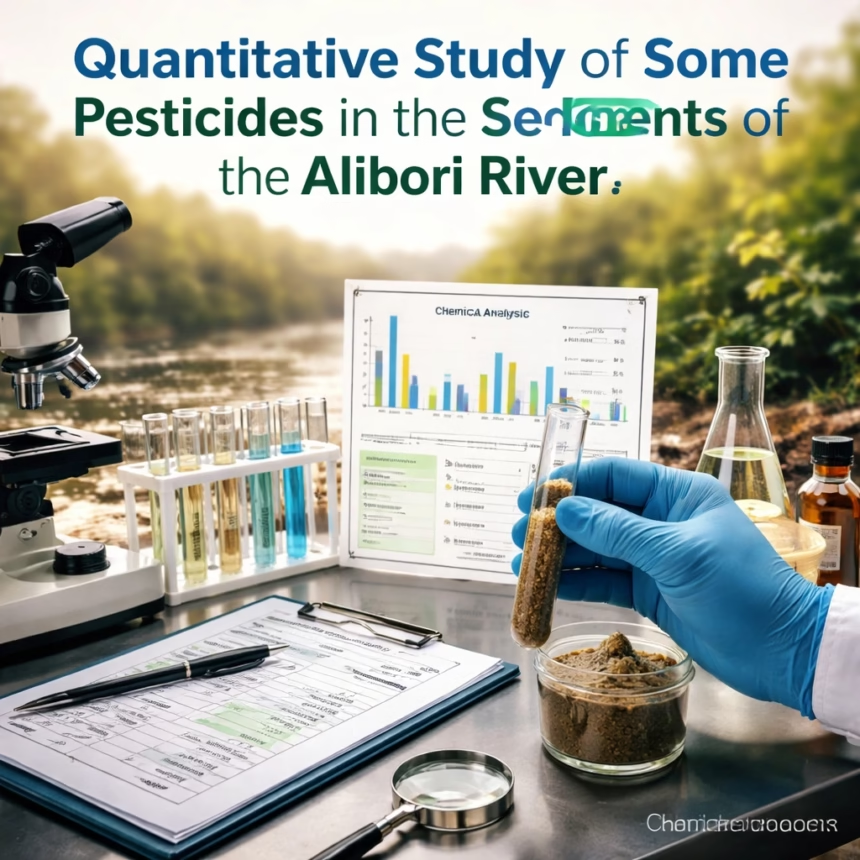
A recently concluded quantitative study has unveiled significant levels of various pesticides embedded within the sediments of the Alibori River, a vital waterway flowing through northern Benin. The findings, released this month, highlight a pressing environmental concern that could have far-reaching implications for both aquatic ecosystems and human communities reliant on the river.
Conducted by researchers from the University of Parakou in collaboration with the Benin National Environmental Agency, the investigation aimed to assess the long-term accumulation of agricultural chemicals in the riverbed, providing the first comprehensive baseline data for the region.
Background: A Lifeline Under Pressure
The Alibori River, originating in the Atakora Mountains, traverses several agricultural zones before joining the Niger River. It serves as a critical water source for drinking, irrigation, and fishing for numerous communities across the Alibori Department and beyond. Its floodplains support diverse ecosystems, making it a biodiversity hotspot within the semi-arid northern region of Benin.
Agricultural Practices and Historical Context
For decades, the Alibori River basin has been a hub for intensive agriculture, primarily cultivating cotton, maize, rice, and cashew nuts. These farming practices, particularly in the mid-20th century and continuing into the present, have historically relied on a wide spectrum of pesticides to protect crops and ensure yields. While some highly persistent chemicals, such as DDT, have been officially banned or restricted for years, their historical application often leaves a lasting legacy in the environment.
Previous anecdotal reports and localized surveys had hinted at potential chemical runoff into the river, but a systematic, quantitative analysis of sediment contamination had been lacking. Sediments act as long-term reservoirs for these chemicals, accumulating them over time and potentially releasing them back into the water column under certain conditions, making their study crucial for understanding persistent pollution.
More Read

Key Developments: Unpacking the Study’s Findings
The groundbreaking study, spanning from late 2023 to early 2024, involved extensive sampling across 15 strategic locations along the Alibori River. Researchers collected sediment cores from various depths to capture a historical snapshot of chemical deposition.
Methodology and Analytical Rigor
The research team employed advanced analytical techniques, including Gas Chromatography-Mass Spectrometry (GC-MS) and High-Performance Liquid Chromatography (HPLC), to identify and quantify a broad range of pesticide residues. Over 150 sediment samples were meticulously processed at the university's environmental chemistry laboratory, ensuring precision and accuracy in the detection of even trace contaminants.
Specific Pesticides and Concentrations
The study detected 28 different pesticide compounds. Of particular concern were the elevated concentrations of organochlorine pesticides (OCPs) such as dichlorodiphenyltrichloroethane (DDT) and its metabolites (DDE, DDD), endosulfan, and lindane (gamma-hexachlorocyclohexane). Despite being phased out globally decades ago, these persistent organic pollutants (POPs) were found in concentrations exceeding international sediment quality guidelines set by organizations like the Canadian Council of Ministers of the Environment (CCME) and the United States Environmental Protection Agency (USEPA) for the protection of aquatic life. For instance, DDE concentrations in some upstream samples reached 500 µg/kg dry weight, significantly above the probable effect level (PEL) of 22 µg/kg.
More Read

Additionally, more recently used pesticides, including several organophosphates (e.g., chlorpyrifos) and triazines (e.g., atrazine), were also identified, albeit generally at lower concentrations than the OCPs. Their presence indicates ongoing agricultural runoff and highlights the continuous input of new chemicals into the river system.
Impact: A Silent Threat to Ecosystems and Communities
The discovery of these persistent pesticide residues in the Alibori River's sediments raises serious alarms about the potential long-term ecological and human health consequences in the region.
Ecological Concerns
The primary concern is the impact on aquatic biodiversity. Pesticides can be acutely toxic to fish, amphibians, and invertebrates, disrupting their reproduction, growth, and survival. Chronic exposure, even at low levels, can lead to behavioral changes, immune suppression, and increased susceptibility to disease. Bioaccumulation, where these chemicals build up in the tissues of organisms over time, is a significant threat. Predator species, including fish-eating birds like herons and kingfishers, are particularly vulnerable to biomagnification, potentially experiencing reproductive failures and population declines.
Human Health Risks
Communities living along the Alibori River often rely on its waters for drinking, bathing, and irrigation of food crops. Fish caught from the river are a staple food source. The presence of high levels of DDT and other persistent chemicals in sediments suggests a potential pathway for human exposure through contaminated drinking water, direct contact during bathing, or the consumption of fish that have accumulated these toxins in their flesh. Long-term exposure to certain pesticides has been linked to a range of serious health issues, including neurological disorders, reproductive problems, endocrine disruption, and increased cancer risks. Children and pregnant women are particularly vulnerable to these effects.
Economic Ramifications
Beyond health and environment, the contamination could have economic consequences. A decline in fish populations would directly impact the livelihoods of local fishermen. Concerns about the safety of agricultural produce irrigated with river water could affect local markets and potentially export opportunities, hindering regional economic development.
What Next: Charting a Path Towards Remediation and Prevention
The findings of the Alibori River sediment study serve as a critical wake-up call, prompting an urgent need for concerted action from various stakeholders.

Policy and Regulatory Reforms
The Benin Ministry of Environment and the Ministry of Agriculture are expected to review the study's findings closely. This may lead to stricter regulations on pesticide use, including the enforcement of bans on specific chemicals, tighter controls on application methods, and enhanced monitoring of agricultural runoff. There is a strong call for the development of a national sediment quality guideline tailored to Benin's specific environmental conditions.
Enhanced Monitoring and Research
Researchers recommend establishing a long-term environmental monitoring program for the Alibori River, extending beyond sediments to include water quality, fish tissue analysis, and even human health assessments in affected communities. Further research is needed to pinpoint specific sources of contamination, understand the transport mechanisms of these pesticides, and model their long-term fate and potential for remobilization from sediments.
Promoting Sustainable Agriculture
A key strategy for prevention involves promoting integrated pest management (IPM) practices among local farmers. This includes encouraging the use of biological controls, crop rotation, and resistant crop varieties, thereby reducing reliance on synthetic pesticides. Farmer training programs, supported by agricultural extension services, will be crucial in disseminating knowledge about safer farming techniques and the responsible disposal of pesticide containers.
Community Engagement and Awareness
Public awareness campaigns are vital to inform riverine communities about the risks associated with pesticide contamination and to educate them on safe water practices and the importance of consuming fish from verified safe sources. Local NGOs and community leaders are expected to play a significant role in facilitating these educational initiatives.
The Alibori River study underscores the complex and enduring challenge of environmental pollution from agricultural practices. Addressing this hidden threat will require a multi-faceted approach, combining scientific rigor, policy reform, and community action to safeguard the health of both the river and the populations it sustains for generations to come.