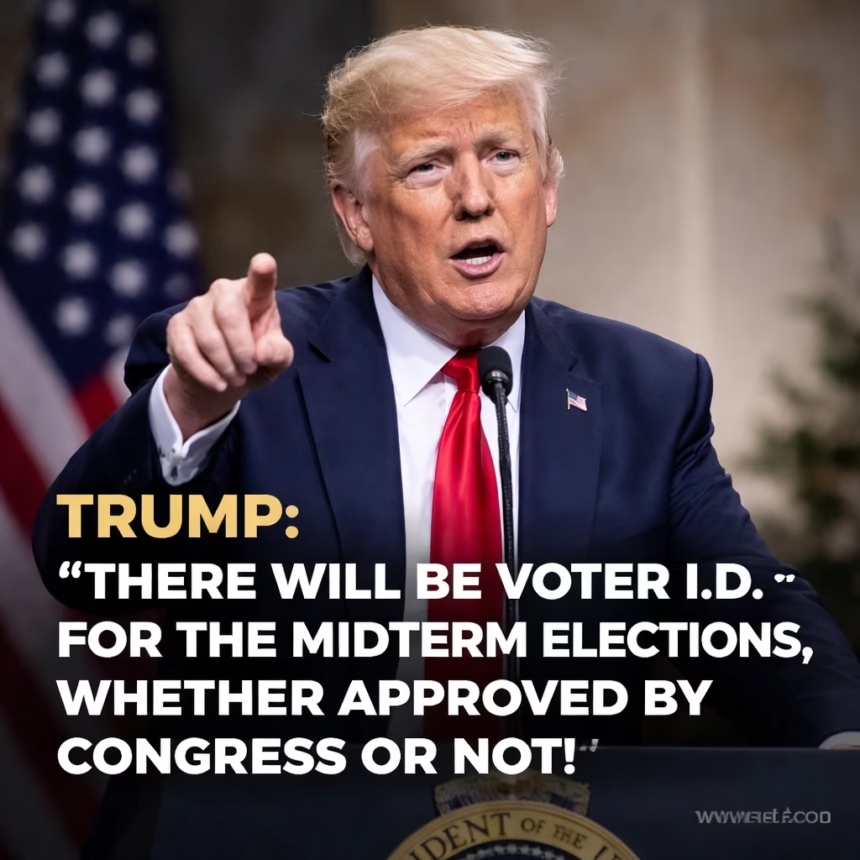
Former President Donald Trump recently made a striking declaration, asserting that stringent voter identification requirements would be implemented for the upcoming midterm elections, irrespective of Congressional approval. This bold statement, delivered during a public address, has reignited a fervent national debate over election integrity, the balance of federal and state powers in election administration, and the practical implications of electoral reform across the United States.
Background: The Enduring Battle Over Voter ID
The push for voter identification laws in the United States is a long-standing political issue, gaining significant traction since the early 2000s. Indiana was a pioneer in this movement, becoming the first state to enact a strict photo ID law in 2005. Proponents, predominantly Republicans, advocate for these laws as a critical safeguard against voter fraud and a necessary measure to ensure the security and integrity of elections.
Conversely, opponents, largely Democrats and civil rights organizations, contend that strict voter ID laws disproportionately disenfranchise eligible voters. They argue that minority groups, the elderly, students, and low-income individuals are more likely to lack the specific forms of identification required or face significant barriers in obtaining them, effectively suppressing their participation in the democratic process.
The administration of elections in the U.S. is primarily a state responsibility, resulting in a complex and varied patchwork of laws across the nation. While the Help America Vote Act (HAVA) of 2002 introduced some federal standards, it largely deferred to individual states on the specifics of voter identification. As of early 2024, 38 states require voters to show some form of identification at the polls, ranging from strict photo ID requirements to systems where ID is requested but not strictly mandatory, or where non-photo ID is accepted.
Donald Trump has consistently placed election integrity at the forefront of his political agenda, particularly following the 2020 presidential election. His repeated claims of widespread voter fraud and his subsequent advocacy for stricter election laws, including universal voter ID, have become a cornerstone of his public messaging and political movement. This history provides crucial context for his latest pronouncement regarding midterm elections.
More Read

Key Developments: Trump’s Unprecedented Claim and Reactions
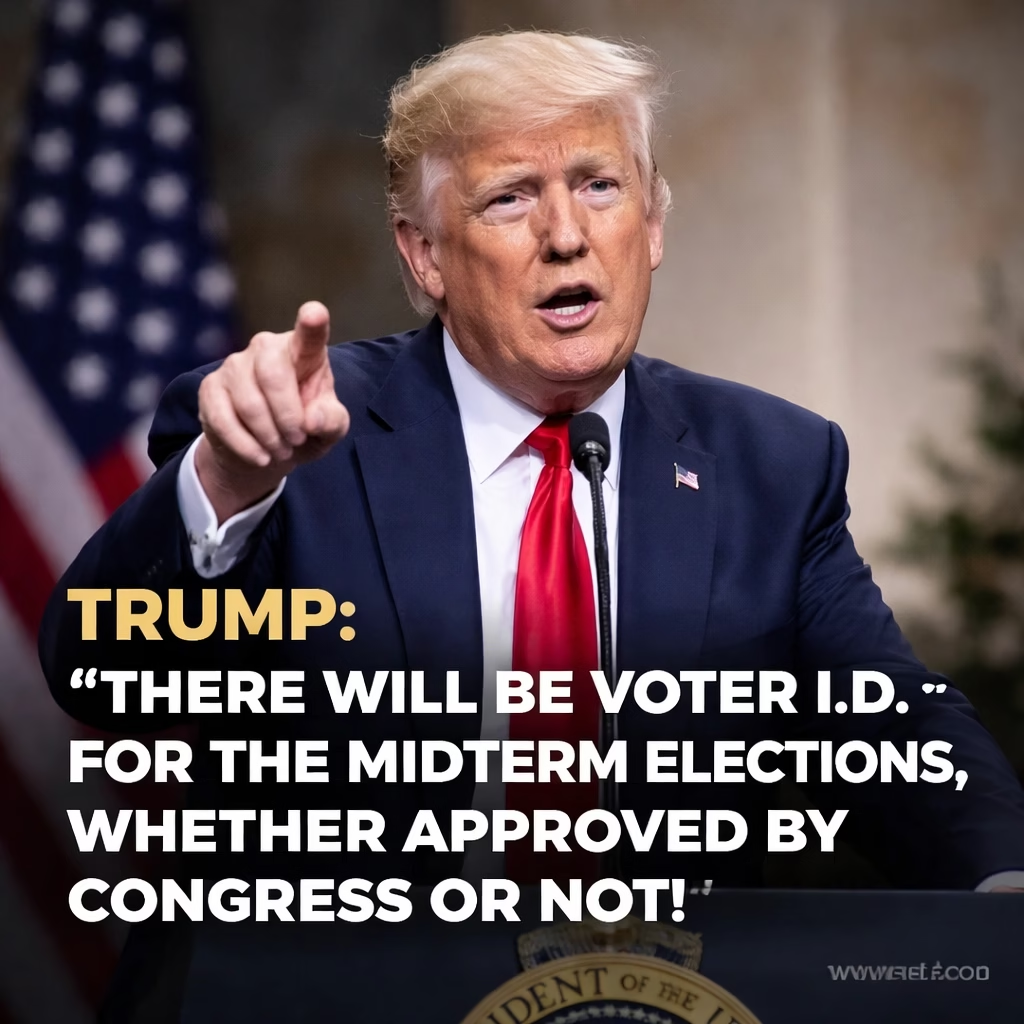
Former President Trump's recent statement, delivered during a rally in a key swing state, was unequivocal: "There will be Voter I.D. for the Midterm Elections, whether approved by Congress or not!" This declaration immediately drew attention, not only for its assertive tone but also for its implied bypass of conventional legislative processes.
Legal scholars and political analysts swiftly questioned the practical and constitutional feasibility of such a move. The U.S. Constitution grants states significant authority over the conduct of elections. A president or former president lacks the direct legal power to unilaterally impose a national voter ID requirement. Potential, albeit highly contentious, avenues could include leveraging federal funding conditions for states, issuing executive orders (though their scope for state-administered elections would be severely limited and subject to immediate legal challenge), or exerting immense political pressure.
Political Reactions
The statement elicited immediate and polarized reactions across the political spectrum. Many Republican leaders and conservative commentators swiftly echoed support for universal voter ID, framing it as a common-sense measure essential for election security. Senator Mike Lee (R-UT), for instance, might characterize it as a vital step towards restoring public trust in the electoral system.

Conversely, Democratic lawmakers and progressive advocacy groups vehemently denounced Trump’s assertion as a dangerous overreach and a potential attack on democratic principles. Representative Jamie Raskin (D-MD) could describe it as “an affront to the constitutional framework” and a clear attempt to suppress votes, particularly among marginalized communities. Election officials, regardless of party affiliation, expressed concerns about the potential for widespread confusion, logistical nightmares, and legal battles if such a directive were attempted without clear legal grounding and broad consensus.
Congressional Standoff
In Congress, attempts to pass federal voter ID legislation have historically stalled due to deep partisan divisions. Bills like the “Voter ID Act,” aimed at establishing national standards, have faced strong Democratic opposition. Similarly, Democratic-backed legislation such as the For the People Act (H.R.1/S.1) and the John Lewis Voting Rights Advancement Act, which sought to expand voting access and counter restrictive state laws, have been met with Republican filibusters and opposition, highlighting the legislative gridlock on election reform.
Impact: Who Stands to Be Affected?
Should a universal voter ID requirement be implemented, even under contentious circumstances, its impact would be far-reaching, affecting various segments of the electorate, election administrators, and the broader political landscape.
Voters
The most direct impact would fall on voters, particularly those who do not possess a current government-issued photo identification, such as a driver’s license or passport. Estimates suggest that approximately 11% of U.S. citizens fall into this category, a demographic that disproportionately includes the elderly, low-income individuals, students, and minority groups. Obtaining new identification often requires original documents like birth certificates, proof of residency, and can incur costs, posing significant logistical and financial barriers for many.
Such a sudden change could lead to increased reliance on provisional ballots, longer wait times at polling places, and widespread confusion among the electorate and poll workers if rules are unclear or inconsistently applied across jurisdictions.
Election Officials and States
State and local election officials would face immense logistical and financial challenges. Implementing a uniform federal voter ID requirement without sufficient lead time would necessitate extensive training for poll workers, the acquisition of new equipment for ID verification, and massive public education campaigns to inform voters of the new requirements. States would also confront the risk of numerous legal challenges from civil rights organizations and potentially from other state governments if federal mandates are perceived as infringing upon state sovereignty or voter rights.
More Read

Political Parties and Courts
From a political standpoint, Republicans might anticipate increased turnout among their base, who generally favor stricter ID laws, while potentially suppressing votes from demographics less likely to possess the required identification. Democrats would likely mobilize intensely against such measures, framing them as voter suppression tactics and utilizing them to energize their base and challenge the legality of any imposed mandate.
Ultimately, any attempt to unilaterally impose national voter ID outside of established legislative processes would almost certainly trigger immediate and extensive legal challenges. These disputes would likely ascend to the Supreme Court, tasking the judiciary with interpreting the delicate balance of federal and state powers concerning election administration and the fundamental right to vote.
What Next: Anticipated Milestones and Challenges
Former President Trump's declaration sets the stage for continued political contention surrounding election integrity heading into future election cycles. While the immediate feasibility of his claim remains highly questionable, its political reverberations are significant.
Continued Rhetoric and State-Level Action
Expect former President Trump and his allies to continue championing stricter election integrity measures, including universal voter ID, as a central campaign issue leading into the 2024 presidential election and subsequent midterm elections. In the absence of federal legislation, the battle over voter ID will predominantly continue to unfold in state legislatures and courts. States like Georgia, Texas, and Florida have recently enacted more stringent voting laws, and others may follow suit. Conversely, some states may actively resist or challenge any perceived federal overreach into their election administration.
Executive Influence vs. Congressional Gridlock
While a president cannot unilaterally impose a national voter ID system, a future administration sympathetic to the cause could leverage executive influence. This might involve using federal funding mechanisms to incentivize states to adopt stricter ID laws or issuing guidance documents, though direct mandates would undoubtedly face formidable legal hurdles. However, the prospect of federal legislation on voter ID passing a deeply divided Congress in the near future remains exceedingly low. Any such bill would face significant partisan opposition and the Senate’s procedural filibuster.
Judicial Scrutiny
Any concrete attempt to implement a national voter ID mandate without a clear legislative basis would be met with immediate and rigorous legal challenges. These would likely result in protracted court battles over constitutional authority and voting rights. The Supreme Court’s past rulings have generally upheld state-level voter ID laws, provided they do not unduly burden the right to vote. However, the question of federal imposition without a congressional mandate presents a distinct and complex legal challenge that would test the boundaries of executive power and federalism.