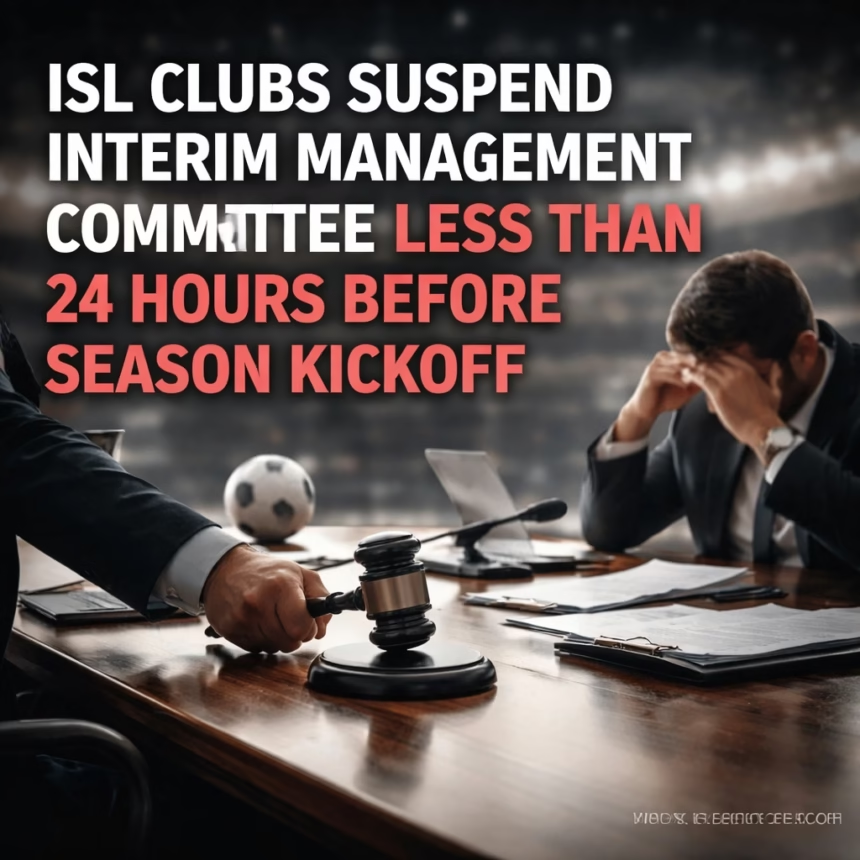
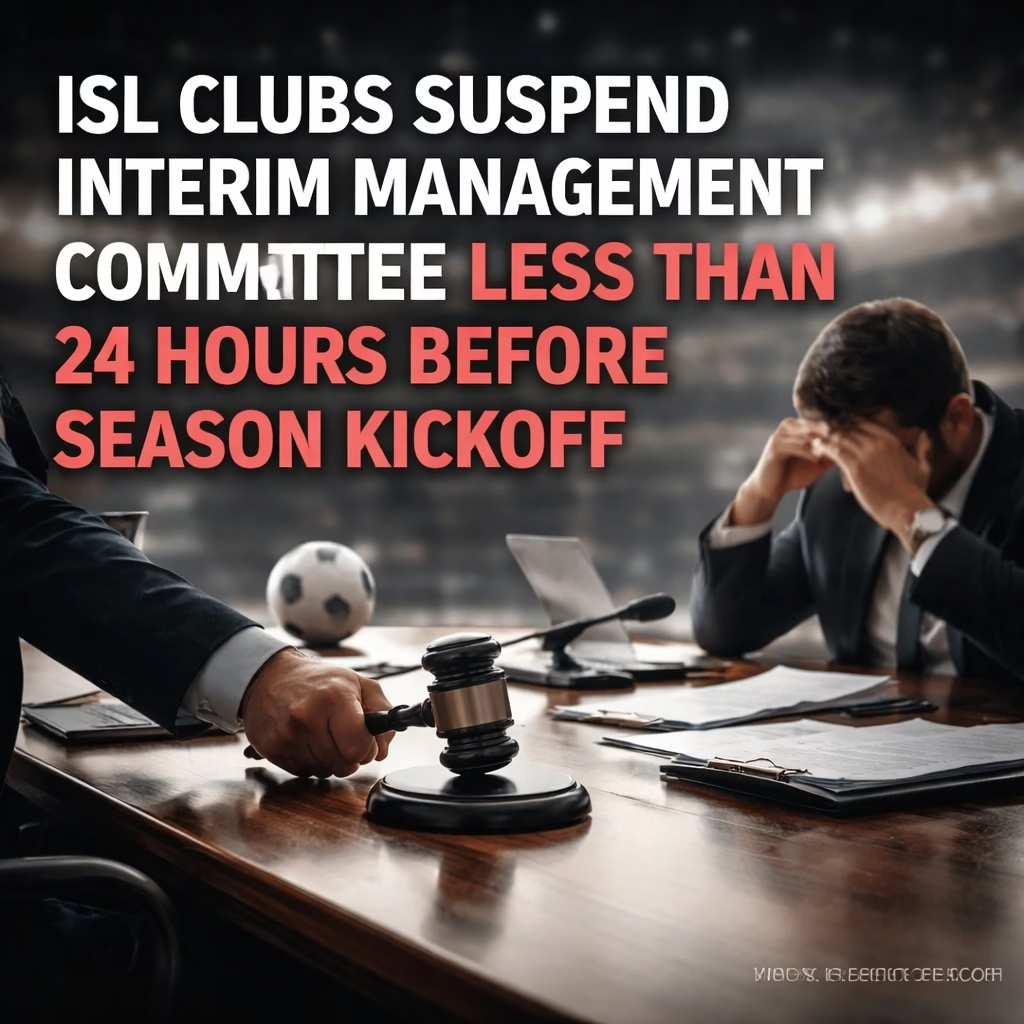
In a dramatic turn of events, the Indian Super League (ISL) finds itself embroiled in a governance crisis less than 24 hours before the scheduled start of its 2024-25 season. A majority of the league's clubs collectively announced the immediate suspension of the Interim Management Committee (IMC) on Friday evening, effectively leaving the league without a governing body on the eve of its highly anticipated kickoff. This unprecedented move, originating from a joint meeting held in Mumbai, sends shockwaves through Indian football, raising significant questions about the season's immediate future and the stability of the nation's premier football competition.
Background: A League in Transition
The Interim Management Committee was established approximately six months prior, following a period of significant administrative upheaval within the league's previous governing structure. Tasked with stabilizing operations, ensuring transparency, and guiding the league through a transitional phase, the IMC's mandate included overseeing critical aspects such as player registrations, fixture finalization, commercial partnerships, and the general administration leading up to the new season. Its formation was a direct response to a perceived vacuum in leadership and a need for an independent body to restore confidence among stakeholders after allegations of mismanagement surfaced concerning the former administrative setup. The IMC comprised former football administrators, legal experts, and independent professionals, chosen for their supposed impartiality and experience. Their primary objective was to facilitate a smooth handover to a permanent governance model, ideally by the end of the current season.
Key Developments: A Sudden Vote of No Confidence
The decision to suspend the IMC emerged from a hastily convened virtual meeting involving representatives from ten of the eleven ISL clubs. Sources close to the discussions indicate that the clubs expressed a unanimous vote of no confidence in the IMC's ability to effectively lead the league. The primary grievances cited reportedly included a lack of transparency in decision-making, insufficient communication regarding crucial operational matters, and a perceived failure to adequately address key concerns raised by the clubs. Among these concerns were issues related to revenue distribution models, scheduling complexities, and the overall strategic direction of the league.
The clubs' collective statement, released late Friday, outlined their decision to "immediately suspend the operations and authority of the Interim Management Committee." While the statement did not explicitly dissolve the committee, the term "suspension" effectively strips it of all functional power. This move highlights a deep-seated frustration that has evidently simmered beneath the surface for weeks, escalating rapidly as the season opener approached. The timing, just hours before the first whistle, underscores the urgency and severity of the clubs' dissatisfaction, leaving no room for a gradual transition or negotiation.
Impact: An Entire Ecosystem in Limbo
The immediate ramifications of this suspension are profound and far-reaching, affecting nearly every facet of the ISL ecosystem.
More Read

Club Operations and Matchday Logistics
With the IMC suspended, there is an immediate vacuum in leadership concerning matchday operations. The first match, scheduled for Saturday evening in Goa, now faces uncertainty. Who will sanction the match? Who will oversee referee appointments, security protocols, and broadcast arrangements? Clubs, which typically rely on central league administration for these functions, are now navigating uncharted territory. Player registration deadlines, which the IMC was overseeing, might also come under scrutiny, potentially impacting squad legality for upcoming fixtures.
Players, Coaches, and Staff
For the hundreds of players, coaches, and support staff across the league, the news brings a cloud of uncertainty. Their livelihoods are directly tied to the smooth functioning of the league. Questions about contracts, welfare, and the stability of their professional environment will undoubtedly arise. The mental impact on athletes preparing for a demanding season, now facing administrative chaos, cannot be understated.
More Read

Fans and Sponsors
Fans, who have eagerly awaited the season's commencement, are left confused and potentially disillusioned. Ticket sales, travel plans, and viewing arrangements are all at risk. Sponsors and commercial partners, who have invested millions in the league, will be closely monitoring the situation. The sudden instability could erode brand confidence and potentially impact future investment, posing a significant financial threat to the league's long-term viability. Broadcasters, having committed extensive resources to cover the season, also face immediate logistical and contractual challenges.
League Integrity and Reputation
Internationally, this development casts a shadow over the reputation of Indian football. The ISL, often lauded as a catalyst for football's growth in India, risks being perceived as unstable and prone to administrative crises. This could deter future foreign investment, player recruitment, and collaborations with international football bodies, undermining years of effort to establish the league as a credible and professional entity.
What Next: Urgent Calls for Resolution
The path forward is fraught with challenges, and immediate action is required to salvage the impending season.
Emergency Meetings and Interim Solutions
The most immediate step will likely involve emergency meetings between the clubs to formulate an alternative governance structure. This could take the form of a temporary steering committee comprising club representatives, or perhaps a revised interim body with a clearer mandate and greater accountability. The All India Football Federation (AIFF), as the sport's governing body in the country, is expected to intervene swiftly to mediate the crisis and ensure the continuity of the league. Their role will be crucial in legitimizing any temporary solution and preventing a complete breakdown.
Potential AIFF Intervention
Given the severity of the situation and its potential impact on Indian football, the AIFF might be compelled to step in directly, potentially taking over the league's administration temporarily until a stable solution is found. This would be an extraordinary measure but one that might be considered necessary to protect the integrity of the competition and the interests of all stakeholders.
Legal and Contractual Review
The suspension of the IMC might trigger a review of various contracts and agreements that were signed under its authority. Clubs, players, sponsors, and broadcasters may need to assess the legal implications of this administrative void. This could lead to further complications and potential disputes if not handled carefully and transparently.

The coming hours and days will be critical for the ISL. The ability of the clubs and the AIFF to swiftly establish a credible and functional administrative framework will determine whether the 2024-25 season can commence as planned, or if it will be delayed, potentially jeopardizing the future of India's premier football league. The eyes of the football world are now firmly fixed on India, awaiting a resolution to this unprecedented pre-season crisis.