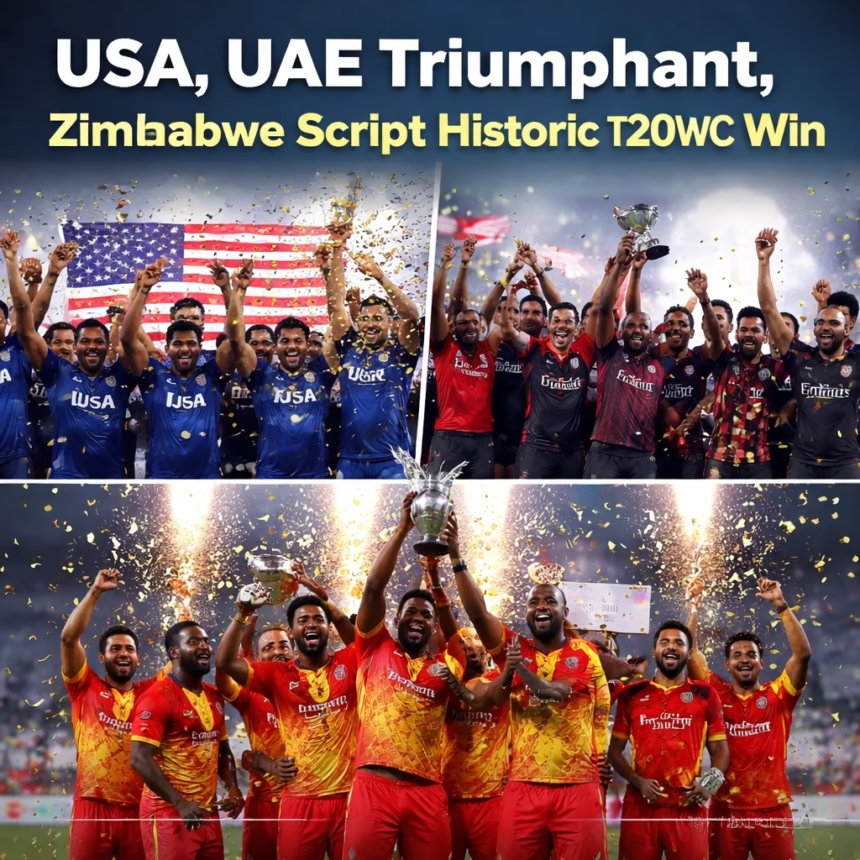
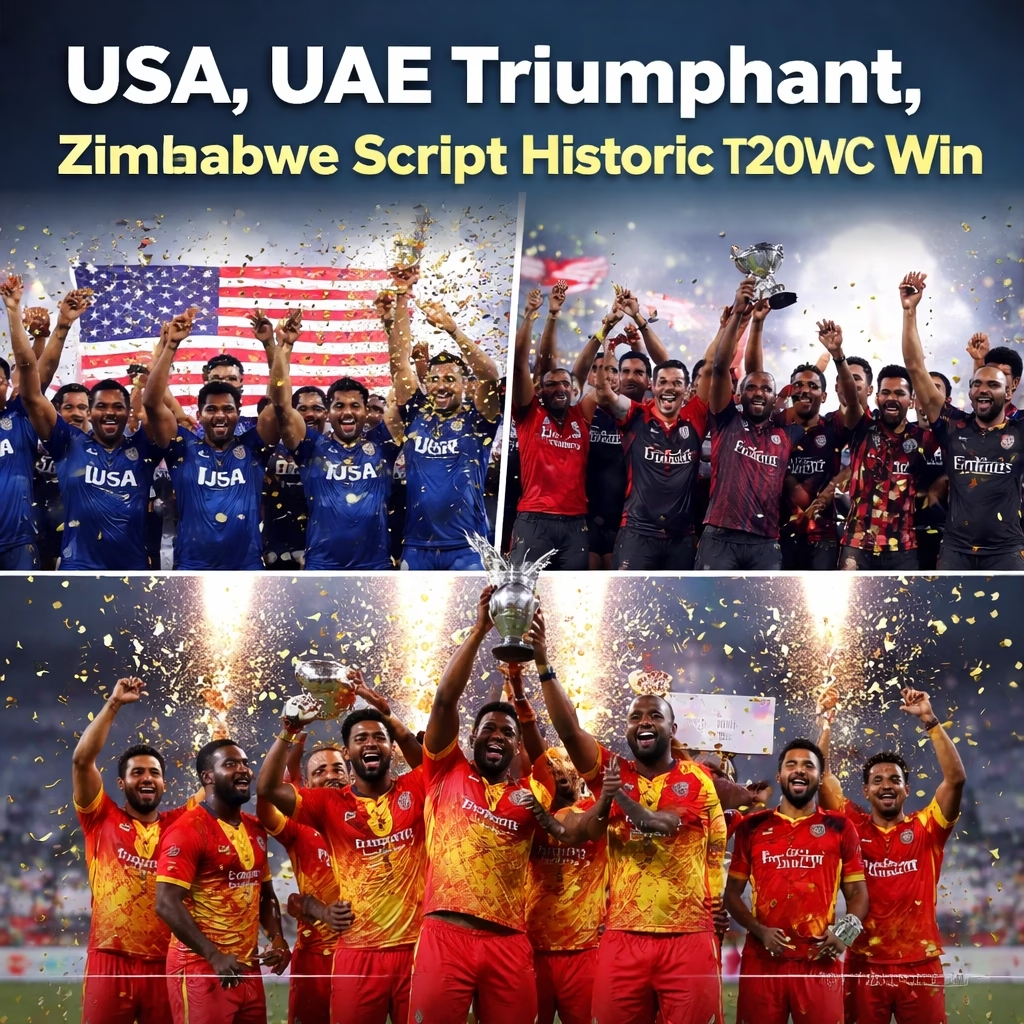
In an unprecedented turn of events at the recently concluded ICC Men's T20 World Cup 2026, co-hosted across the West Indies and the United States, cricket witnessed a dramatic shift in its global landscape. The United States of America lifted the coveted main trophy, while the United Arab Emirates triumphed in the inaugural Challenger Cup, a significant secondary competition. Adding to the spectacle, Zimbabwe scripted a historic qualification for the semi-finals, marking a new era for associate and emerging cricketing nations.
Background: A Sport’s Expanding Horizons
The T20 World Cup, since its inception in 2007, has traditionally been dominated by established cricketing powerhouses such as India, Australia, England, and the West Indies. While the tournament has always offered moments of brilliance from various teams, the 2026 edition was designed with an expanded format, featuring 24 teams, a deliberate move by the International Cricket Council (ICC) to foster global growth. This expansion provided a larger stage for associate nations, allowing them more opportunities to compete against full members and gain crucial experience. Both the USA and UAE have been steadily investing in their cricketing infrastructure, with professional leagues like Major League Cricket (MLC) in the USA and the ILT20 in the UAE attracting international talent and nurturing local players. Zimbabwe, a full member nation, has faced its share of administrative and financial challenges over the past two decades, often struggling to compete consistently at the highest level, yet possessing a rich history and passionate fan base.
Key Developments: The Rise of the Underdogs
The tournament, which ran from October 5th to November 2nd, 2026, saw early upsets that signaled a different trajectory. The USA, playing on home soil in newly developed stadiums in Dallas, New York, and Lauderhill, Florida, began their campaign with a stunning victory over Australia in the group stage. Led by captain Monank Patel and propelled by explosive batting from Aaron Jones and incisive bowling from Saurabh Netravalkar, the American squad displayed remarkable composure and tactical acumen. Their journey saw them navigate a challenging Super 8s phase, defeating South Africa and Pakistan, before a nail-biting semi-final victory against defending champions England in Bridgetown, Barbados. The final, held at the Brian Lara Cricket Academy in Trinidad, saw the USA overcome a formidable Indian side by 12 runs, sparking jubilant celebrations across the nation.
Concurrently, the UAE carved their own path to glory in the Challenger Cup, a parallel competition for teams that did not qualify for the Super 8s of the main tournament but demonstrated strong group stage performances. Under the leadership of Muhammad Waseem, the UAE team showcased their growing prowess, particularly with their spin attack and dynamic fielding. Their defining moment came in the Challenger Cup final against Scotland in St. Lucia, where they chased down a challenging target with an over to spare, securing a historic trophy and significant ICC ranking points.
Zimbabwe's narrative was perhaps the most emotionally resonant. Drawn in a group with New Zealand, Sri Lanka, and Afghanistan, few expected them to progress. However, a stunning all-round performance against New Zealand in Guyana, orchestrated by veteran Sikandar Raza and emerging fast bowler Blessing Muzarabani, secured a crucial win. They followed this with a dominant display against Afghanistan, earning them a spot in the Super 8s for the first time in their T20 World Cup history. Their fairytale run continued with a dramatic victory over Pakistan, sealing a semi-final berth against Australia. Though they ultimately fell short in a hard-fought contest in St. Vincent, their journey captivated audiences worldwide, rekindling hope for Zimbabwean cricket.
More Read

Impact: A New Global Cricket Order
The immediate impact of these triumphs is multifaceted. For the USA, winning the T20 World Cup is a monumental achievement that is expected to skyrocket cricket's popularity in a traditionally non-cricketing market. Major League Cricket is anticipated to see unprecedented growth in viewership and investment, attracting more domestic talent and potentially drawing in new fans from diverse communities. The victory legitimizes years of grassroots efforts and substantial financial backing from various stakeholders, paving the way for increased infrastructure development and youth programs across the country.
The UAE's Challenger Cup win similarly validates their consistent investment in the sport. It enhances their reputation as a competitive cricketing nation and strengthens the appeal of their domestic leagues. This success will likely lead to greater participation at junior levels and attract further international fixtures to the Emirates, solidifying their position as a hub for global cricket.
Zimbabwe's semi-final appearance has ignited a wave of national pride and renewed interest in the sport within the country. It offers a much-needed morale boost and could attract crucial sponsorship and funding, which have often been scarce. This success provides a platform to retain talented players who might otherwise seek opportunities abroad and inspires a new generation of cricketers. Globally, these outcomes send a powerful message to the ICC: expanding the game beyond its traditional strongholds is not just aspirational but achievable, fostering greater diversity and competitiveness in international cricket. The narratives of these three nations serve as a testament to the potential that lies within emerging cricketing markets.
More Read

What Next: Sustaining the Momentum
For the USA, the challenge now lies in consolidating their success. The focus will be on leveraging the World Cup victory to build sustainable domestic structures, expanding the reach of Major League Cricket, and ensuring continued investment in player development pathways. Their next major milestone will be defending their title and consistently competing against full members in bilateral series and future ICC tournaments. There will also be increased scrutiny on their progress towards potentially achieving full membership status within the ICC.
The UAE will aim to build on their Challenger Cup success by consistently performing well against higher-ranked nations. Their objective will be to regularly qualify for the main stages of ICC tournaments and to further develop their player pool through strong academy systems and a robust domestic league. Increased bilateral series with full member nations will be crucial for their continued growth and experience.
Zimbabwe faces the task of transforming this historic run into long-term stability and success. Securing more consistent international fixtures against top-tier opposition will be vital for their players' development and ranking points. Addressing administrative stability and financial sustainability will be paramount to ensure that this triumph is not a one-off but a catalyst for a sustained revival of Zimbabwean cricket. The ICC, for its part, is expected to continue its global development programs, potentially exploring further expansions of major tournaments and providing more support to emerging nations, ensuring that the spirit of the 2026 T20 World Cup continues to inspire across the cricketing world.