Dry Taps, Fury Rises: Steenhuisen Unleashes Scathing Attack on ANC Over Mpumalanga Water Disaster
Dry Taps, Fury Rises: Steenhuisen Unleashes Scathing Attack on ANC Over Mpumalanga Water Disaster
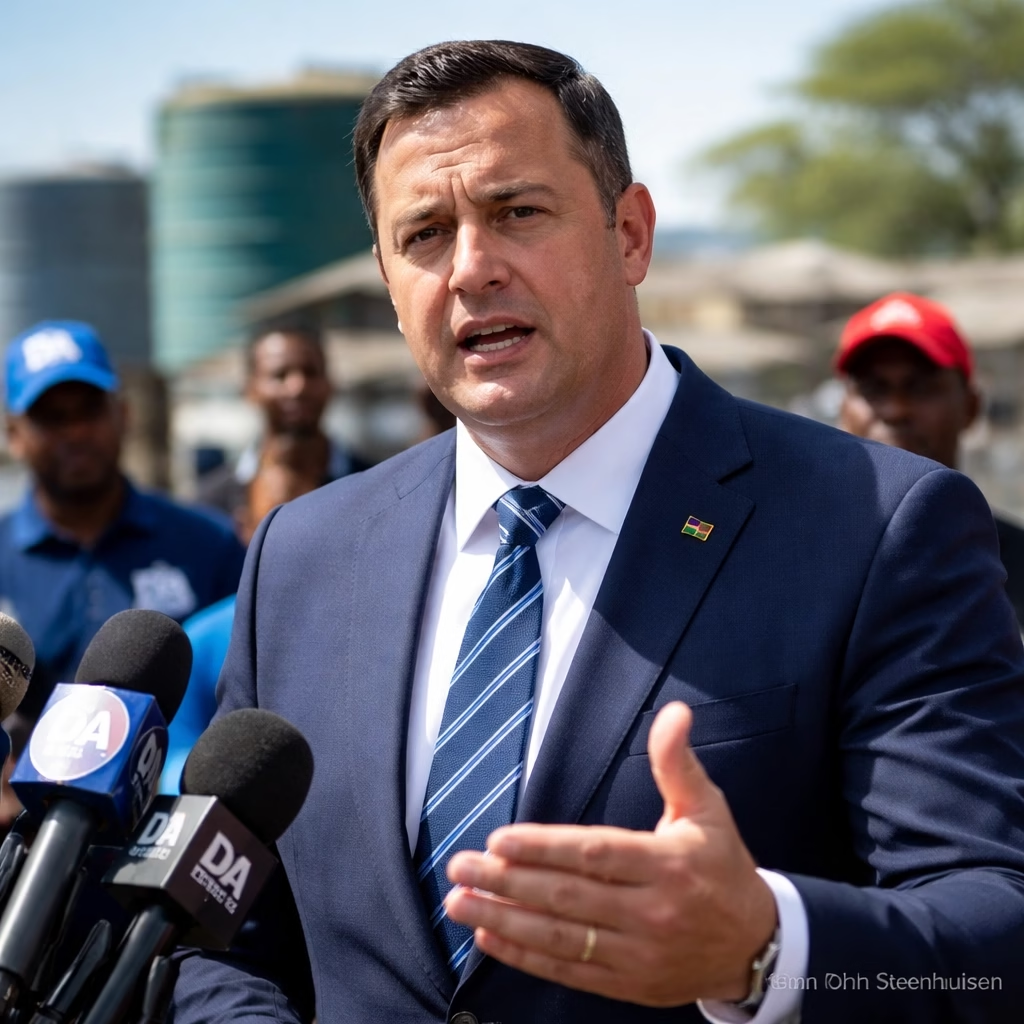
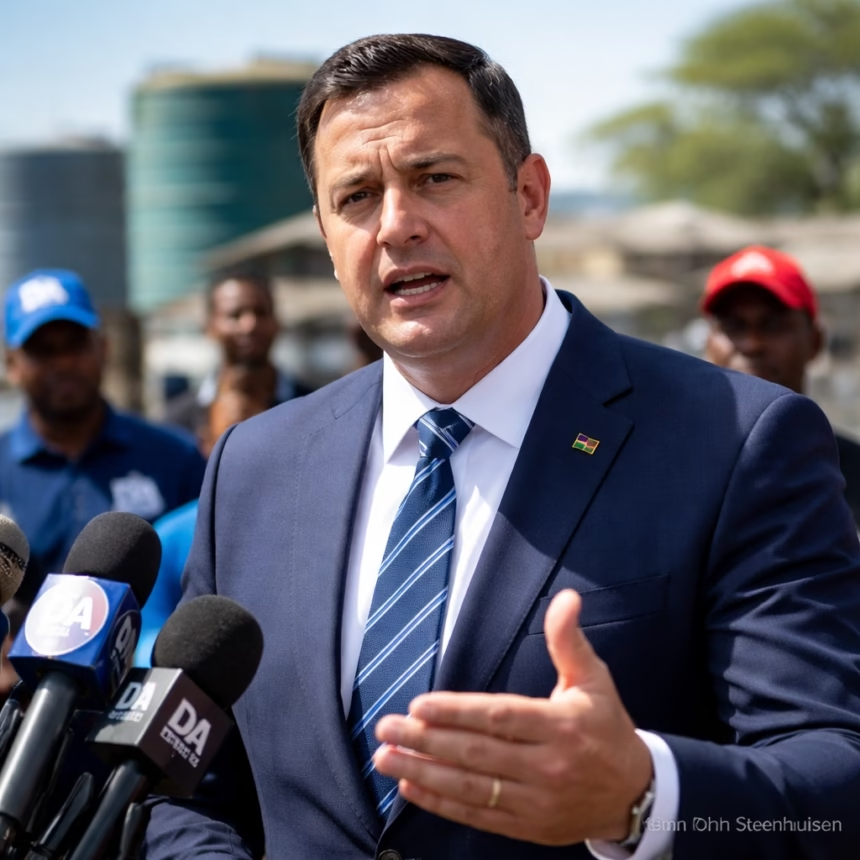
Democratic Alliance (DA) leader John Steenhuisen recently launched a fierce condemnation of the African National Congress (ANC) government, accusing it of catastrophic failures in delivering basic water services to communities across Mpumalanga province. His scathing remarks followed an oversight visit in early June 2024 to critically affected areas, including Emalahleni and parts of the Govan Mbeki Municipality, where residents have endured prolonged periods without reliable water supply. The DA leader highlighted the severe humanitarian crisis unfolding due to widespread infrastructure collapse and alleged governance deficiencies.
Background: A Decade of Dry Taps
Mpumalanga, a province rich in natural resources and a significant contributor to South Africa's energy grid, has paradoxically grappled with a deepening water crisis for over a decade. The problem is particularly acute in industrial hubs like Emalahleni (formerly Witbank) and the Govan Mbeki Local Municipality, which encompasses towns such as Secunda, Trichardt, and Kinross. Residents in these areas have routinely faced dry taps, inconsistent supply, and, at times, contaminated water for years, transforming a fundamental human right into a daily struggle.
The roots of this crisis are multifaceted, tracing back to chronic underinvestment in water infrastructure, alleged corruption within municipal procurement processes, and a severe lack of maintenance. Key water treatment plants and distribution networks, many dating back to the apartheid era, have deteriorated significantly without adequate upgrades or repairs. For instance, the Emalahleni Local Municipality, responsible for water provision, has been repeatedly flagged for financial mismanagement and poor service delivery by the Auditor-General and various oversight bodies. Similar issues plague the Nkangala District Municipality, which oversees bulk water supply to several local municipalities, including Emalahleni.
More Read

Community protests over water shortages have become a regular feature in towns like Kriel, Hendrina, and Carolina, often leading to violent clashes. Despite numerous promises from provincial and national government officials to address the crisis, tangible improvements have largely failed to materialise. Instead, residents report a worsening situation, forcing them to rely on costly private water tankers, often unregulated, or to collect water from potentially unsafe sources, posing significant health risks. The DA has consistently used these failures as a cornerstone of its critique against the ANC's governance record.
Key Developments: Steenhuisen’s On-the-Ground Assessment
John Steenhuisen's recent oversight visit to Mpumalanga in early June 2024 brought renewed national attention to the dire water situation. During his tour, the DA leader visited various communities in Emalahleni, including areas like Tasbetpark and KwaGuqa, where residents detailed their daily struggles. He witnessed firsthand the impact of dry taps, with many households resorting to storing water in buckets and containers, a practice that has become a norm rather than an exception.
Steenhuisen’s scathing remarks targeted what he described as the ANC's "catastrophic failure" and "utter contempt" for the people of Mpumalanga. He highlighted specific examples of infrastructure neglect, pointing to dilapidated pump stations, leaking pipes, and non-functional boreholes. The DA leader also drew attention to the financial aspect, questioning how significant allocations for water infrastructure projects, reportedly billions of rand over the years, had seemingly vanished without yielding improved service delivery. He cited reports suggesting widespread tender irregularities and corruption as primary culprits, diverting essential funds away from their intended purpose.

Furthermore, Steenhuisen criticised the provincial government's perceived inaction and lack of accountability. He argued that despite the escalating crisis, there has been no comprehensive, transparent plan presented by the provincial Department of Cooperative Governance and Traditional Affairs (CoGTA) or the relevant municipalities to definitively resolve the water shortages. The DA’s findings during the visit contradicted official assurances of progress, painting a grim picture of communities left to fend for themselves. This public condemnation served to amplify the voices of frustrated residents, placing renewed pressure on the provincial and national authorities to respond concretely.
Impact: A Crisis Beyond Inconvenience
The chronic water failures in Mpumalanga have unleashed a devastating impact across all facets of community life. Hundreds of thousands of residents face a daily battle for clean, reliable water, eroding their quality of life and dignity. Households are forced to dedicate significant time and resources to water procurement, often queuing for hours at communal standpipes or relying on expensive, sometimes unsafe, privately operated water tankers. This disproportionately affects low-income families, who bear the brunt of these additional costs and logistical burdens.
The health implications are particularly alarming. Reliance on alternative, often unregulated, water sources exposes communities to a heightened risk of waterborne diseases such as cholera, typhoid, and dysentery. Reports from local clinics occasionally indicate spikes in gastrointestinal illnesses, directly linked to poor water quality. Inadequate water supply severely compromises sanitation and hygiene practices, especially in informal settlements and overcrowded areas. Schools struggle to maintain basic hygiene standards, affecting student attendance and learning outcomes, while healthcare facilities find it challenging to operate effectively without a consistent water supply for sanitation and medical procedures.
Economically, the crisis stifles local development. Businesses, particularly those reliant on water for operations like car washes, laundromats, and food establishments, face significant disruptions, leading to reduced productivity, job losses, and a reluctance for new investments. Agricultural activities, crucial for rural livelihoods, also suffer from water scarcity. The overall socio-economic fabric of affected towns is weakened, contributing to a cycle of poverty and despair. The ongoing crisis has fostered a deep sense of disillusionment and anger among the populace, who feel abandoned by the government tasked with ensuring their basic needs.
What Next: Pressure Mounts for Action
The Democratic Alliance has vowed to intensify its oversight efforts and pressure on the ANC government following Steenhuisen's visit. The party plans to table urgent parliamentary questions to both the Minister of Water and Sanitation and the Minister of Cooperative Governance and Traditional Affairs, demanding concrete timelines and action plans for addressing the Mpumalanga water crisis. Furthermore, the DA indicated it would explore legal avenues, including potential court action, to compel municipalities and the provincial government to fulfil their constitutional mandate of providing basic services. Public awareness campaigns will also be ramped up to mobilise affected communities and highlight the government's failures.
In response to mounting public and political pressure, there is an expectation that the provincial government and relevant district municipalities may announce new interventions or re-commit to existing plans. This could include allocating emergency funds for infrastructure repairs, deploying technical teams, or initiating investigations into alleged corruption. However, residents and opposition parties remain sceptical, demanding tangible results rather than further promises. Upcoming local government elections will undoubtedly see water service delivery as a central campaign issue, with the DA seeking to capitalise on the ANC's perceived failures in the province.
More Read

For the communities of Mpumalanga, the immediate future holds continued uncertainty. While some temporary measures, such as increased reliance on water tankers, may be implemented, a sustainable, long-term solution requires comprehensive infrastructure overhaul, transparent financial management, and robust accountability mechanisms. Without these fundamental changes, the humanitarian crisis is poised to deepen, further eroding trust in public institutions and exacerbating the socio-economic challenges faced by the province's residents. The spotlight remains firmly on the authorities to translate rhetoric into action and finally deliver the fundamental right to water.