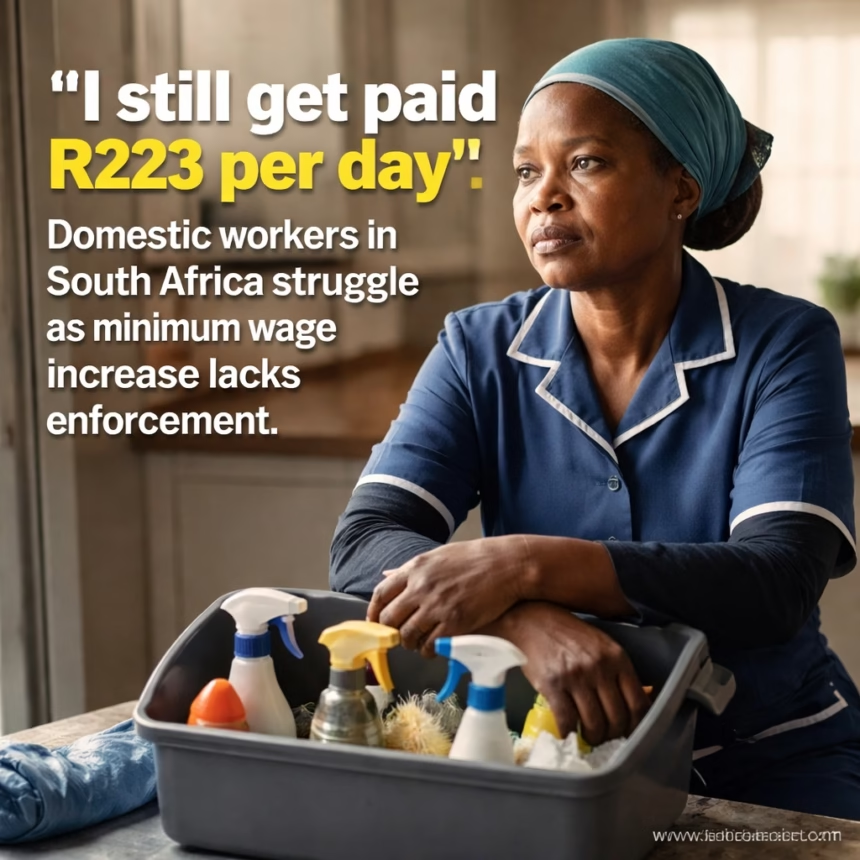
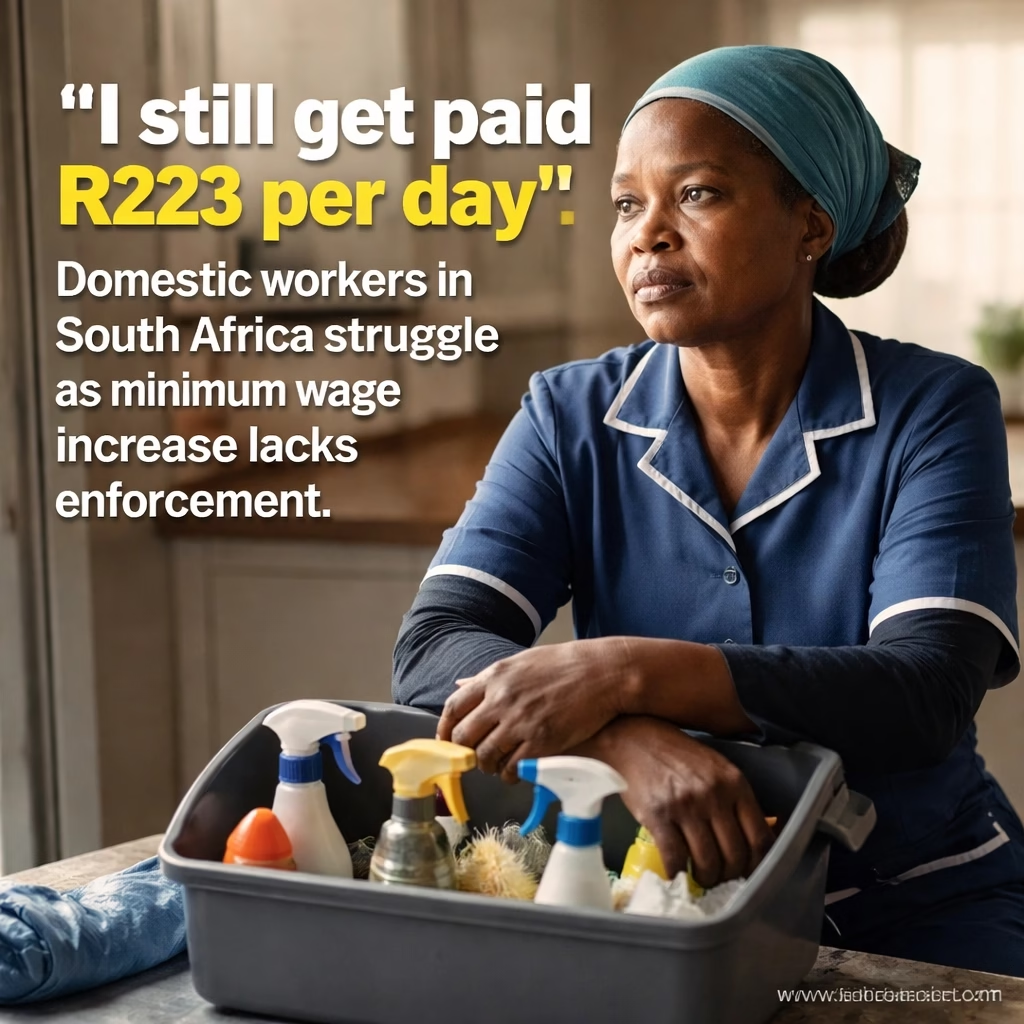
Despite recent adjustments to South Africa's national minimum wage, a significant number of domestic workers across the nation report continued underpayment, with many citing daily earnings stagnating around R223. This pervasive issue, affecting vulnerable workers in both urban and rural areas, highlights a critical enforcement gap that undermines progressive labour legislation designed to uplift the sector. The struggle underscores systemic challenges in ensuring fair compensation for a workforce crucial to many South African households.
Background: A History of Vulnerability and Progress
The domestic work sector in South Africa has historically been characterised by informality, low wages, and limited labour protections. For decades, these workers, predominantly Black African women, operated outside comprehensive legal frameworks, leaving them susceptible to exploitation and precarious employment conditions.
The Road to Parity
A significant shift began with the introduction of South Africa's first National Minimum Wage (NMW) on January 1, 2019. Initially set at R20 per hour for general workers, domestic workers were granted a lower rate of R15 per hour, approximately 75% of the general NMW. This tiered approach was a recognition of the sector's unique challenges but also drew criticism for perpetuating historical inequalities.
The government, through the Department of Employment and Labour, committed to a phased approach to achieve full parity. This commitment saw incremental increases specifically for domestic workers. By March 1, 2022, a landmark decision brought domestic workers' wages to 100% parity with the general NMW, setting their hourly rate at R23.19. This marked a crucial step towards valuing their labour equally within the broader economy and was widely celebrated by labour unions and advocacy groups. Subsequent annual adjustments have aimed to maintain this parity and account for inflation, reflecting a policy commitment to improving the living standards of this essential workforce.
Key Developments: The Latest Hike and Persistent Discrepancies
The most recent adjustment to the National Minimum Wage took effect on March 1, 2024, raising the hourly rate to R27.58 for all workers, including domestic employees. For a standard eight-hour workday, this translates to a minimum daily earning of R220.64. This increase was intended to provide much-needed relief to workers grappling with the rising cost of living in South Africa.
More Read

The Enforcement Gap
However, the reality on the ground often diverges sharply from legislative intent. Many domestic workers report their daily earnings stagnating around R223, a figure that, for many, fails to reflect the mandated increases or adequately compensate for their actual working hours, especially when exceeding the standard eight-hour day. This stagnation indicates a severe lack of enforcement, leaving workers deprived of their legally entitled income.
The Department of Employment and Labour is tasked with monitoring and enforcing NMW compliance. Its inspectorate is mandated to conduct workplace inspections, identify non-compliant employers, and facilitate the recovery of underpaid wages. The Commission for Conciliation, Mediation and Arbitration (CCMA) also plays a vital role, offering a platform for dispute resolution between employees and employers regarding wage discrepancies. Despite these mechanisms, the informal nature of domestic work, often conducted within private homes, poses significant challenges to effective oversight. Many employers remain unregistered with the Unemployment Insurance Fund (UIF) and fail to provide written employment contracts, making it difficult to track and enforce compliance with the Basic Conditions of Employment Act (BCEA). Furthermore, fear of dismissal often prevents domestic workers from reporting violations, perpetuating a cycle of underpayment.
Impact: A Vulnerable Workforce on the Brink
The failure to enforce the national minimum wage has profound and far-reaching consequences for South Africa's approximately 807,000 domestic workers and their dependents.
More Read

A Vulnerable Workforce
Domestic workers are overwhelmingly women, many of whom are single mothers and primary breadwinners for their families. Their meagre and often stagnant wages directly impact their ability to provide basic necessities such as food, shelter, healthcare, and education for their children. Persistent underpayment pushes these households deeper into poverty, exacerbating existing socio-economic inequalities. Food insecurity becomes a daily reality, and access to essential services remains out of reach for many.
Beyond the immediate financial strain, the psychological impact is significant. Workers often report feelings of exploitation, indignity, and hopelessness. The constant struggle to make ends meet, coupled with the knowledge that their legal rights are being violated, contributes to immense stress and diminished well-being. The power imbalance inherent in the employer-employee relationship within private homes often leaves workers feeling disempowered and without recourse, further entrenching their vulnerability. This struggle is not isolated to specific regions; reports of non-compliance emanate from bustling metropolitan areas like Johannesburg and Cape Town, as well as smaller towns and rural communities across all nine provinces.
What Next: Towards Greater Accountability and Enforcement
Addressing the persistent underpayment of domestic workers requires a multi-faceted approach involving government, civil society, and increased employer accountability.
Advocacy and Accountability
The Department of Employment and Labour has committed to intensifying its inspection efforts, particularly in sectors known for high non-compliance, including domestic work. These efforts must be coupled with robust awareness campaigns to educate both employers and employees about their rights and obligations under the NMW legislation and the BCEA. Such campaigns should clarify the latest wage rates, the importance of written contracts, and the mechanisms available for reporting violations without fear of reprisal.
Labour unions, such as the South African Domestic Service and Allied Workers Union (SADSAWU), continue to play a crucial role in advocating for domestic workers' rights, providing support, and assisting with dispute resolution through the CCMA. Their ongoing efforts are vital in empowering workers to demand fair wages and improved working conditions.

Ultimately, greater employer accountability is paramount. Employers are legally obligated to adhere to the NMW, register their employees for UIF, and provide written contracts outlining terms of employment. Increased public awareness and social pressure on employers to comply are essential. Future legislative reviews and enforcement strategies must continuously adapt to the unique challenges of the domestic work sector, ensuring that policy translates into tangible improvements in the daily lives of these indispensable workers. The goal remains to ensure that every domestic worker in South Africa receives fair pay for a fair day's work, moving beyond the current reality of stagnant wages and unenforced increases.