Kano's Iconic Singer Market Engulfed: Billions Lost in Devastating Inferno
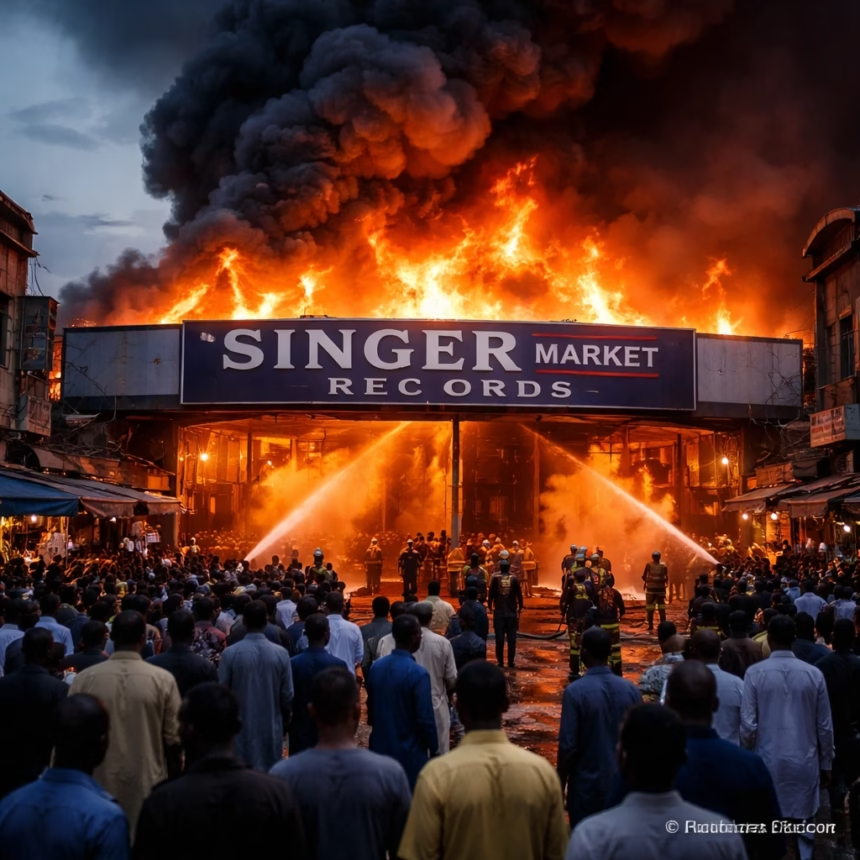
A massive fire outbreak has once again ravaged the bustling Singer Market in Kano, Nigeria, on Thursday, June 20, 2024. The inferno, which ignited in the early hours, swiftly consumed vast sections of the commercial hub, leaving a trail of destruction estimated to be worth billions of naira.
The incident marks another tragic chapter for traders in the ancient city, prompting immediate response from emergency services and renewed calls for enhanced safety measures across Kano's vital markets.
Background: A History of Flames and Commerce
Singer Market, established in the late 1970s, stands as one of West Africa's largest and most significant commercial centers. Renowned for its trade in textiles, foodstuff, electronics, and various commodities, it serves as a crucial economic artery for Kano State and the wider region, including neighboring countries like Niger and Chad.
The market has, however, been a recurring victim of devastating fires. Notable incidents include the extensive blaze of February 2016, which destroyed goods estimated at over N3 billion, and another significant outbreak in October 2020 that affected the textile section.
Following these previous disasters, government administrations and market associations had pledged to implement robust fire prevention strategies, including the installation of modern fire hydrants, wider access routes for emergency vehicles, and regular safety drills. Many traders, however, often cite a lack of consistent enforcement and maintenance of these measures.

The recurring nature of these fires has led to significant economic setbacks for thousands of traders, many of whom operate on credit or personal savings, often without adequate insurance coverage.
Key Developments: The Night of Devastation
The latest fire was first reported around 1: 30 AM on Thursday, June 20, 2024, originating from the highly congested textile and provisions section of the market. Eyewitnesses reported seeing smoke billowing from Block B, a densely packed area known for its high-value fabrics and imported goods.
Mr. Aminu Idris, a night watchman at a nearby plaza, described the rapid escalation: "The fire started small, but within minutes, it spread like wildfire. The wind was strong, and there were so many combustible materials. We tried to put it out with buckets, but it was too much."

The Kano State Fire Service was alerted promptly, deploying multiple fire tenders and over 60 personnel to the scene. Reinforcements from the Federal Fire Service and private industrial fire brigades, including those from Dangote Group, also joined the efforts to contain the inferno.
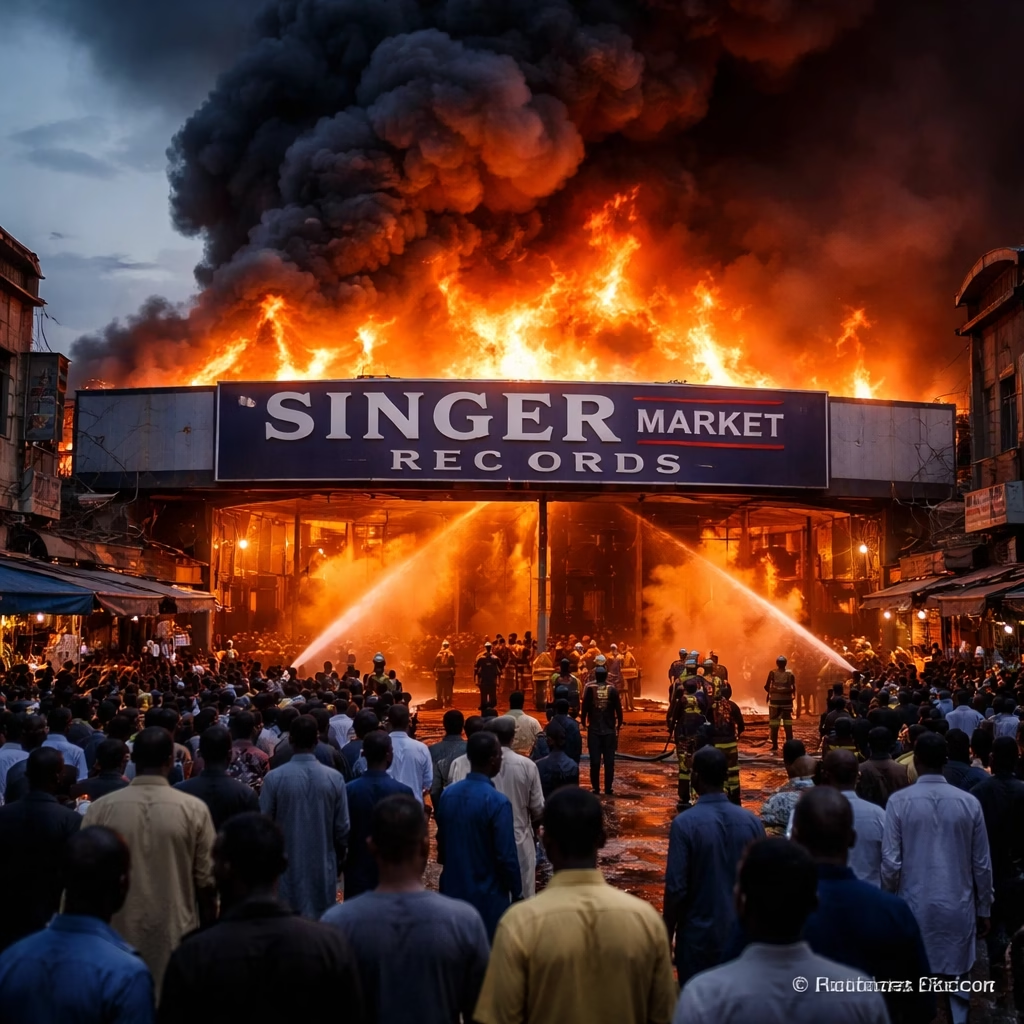
Despite the swift response, the narrow access roads within the market posed significant challenges, hindering the rapid deployment of equipment. Firefighters battled the blaze for over six hours before bringing it under control by 8:00 AM.
Sections Ravaged
Preliminary assessments indicate that Block B (textiles), Block D (electronics), and parts of Section E (provisions and household goods) bore the brunt of the destruction. Hundreds of shops, warehouses, and stalls were completely razed.
Mr. Kabiru Musa, Chairman of the Singer Market Traders Association, expressed his anguish: “This is a catastrophe. We are talking about hundreds of shops, thousands of livelihoods. Many traders had just restocked for the upcoming festive season. Everything is gone.”
Cause Under Investigation
While the exact cause remains under investigation, initial reports from the Kano State Fire Service suggest an electrical fault as a probable trigger. Mr. Hassan Umar, Director of Operations for the Fire Service, stated, “Our preliminary findings point towards a faulty electrical connection in one of the shops. However, a full forensic investigation will be conducted to ascertain the precise cause.”
More Read

The sheer density of electrical wiring, often illegally tapped or overloaded, coupled with the storage of highly flammable materials, frequently contributes to such outbreaks in Nigerian markets.
Impact: Billions Lost, Livelihoods Shattered
The economic ramifications of this latest fire are profound and far-reaching. Initial estimates from the Kano State Ministry of Commerce and the Market Traders Association place the total value of destroyed goods and property at well over N7 billion.
This figure encompasses a wide array of high-value items, including imported lace materials, Ankara fabrics, sophisticated electronics, and bulk food items like rice, sugar, and flour. Many traders had invested their life savings, or taken out substantial loans, to acquire their inventory.
Economic Devastation
Over 4,000 traders and their direct employees are immediately affected by the loss of their businesses. This translates to an estimated 20,000 dependents facing severe economic hardship in the short to medium term. The ripple effect extends to transporters, suppliers, artisans, and casual laborers who rely on the market’s daily activities.
Mr. Garba Ali, a textile merchant who lost his entire shop, lamented, “I had goods worth over N50 million. All gone. How do I start again? My children’s school fees, our daily food, everything depends on this shop.”
Supply Chain Disruptions
Singer Market’s role as a regional distribution hub means the fire will inevitably lead to supply chain disruptions. Merchants from neighboring states and even countries often source their goods from Kano. The sudden loss of inventory will likely cause price increases for affected commodities across the region.
Dr. Aisha Mahmud, an economist at Bayero University Kano, commented, “This incident will undoubtedly have a noticeable impact on local inflation and market stability, especially for consumer goods. The government must act swiftly to mitigate these effects.”
Social and Psychological Toll
Beyond the financial losses, the fire inflicts a significant social and psychological toll on the affected community. The sense of despair and helplessness among traders is palpable. Many have witnessed their life’s work reduced to ashes overnight, leading to emotional distress and uncertainty about the future.
Community leaders are calling for psychological support services in addition to financial aid for the victims.
What Next: Investigation, Relief, and Rebuilding
In response to the disaster, the Kano State Government has moved swiftly to establish a high-powered committee to investigate the fire's cause and assess the extent of the damage. Governor Abba Kabir Yusuf, who visited the scene, expressed his condolences and vowed government support.
Official Response and Investigation
The Governor announced the formation of a seven-member investigative panel, headed by Engr. Bashir Gidado, a retired Director of Works. The committee has been tasked with submitting its findings and recommendations within two weeks, focusing on prevention strategies for future occurrences.
“We will not stand by and watch our economic pillars crumble,” Governor Yusuf stated during his visit. “This committee will ensure a thorough investigation, and we will implement its recommendations to safeguard our markets.”
Relief Efforts and Rebuilding Plans
The state government has also pledged immediate relief assistance to the affected traders. Details of the relief package are expected to be announced next week, potentially including financial grants, temporary trading spaces, and access to interest-free loans.
The National Emergency Management Agency (NEMA) and the State Emergency Management Agency (SEMA) are coordinating efforts to provide humanitarian aid, including food items and temporary shelters for those whose homes were also affected by the market’s proximity to residential areas.
Discussions are also underway regarding the long-term rebuilding of the affected market sections. Calls for a modernized, fire-resistant market structure are gaining momentum, with proposals for wider internal roads, dedicated fire service posts, and advanced sprinkler systems.
Calls for Enhanced Safety Measures
Market associations and civil society groups are reiterating their demands for a comprehensive overhaul of market infrastructure and stricter enforcement of safety regulations across all major markets in Kano. This includes regular electrical inspections, prohibition of illegal connections, and mandatory fire safety training for traders.
The hope remains that this latest tragedy will serve as a definitive catalyst for lasting change, ensuring that Kano’s vibrant commercial spirit can thrive without the constant threat of devastating infernos.