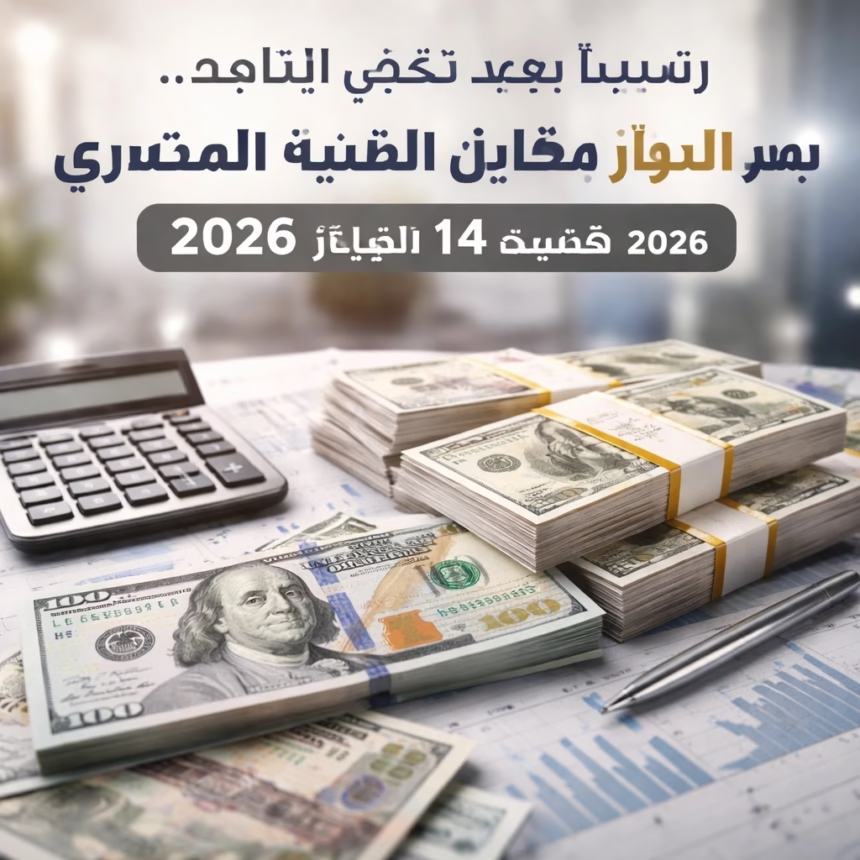
Dollar Surge? Egypt's Currency Reacts to Interest Rate Shift
Cairo, Egypt – The Egyptian pound experienced notable fluctuations today, February 14, 2026, following the Central Bank of Egypt's (CBE) decision to reduce key interest rates. The move, announced earlier this week, has sparked debate among economists and market participants regarding its long-term implications for the nation's economy.
Background: A Period of Economic Adjustment
Egypt has been navigating a period of significant economic adjustments since 2023. High inflation, coupled with external debt pressures, prompted the CBE to implement a series of monetary policy changes. In late 2024, the CBE undertook a substantial devaluation of the Egyptian pound, aiming to attract foreign investment and curb speculative currency movements. This devaluation, initially met with resistance, aimed to improve Egypt’s trade balance and boost export competitiveness.
Throughout 2025, the CBE maintained a relatively tight monetary policy, with interest rates remaining elevated to combat inflation. This approach, while contributing to some success in controlling price increases, also dampened economic growth. The recent interest rate cut is seen as a deliberate attempt to stimulate investment and support domestic industries.
Key Developments: The Rate Cut and Immediate Aftermath
The CBE announced a 0.75% reduction in the benchmark interest rate on February 10, 2026. This brought the rate down to 17.75% per annum. The decision came as a surprise to some analysts, who had predicted a smaller adjustment. Immediately following the announcement, the Egyptian pound showed mixed performance against the US dollar.
More Read

Initially, the pound experienced a modest strengthening, reaching a low of 45.80 EGP per dollar in early trading. However, by midday, the dollar had regained some ground, settling at approximately 46.15 EGP. Market volatility remained elevated throughout the day, with traders closely monitoring investor sentiment and potential government interventions.
The CBE has stated that the rate cut is part of a gradual normalization of monetary policy, designed to support sustainable economic growth. Governor of the CBE, Dr. Khaled Omar, emphasized the importance of maintaining macroeconomic stability while fostering a conducive environment for investment. He stated in a press conference on February 11th that further rate adjustments could be considered depending on inflation trends.
More Read

Impact: Businesses, Consumers, and Investors
The interest rate cut has a wide-ranging impact across various sectors of the Egyptian economy. Businesses, particularly those reliant on borrowing, stand to benefit from lower financing costs. This could incentivize investment in new projects and expansion of existing operations. However, concerns remain about the potential for increased inflation if the rate cut leads to excessive money supply growth.
Consumers may also see some relief from lower loan interest rates, although the impact on everyday prices is likely to be less immediate. The devaluation of the pound in previous years has already contributed to higher import costs, which are often passed on to consumers. The government is actively working to mitigate these effects through targeted subsidies and social safety nets.
Foreign investors are closely watching the developments. A stable and predictable economic environment is crucial for attracting foreign capital. The CBE’s commitment to maintaining macroeconomic stability will be a key factor in determining the future flow of investment into Egypt. Analysts suggest the rate cut signals increased confidence in the country's economic outlook, though caution remains due to global economic uncertainties.
Impact on Small and Medium Enterprises (SMEs)
SMEs, which constitute a significant portion of the Egyptian economy, are expected to benefit from reduced borrowing costs. This could provide a much-needed boost to their growth and competitiveness. However, access to credit remains a challenge for many SMEs, and the impact of the rate cut will depend on the availability of affordable financing options.
What Next: Future Outlook and CBE Strategy
The CBE has signaled a cautious approach to future monetary policy decisions. The central bank will be closely monitoring inflation data, exchange rate movements, and global economic conditions before making further adjustments to interest rates. The next scheduled monetary policy committee meeting is slated for April 15, 2026. Analysts anticipate that the CBE will adopt a data-dependent approach, responding to developments in the economic landscape.
The government is also focusing on fiscal consolidation measures to support macroeconomic stability. These measures include reducing government spending and increasing revenue collection. The success of these efforts will be crucial in ensuring the long-term sustainability of Egypt’s economy. The government plans to present its revised budget to parliament by March 1st.

The Egyptian pound's future trajectory will depend on a complex interplay of factors, including global oil prices, foreign investment flows, and the effectiveness of government policies. The CBE’s commitment to maintaining a stable exchange rate and managing inflation will be key in navigating the challenges ahead.