Nuclear Brinkmanship Softens? Iran Signals Flexibility in Deal Negotiations
Nuclear Brinkmanship Softens? Iran Signals Flexibility in Deal Negotiations
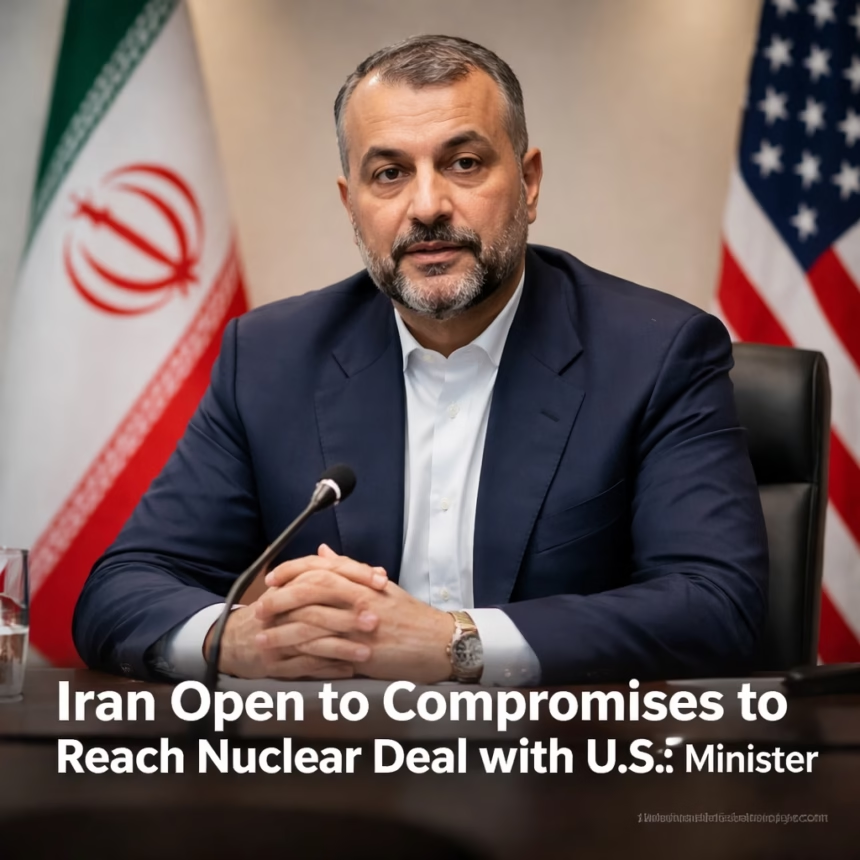
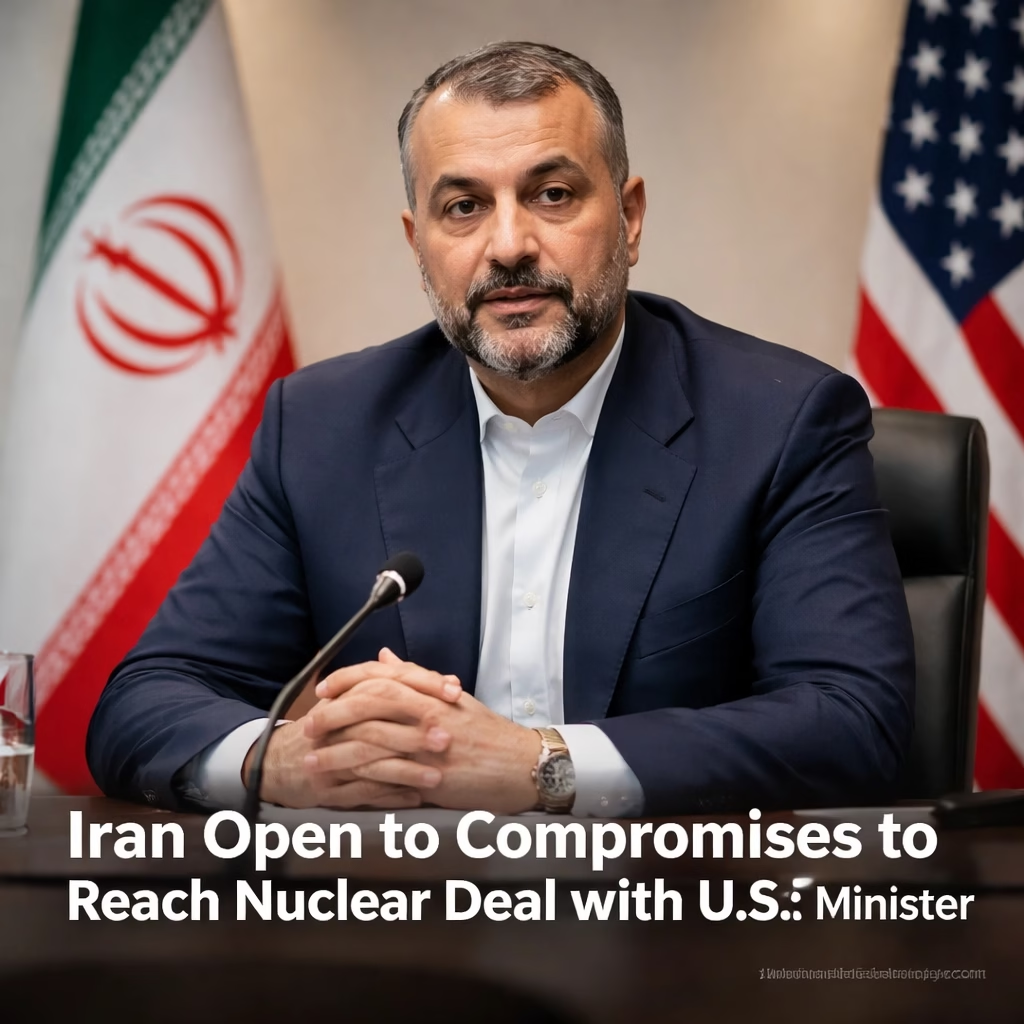
Tehran, Iran – Iran's Foreign Minister, Hossein Amir-Abdollahian, recently indicated the Islamic Republic's readiness for compromises with the United States to revive the 2015 nuclear deal. These statements, made in early October 2023, offer a cautious glimmer of hope for a diplomatic resolution to a protracted international standoff.
Background to a Decade of Brinkmanship
The core of the current nuclear impasse is the Joint Comprehensive Plan of Action (JCPOA), a landmark agreement signed in July 2015. This accord involved Iran and the P5+1 group of world powers: China, France, Germany, Russia, the United Kingdom, and the United States. Under its provisions, Iran committed to significant restrictions on its nuclear program, including limits on uranium enrichment levels, reductions in its enriched uranium stockpile, and redesign of its Arak heavy water reactor. These measures were subject to stringent international monitoring by the International Atomic Energy Agency (IAEA). In exchange, Iran received substantial relief from international sanctions.
However, the JCPOA's future became uncertain in May 2018 when then-U.S. President Donald Trump unilaterally withdrew the United States from the agreement. Citing perceived flaws, the Trump administration reimposed a wide array of debilitating sanctions on Iran. Tehran responded by progressively scaling back its own commitments starting in 2019. Iran began to enrich uranium beyond the 3.67% purity limit, accumulated larger stockpiles, and deployed advanced centrifuges, steadily advancing its nuclear capabilities closer to weapons-grade levels and triggering global alarm.
More Read

The Stalled Vienna Talks
Upon assuming office in January 2021, U.S. President Joe Biden expressed a willingness to return to the JCPOA, contingent on Iran’s full compliance with its original obligations. This stance initiated a series of indirect talks in Vienna, Austria, mediated by European Union diplomats. These negotiations, which commenced in April 2021, aimed to orchestrate a mutual return to compliance. Despite multiple rounds, the talks repeatedly stalled by mid-2022. Key sticking points included the scope and sequencing of sanctions relief, the duration of the deal’s restrictions, and Iran’s demand for guarantees against any future U.S. withdrawal from the accord.
Another significant obstacle has been the IAEA’s ongoing investigations into traces of uranium found at several undeclared Iranian sites. Tehran has been slow to provide satisfactory explanations to the nuclear watchdog regarding these findings. The absence of direct communication between Washington and Tehran further complicated diplomatic efforts, fostering an environment of deep mistrust and suspicion that has characterized the nuclear dossier for years.
Key Developments: A Glimmer of Flexibility
Foreign Minister Amir-Abdollahian’s recent statements mark a notable departure from Iran’s previously firm public negotiating position. Speaking to state media, he reportedly affirmed Iran’s readiness to “accept compromises” to achieve a deal, underscoring that “we have never moved away from diplomacy and negotiation.” While specific details of these potential compromises remain undisclosed, his remarks suggest a newfound flexibility on issues that previously appeared intractable.
More Read

The Prisoner Exchange and De-escalation
This diplomatic overture follows a significant, albeit limited, instance of de-escalation between the two nations. In August 2023, the U.S. and Iran successfully conducted a prisoner exchange. Five American citizens were released from Iranian detention in exchange for five Iranians held in the U.S. Additionally, approximately $6 billion in Iranian oil revenues, previously frozen in South Korea, were unfrozen for humanitarian use. This humanitarian gesture, facilitated by Qatar, demonstrated that despite profound disagreements, channels for practical cooperation and trust-building measures can still exist, potentially setting a precedent for broader diplomatic engagements.
The unfreezing of funds, specifically designated for humanitarian purposes, was a critical component of the exchange, providing Iran with some economic relief while adhering to U.S. sanctions policy. This transaction, though distinct from nuclear negotiations, has been interpreted by some analysts as creating a more conducive atmosphere for broader talks, signaling a willingness from both sides to engage in pragmatic exchanges.
International Reactions and IAEA Concerns
The U.S. State Department has responded cautiously to Amir-Abdollahian’s statements, reiterating that the “door for diplomacy remains open” but emphasizing that Iran must demonstrate its seriousness through concrete, verifiable actions. European allies, particularly France, Germany, and the UK, who have consistently advocated for the JCPOA’s restoration, have welcomed any indication of Iranian flexibility, urging all parties to seize this moment for renewed negotiations.
Concurrently, the International Atomic Energy Agency continues to report on Iran’s accelerating nuclear activities. Recent IAEA reports indicate that Iran’s uranium enrichment levels have reached 60% purity, a level technically indistinguishable from the 90% required for weapons-grade material. Furthermore, Iran’s stockpile of highly enriched uranium continues to expand, significantly reducing its “breakout time”—the theoretical period needed to produce enough fissile material for a nuclear weapon. These technical advancements underscore the urgency of a diplomatic resolution.
Potential Impact of a Revived Deal
A successful revival of the JCPOA or a new, mutually acceptable nuclear accord would have far-reaching implications across various critical domains.
Economic Repercussions
For Iran, the most immediate and tangible benefit would be the lifting of crippling international sanctions. This would enable Iran to significantly increase its oil exports, potentially influencing global oil prices and injecting much-needed revenue into its struggling economy. Sanctions relief could also facilitate foreign investment, improve trade relations, and alleviate the severe economic pressures faced by ordinary Iranians, potentially contributing to domestic stability.

Regional Stability and Non-Proliferation
A deal would likely contribute to reducing regional tensions, particularly with adversaries like Israel and Saudi Arabia, who view Iran’s nuclear ambitions with deep suspicion. While these regional powers might remain wary, a verified halt to Iran’s nuclear weaponization capabilities would represent a significant step towards de-escalation. From a global non-proliferation perspective, a revived agreement would reinforce the international non-proliferation regime, helping to prevent a dangerous nuclear arms race in the Middle East and upholding the integrity of the Nuclear Non-Proliferation Treaty (NPT).
U.S. Foreign Policy and Global Diplomacy
For the Biden administration, a successful return to a nuclear deal would represent a significant diplomatic achievement, showcasing the efficacy of multilateralism and diplomacy over unilateral pressure. It could also free up diplomatic resources to address other pressing global challenges. Conversely, a failure to secure a deal, especially after Iran’s latest overture, could lead to further escalation, potentially pushing the region closer to conflict and further entrenching the current stalemate.
What Next: Navigating the Path Forward
The path to a renewed nuclear deal remains fraught with challenges, but the recent statements from Tehran offer a potential opening. Several key milestones and considerations will shape the trajectory of future negotiations.
Resumption of Direct or Indirect Talks
The immediate next step would involve a clearer articulation of Iran’s specific compromise proposals and a positive, reciprocal response from the U.S. This could pave the way for a resumption of indirect talks, possibly in mediating countries such as Oman or Qatar, which have previously played facilitating roles. The ultimate goal would be to move towards direct negotiations, which many analysts believe are essential for resolving complex outstanding issues and building genuine trust.
Crucially, any renewed talks would need to address the core disagreements that stalled previous efforts: the scope and sequencing of sanctions relief, the duration of nuclear restrictions, and the critical question of guarantees against future U.S. withdrawal. Iran has also consistently demanded the closure of the IAEA’s investigations into undeclared sites, a demand that the U.S. and European powers have resisted, insisting on full transparency and compliance with the nuclear watchdog’s mandates.
The Role of the IAEA
The International Atomic Energy Agency will continue to play a critical role in monitoring Iran’s nuclear activities and verifying any future commitments. Addressing the IAEA’s outstanding questions about past nuclear material traces will be a significant confidence-building measure. Enhanced transparency and access for IAEA inspectors would be paramount for any new agreement to gain international credibility and ensure its long-term viability.
Domestic Politics and Geopolitical Factors
Both Washington and Tehran face internal political complexities that could influence the negotiations. In Iran, Supreme Leader Ayatollah Ali Khamenei holds the final say on all major policy decisions, and the influence of hardline factions remains strong. In the U.S., any deal with Iran would face intense scrutiny and potential opposition from Congress, especially in the run-up to the 2024 presidential election. External geopolitical events, particularly regional conflicts or renewed tensions, could also derail diplomatic efforts or alter negotiating positions.
While a quick resolution appears unlikely, the latest signals from Tehran indicate a potential shift in strategy, offering a fragile hope for diplomacy. The coming weeks and months will reveal whether these indications of flexibility translate into concrete steps towards a lasting and verifiable nuclear agreement.