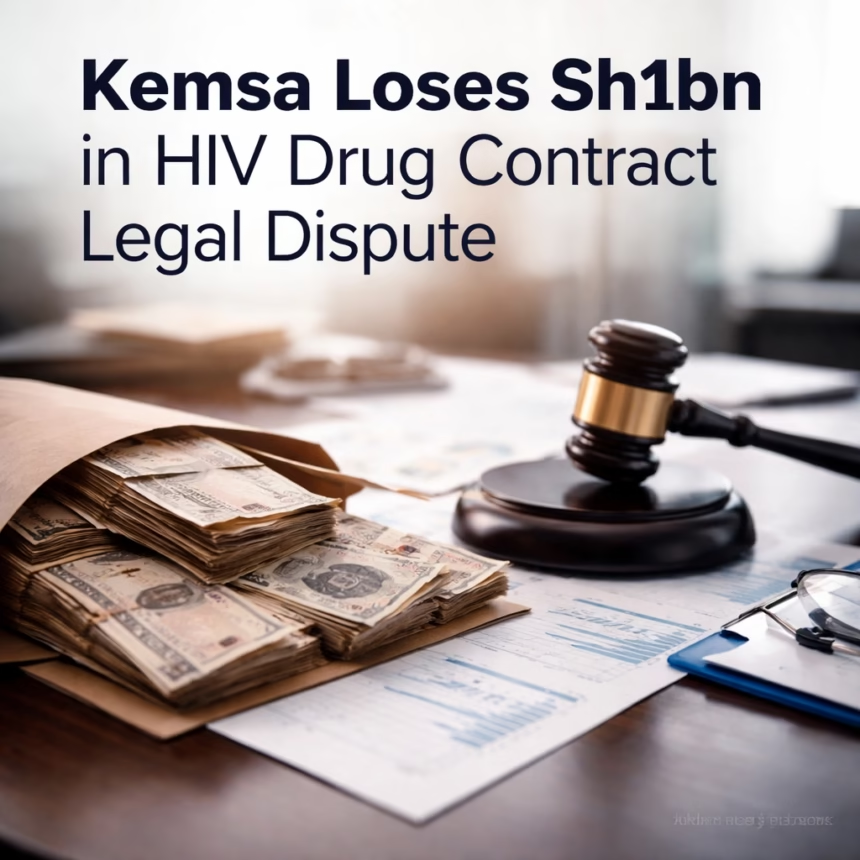
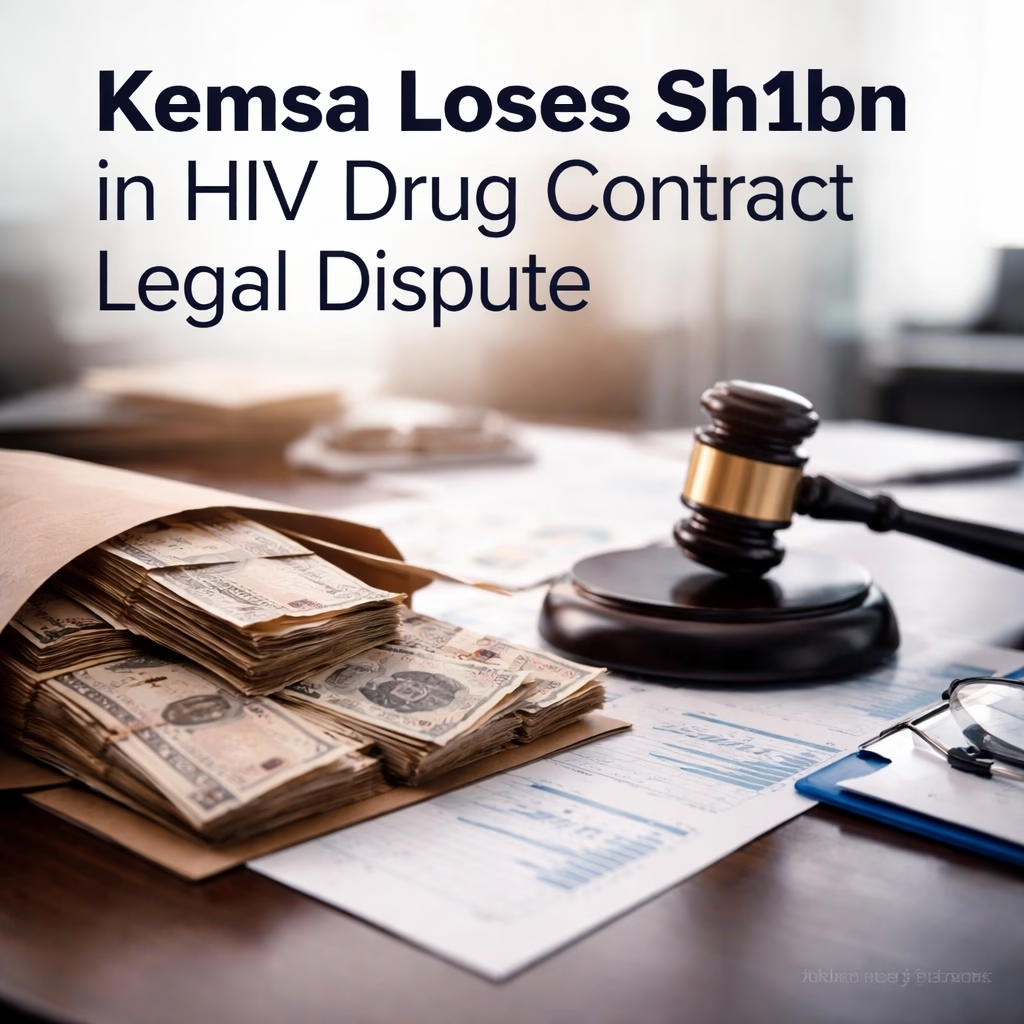
The Kenya Medical Supplies Authority (KEMSA) faces a monumental financial blow following a recent court ruling that orders it to pay approximately Sh1 billion in damages. This significant judgment, delivered by the High Court in Nairobi on October 26, 2023, stems from a protracted legal dispute over a crucial contract for the supply of Anti-Retroviral (ARV) drugs, essential for managing HIV/AIDS in the country.
Background to the Billion-Shilling Battle
The Kenya Medical Supplies Authority (KEMSA) is the central government agency tasked with procuring, warehousing, and distributing medical commodities to public health facilities across Kenya. Its mandate is critical, particularly in the provision of life-saving drugs for chronic conditions like HIV/AIDS, tuberculosis, and malaria. The smooth functioning of KEMSA is paramount to the nation's public health infrastructure.
In early 2018, KEMSA initiated a competitive tender process for the procurement of a substantial quantity of Anti-Retroviral (ARV) drugs, specifically tenofovir, lamivudine, and dolutegravir (TLD) – a first-line regimen widely recommended by the World Health Organization. This tender, designated KEMSA/ARV/003/2018-2019, aimed to secure a two-year supply to ensure uninterrupted access for over 1.2 million Kenyans living with HIV. Several local and international pharmaceutical companies submitted bids, vying for the lucrative contract valued at an estimated Sh7 billion over its duration.
Among the bidders was AfyaMed Pharmaceuticals Ltd., a well-established Kenyan-based pharmaceutical distributor with a track record of supplying medical commodities to both public and private sectors. AfyaMed Pharmaceuticals Ltd. emerged as the lowest evaluated bidder for a significant portion of the ARV supply, specifically lot 2 covering TLD 50mg tablets, after a rigorous technical and financial evaluation process conducted by KEMSA's tender committee. A letter of intent was reportedly issued to AfyaMed Pharmaceuticals Ltd. on May 15, 2019, signaling their success in the tender.
However, the procurement process took an unexpected turn in August 2019. KEMSA, citing what it described as "unforeseen budgetary reallocations" and "changes in donor funding frameworks," controversially cancelled the entire tender process, including the specific award to AfyaMed Pharmaceuticals Ltd. This decision was communicated through a public notice and individual letters to all bidders, sparking immediate concern within the pharmaceutical industry and among public health advocates. AfyaMed Pharmaceuticals Ltd. strongly contested this cancellation, arguing that KEMSA had already committed to the award and that the reasons provided were insufficient and lacked transparency.
More Read

The Genesis of the Legal Challenge
Following the cancellation, AfyaMed Pharmaceuticals Ltd. engaged legal counsel, asserting that KEMSA's actions constituted a breach of contract and legitimate expectation. They argued that having been declared the successful bidder and issued with a letter of intent, they had incurred significant costs in preparing for the contract, including securing credit lines, reserving manufacturing slots with their overseas partners, and planning logistics. The company sought redress, initially through internal appeals within KEMSA and later through the Public Procurement Administrative Review Board (PPARB).
The PPARB, after reviewing the submissions, sided with KEMSA, upholding the cancellation on technical grounds related to the procurement laws, stating that KEMSA had the right to cancel a tender before a formal contract was signed. Dissatisfied with this outcome, AfyaMed Pharmaceuticals Ltd. escalated the matter to the High Court in Nairobi in early 2020, seeking judicial review of the PPARB's decision and substantial damages for loss of profit and incurred expenses.
Key Developments in the Courtroom
The legal battle has spanned over three years, marked by numerous court appearances, filing of affidavits, and extensive legal arguments from both sides. AfyaMed Pharmaceuticals Ltd., represented by a prominent legal firm, presented evidence detailing their financial commitments and the projected profits from the cancelled contract. They emphasized the detrimental impact of KEMSA's abrupt decision on their business operations and reputation within the industry.
More Read

KEMSA, on its part, maintained that its actions were within the confines of procurement law and were necessitated by evolving financial circumstances and public interest considerations. They argued that no formal contract had been executed, and therefore, no binding obligation existed to the plaintiff. They also highlighted the complexities of donor-funded projects and the need for flexibility in public procurement.
The High Court’s Landmark Ruling
On October 26, 2023, Justice Serah Mwangi delivered the much-anticipated judgment at the Milimani Law Courts in Nairobi. In a comprehensive ruling, the High Court found KEMSA liable for breach of legitimate expectation and for failing to adhere to principles of fairness and transparency in public procurement.
Justice Mwangi's judgment highlighted that while KEMSA, as a public entity, has discretion in procurement, this discretion must be exercised reasonably and in good faith. The court noted that KEMSA had failed to adequately justify the abrupt cancellation of the tender, especially after a successful bidder had been identified and notified. The judge emphasized that the letter of intent created a binding expectation, even if a formal contract was yet to be signed, given the extensive preparations undertaken by the successful bidder.
The court awarded AfyaMed Pharmaceuticals Ltd. damages amounting to Sh987,500,000, representing lost profits, pre-contractual expenses, and general damages for the reputational harm suffered. This figure closely aligns with the Sh1 billion reported, marking a significant victory for the pharmaceutical company and a severe financial blow to KEMSA. The judgment also included interest on the awarded amount from the date of filing the suit until full payment, further increasing KEMSA's financial obligation.
Profound Impact on Public Health and Finances
The court's decision carries far-reaching implications, not only for KEMSA's financial standing but also for the broader public health sector in Kenya.
Financial Strain on KEMSA and Taxpayers
The immediate and most tangible impact is the Sh1 billion financial burden placed on KEMSA. This substantial amount represents a significant portion of KEMSA's operational budget and will undoubtedly strain its resources. KEMSA is a public entity funded primarily by the Kenyan taxpayer and through donor support. The payment of this compensation will ultimately fall on the public purse, diverting funds that could otherwise be used for essential medical supplies, infrastructure development, or other critical health programs. There are concerns about how KEMSA will source these funds, whether through reallocations, supplementary budgets, or even potential borrowing, all of which have downstream effects.

Potential Disruptions to ARV Supply Chain
While the immediate supply of ARVs may not be directly affected, the financial strain and the need to allocate funds for this payment could indirectly impact future procurement cycles. KEMSA's ability to engage in new, large-scale tenders might be hampered if its financial reserves are depleted. Any delay or reduction in procurement capacity could potentially lead to stockouts of essential medicines, including ARVs, jeopardizing the health and lives of millions of Kenyans living with HIV who rely on consistent access to these drugs. This ruling could also make other potential suppliers more cautious about participating in KEMSA tenders, fearing similar arbitrary cancellations and the associated financial risks.
Erosion of Public Trust and Institutional Credibility
This legal defeat adds to a series of controversies that have plagued KEMSA in recent years, including allegations of corruption and mismanagement, particularly concerning COVID-19 related procurements. The Sh1 billion judgment further erodes public confidence in the institution's governance, transparency, and operational integrity. It raises questions about KEMSA's internal decision-making processes, its adherence to procurement laws, and its accountability to the public. Rebuilding this trust will be a significant challenge for the agency.
Precedent for Future Public Procurement
The ruling sets a significant precedent for public procurement in Kenya. It reinforces the principle that public entities, even without a signed contract, can be held liable for actions that create legitimate expectations and cause financial harm to bidders. This could lead to increased scrutiny of tender cancellations and a more cautious approach by government agencies in managing procurement processes. While intended to foster fairness, it could also potentially slow down procurement if agencies become overly risk-averse.
What Next for KEMSA and the Health Sector?
The path forward for KEMSA and the broader health sector following this landmark ruling is multifaceted and will require strategic decision-making.
KEMSA’s Immediate Response and Potential Appeal
KEMSA's legal team is currently reviewing the judgment. The Authority has a window of 30 days to decide whether to appeal the High Court's decision to the Court of Appeal. An appeal would prolong the legal battle and potentially incur further legal costs, but it might also offer KEMSA a chance to overturn or reduce the damages awarded. However, given the High Court's firm reasoning, the success of an appeal is not guaranteed. If KEMSA opts not to appeal or if an appeal fails, the Authority will be compelled to make arrangements for the payment of the Sh1 billion.
Government Intervention and Oversight
The Ministry of Health, as KEMSA's parent ministry, will undoubtedly be under pressure to address the financial implications and the broader governance issues highlighted by the ruling. There may be calls for an independent audit of KEMSA's procurement processes and a review of its management. Parliament's health committee and public accounts committee are also likely to take an interest, demanding explanations and accountability from KEMSA's leadership. The Ethics and Anti-Corruption Commission (EACC) may also launch investigations if any evidence of impropriety in the tender cancellation emerges.
Reforms in Procurement and Governance
This incident underscores the urgent need for comprehensive reforms within KEMSA and other public procurement entities. There will likely be renewed calls for stricter adherence to procurement laws, enhanced transparency, and robust internal controls to prevent similar disputes in the future. Training for procurement officers on the legal implications of their decisions, particularly regarding tender cancellations and letters of intent, will be crucial. The ruling serves as a stark reminder of the financial consequences of procedural missteps.
Ensuring Uninterrupted ARV Supply
Amidst the legal and financial turmoil, the paramount concern remains the uninterrupted supply of ARVs to patients. The Ministry of Health and KEMSA will need to reassure the public and development partners that this judgment will not compromise the availability of essential medicines. Contingency plans may need to be activated to mitigate any potential impact on the supply chain, possibly involving direct procurement for critical items or seeking emergency funding from the National Treasury.
The Sh1 billion judgment against KEMSA is a defining moment for public procurement in Kenya. It highlights the delicate balance between public interest, budgetary constraints, and the legal obligations owed to private entities. How KEMSA and the government respond in the coming weeks and months will determine the long-term ramifications for the agency, the health sector, and ultimately, the millions of Kenyans who depend on a well-functioning and accountable medical supply chain.