Nairobi's Global Leap: How This Conference Will Redefine Travel's Future
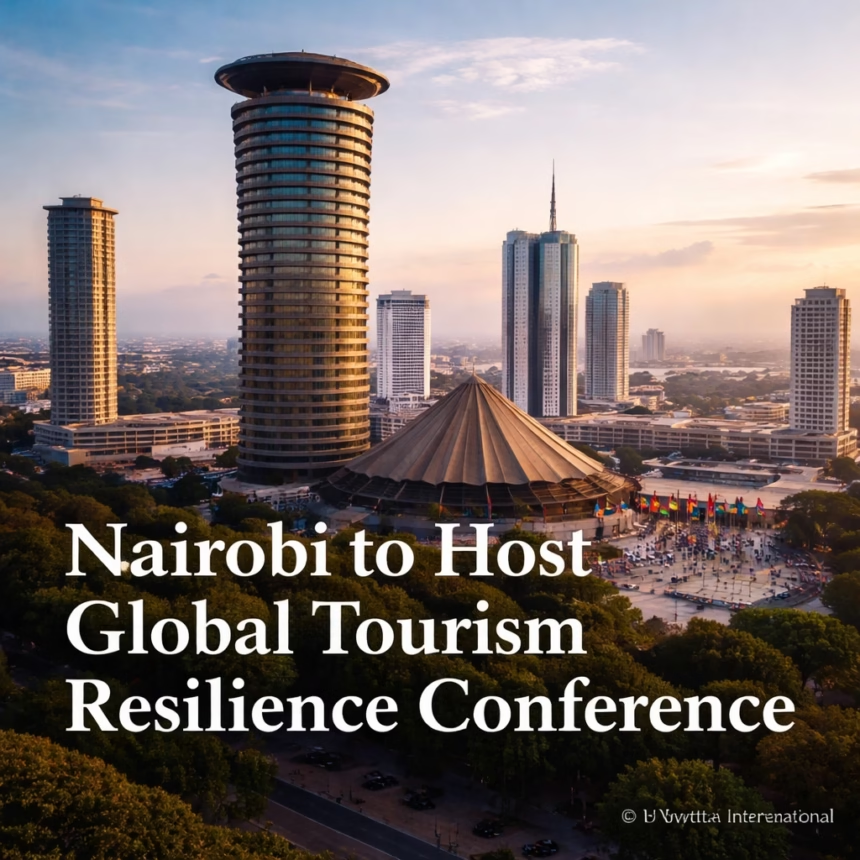
Nairobi, Kenya, is set to host a landmark Global Tourism Resilience Conference at the Kenyatta International Convention Centre (KICC) from February 12-14, 2025. This pivotal event aims to fortify the global tourism sector against future shocks, fostering sustainability and adaptability in an ever-evolving landscape. Delegates from over 100 nations are expected to converge, focusing on innovative strategies for industry recovery and growth.
Background: A World in Flux Demands Resilience
The concept of tourism resilience gained critical prominence following a series of global disruptions, most notably the COVID-19 pandemic, which brought international travel to a near standstill. Prior to this, geopolitical instabilities, natural disasters, and economic downturns had already highlighted the sector's inherent vulnerabilities. The need for robust frameworks to anticipate, mitigate, and recover from such crises became undeniable.
Kenya's selection as the host nation underscores its growing influence in global tourism and its proactive approach to sustainable development. The country has itself navigated various challenges, from security concerns to climate change impacts, emerging with strengthened tourism infrastructure and policy. Its strategic location and established conferencing facilities, particularly KICC, made it an ideal choice for a conference of this magnitude.
More Read

Discussions for such a global forum began informally in late 2022, spearheaded by the United Nations World Tourism Organization (UNWTO) and the World Travel and Tourism Council (WTTC). Early consultations involved key stakeholders, including the African Tourism Board and several national tourism ministries. These preliminary meetings identified a shared urgency to move beyond reactive measures towards proactive resilience planning.
The initiative also aligns with the UN Sustainable Development Goals (SDGs), particularly those related to sustainable tourism, economic growth, and climate action. By fostering resilience, the conference aims to ensure that tourism continues to be a driver of socio-economic progress without compromising environmental integrity or cultural heritage.
Key Developments: Forging Partnerships and Shaping Agendas
The official announcement confirming Nairobi as the host city was made in July 2024 by Kenya's Cabinet Secretary for Tourism, Wildlife, and Heritage, Hon. Alfred Mutua, alongside UNWTO Secretary-General Zurab Pololikashvili. This announcement followed extensive negotiations and a rigorous assessment of Nairobi's capacity and commitment to the conference objectives.

Significant partnerships have since been forged to ensure the conference's success. The Kenya Tourism Board (KTB) is collaborating closely with international bodies like the UNWTO, WTTC, and the Global Tourism Resilience and Crisis Management Centre (GTRCMC). These collaborations extend to logistical planning, content development, and delegate outreach, ensuring a comprehensive and impactful agenda.
KICC, a renowned venue, is undergoing minor upgrades to accommodate the anticipated influx of delegates and ensure state-of-the-art presentation facilities. Security protocols are being meticulously planned in coordination with local and international agencies to guarantee a safe environment for all participants. These preparations reflect Kenya's commitment to hosting a world-class event.
The conference agenda is structured around several critical pillars of resilience. These include climate change adaptation, digital transformation for crisis management, financial mechanisms for recovery, community-based tourism resilience, and policy frameworks for future-proofing the sector. Specific sessions will delve into topics such as "Sustainable Investment in Vulnerable Destinations" and "Leveraging AI for Early Warning Systems in Tourism."
Anticipated attendance is projected to exceed 2,000 delegates, representing government officials, industry leaders, academics, investors, and civil society organizations from over 100 countries. High-profile keynote speakers, including heads of state, CEOs of major travel corporations, and leading researchers in sustainable development, are expected to share their insights.
Impact: Reshaping Global Travel and Local Economies
The Global Tourism Resilience Conference is poised to have a far-reaching impact across multiple levels, from global policy to local communities.
Global Tourism Sector
Globally, the conference is expected to yield a “Nairobi Declaration on Tourism Resilience,” a comprehensive framework outlining best practices and policy recommendations for building a more resilient industry. This declaration could influence international tourism guidelines, investment priorities, and collaborative efforts in crisis management. It will likely encourage greater data sharing and coordinated responses to future global threats.
More Read

Kenya and Africa’s Standing
For Kenya, hosting this conference significantly elevates its international profile as a leader in sustainable tourism and a capable host for major global events. The direct economic benefits are substantial, with an estimated injection of over KES 500 million into the local economy through delegate spending on accommodation, transport, dining, and other services. Beyond the immediate financial gains, the conference offers unparalleled opportunities for knowledge exchange and skill transfer, benefiting local tourism professionals.
The event also positions the African continent as a proactive player in addressing global challenges. It provides a platform for African nations to showcase their unique resilience strategies and advocate for tailored support that addresses their specific vulnerabilities, such as climate change impacts on wildlife tourism.
Local Businesses and Communities
In Nairobi, local businesses, including hotels, restaurants, transport providers, and artisan markets, will experience a significant boost in activity. The demand for services will create temporary employment opportunities and stimulate local commerce. Beyond the economic uptick, the conference provides an invaluable opportunity for local tourism stakeholders to network with international counterparts, learn about global trends, and potentially forge new business partnerships.
The focus on community-based tourism resilience will also highlight the importance of empowering local populations in tourism development and crisis response. This could lead to increased support for grassroots initiatives and more equitable distribution of tourism benefits within host communities.
Future Travelers
Ultimately, enhanced tourism resilience benefits travelers worldwide. A more robust and adaptable industry means fewer disruptions, quicker recovery from unforeseen events, and a greater assurance of safe and enjoyable travel experiences. It also promises a more sustainable tourism future, preserving the destinations and cultures that attract visitors for generations to come.
What Next: From Conference to Concrete Action
The immediate focus for organizers will be the finalization of the detailed conference program, including the confirmation of all keynote speakers and panel participants. Delegate registration is expected to close in early January 2025, with a final count providing a clear picture of the global representation.
During the conference itself, key milestones will include the formal adoption of the "Nairobi Declaration on Tourism Resilience" and the potential signing of several bilateral or multilateral agreements aimed at implementing specific resilience initiatives. Expert workshops and interactive sessions are designed to foster actionable recommendations rather than mere theoretical discussions.
Post-conference, the work will transition to the implementation phase. A dedicated task force, potentially comprising representatives from the UNWTO, WTTC, and the GTRCMC, will be established to monitor progress on the commitments made. Regular reports will be issued, tracking the adoption of best practices and the impact of new policies across member states.
Long-term, the Nairobi conference is envisioned as a catalyst for a paradigm shift in how the global tourism industry approaches risk and sustainability. It aims to embed resilience as a core principle in all aspects of tourism planning and development, contributing significantly to the UN's 2030 Agenda for Sustainable Development. The outcomes are expected to inform future global tourism summits and investment strategies, ensuring a more stable and prosperous future for travel.