Power Relief: Millions Set to Benefit from New Subsidy Program
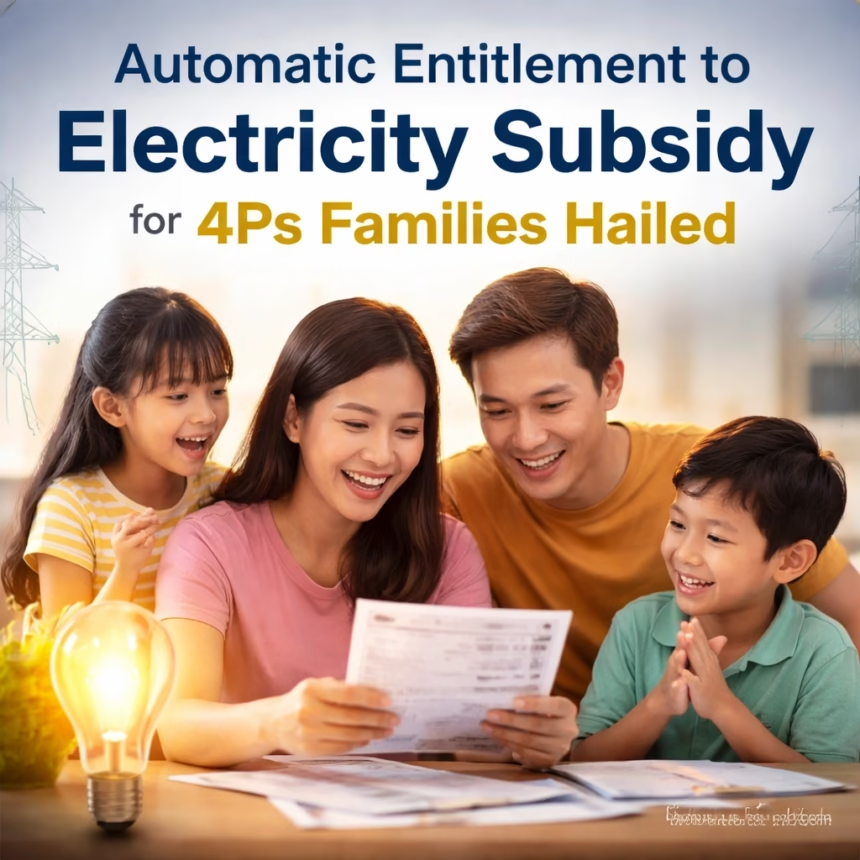
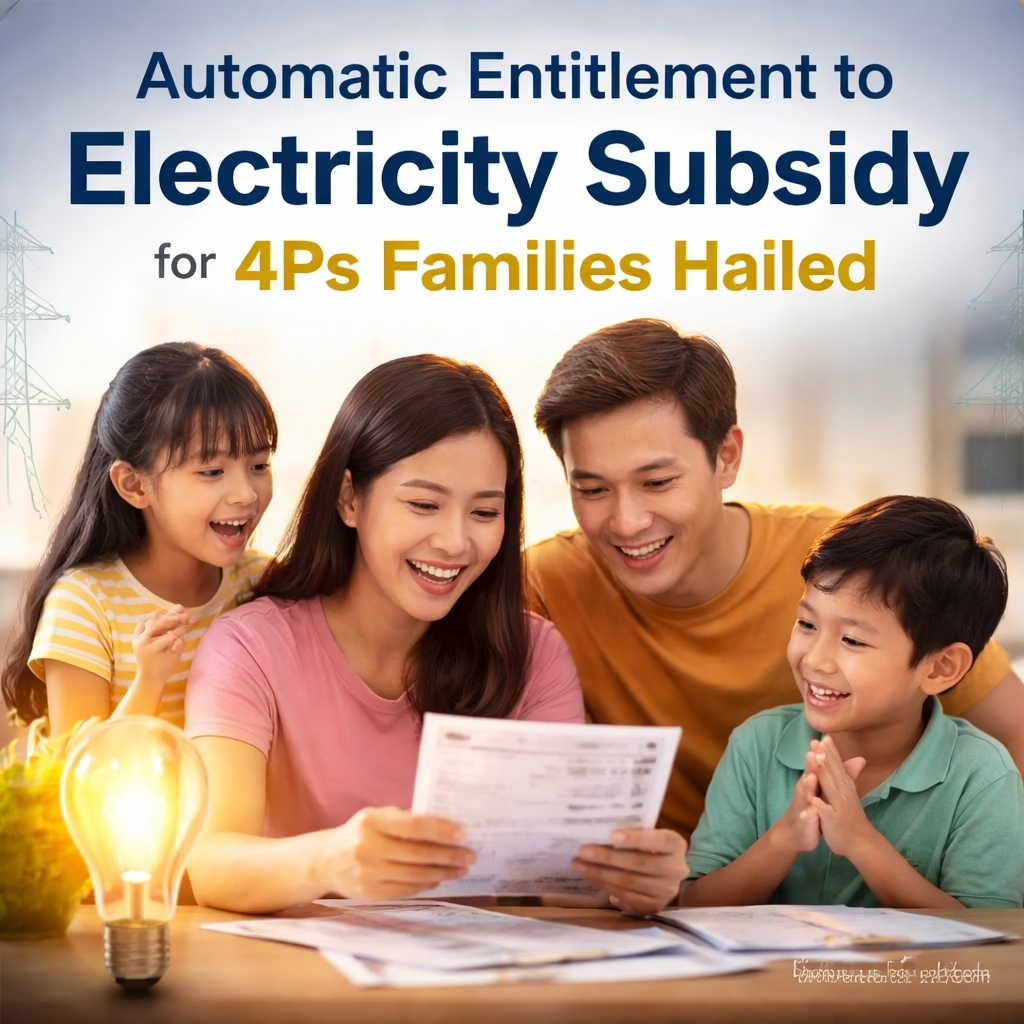
A new initiative in the Philippines promises significant relief to low-income families struggling with rising electricity costs. The government announced the automatic enrollment of Pantawid Pamilyang Pilipino Program (4Ps) beneficiaries into a nationwide electricity subsidy program, effective immediately. The program aims to ease the financial burden on vulnerable households across the country.
Background
The Pantawid Pamilyang Pilipino Program (4Ps), launched in 2008 by the Department of Social Welfare and Development (DSWD), provides cash assistance to eligible poor families. It’s a conditional cash transfer program linked to investments in health and education. Over the years, the program has served millions of families, becoming a cornerstone of poverty alleviation efforts in the Philippines. However, increasing electricity prices have presented a growing challenge for 4Ps beneficiaries, impacting their household budgets.
Prior to this recent development, electricity subsidies were distributed through a separate, more complex registration process. This often left some eligible 4Ps families unaware of or unable to access the available assistance. The government recognized the need for a more streamlined and efficient way to deliver these crucial benefits.
Key Developments
On November 21, 2023, the Department of Energy (DOE) and the Department of Finance (DOF) jointly announced the automatic enrollment of all 4Ps beneficiaries into the "Targeted Subsidy Program" (TSP). This change eliminates the need for separate applications and simplifies the process significantly. Implementation began on November 22, 2023, with electricity distributors nationwide receiving the list of 4Ps beneficiaries.
More Read

The TSP provides a monthly subsidy of PHP 200 for households with a maximum monthly electricity consumption of 300 kilowatt-hours (kWh). This subsidy will be directly credited to the electricity bills of eligible families. The government estimates that this will benefit over 6.7 million households nationwide.
Impact
Financial Relief for Vulnerable Households
The automatic subsidy is expected to provide considerable financial relief to 4Ps families, freeing up funds for essential needs like food, education, and healthcare. The PHP 200 monthly subsidy, while not a substantial amount, represents a significant portion of the budget for many low-income households.
More Read

Reduced Energy Poverty
The program aims to reduce energy poverty by ensuring that low-income families can afford basic electricity needs. This is particularly important in remote areas where access to alternative energy sources may be limited.
Economic Benefits
The increased disposable income for 4Ps families is also expected to have a positive impact on the local economy, boosting demand for goods and services.
What Next
The initial rollout of the TSP is currently underway, with electricity distributors working to implement the automatic subsidy program. The government expects full coverage within the next few weeks. Regular monitoring and evaluation will be conducted to assess the program's effectiveness and identify any areas for improvement.
Monitoring & Evaluation
The DOE and the DSWD will collaborate to monitor the program’s impact on electricity consumption and household finances. Data collected will be used to refine the subsidy program and ensure that it continues to meet the needs of 4Ps beneficiaries.
Future Enhancements
The government has indicated that it is exploring options for expanding the subsidy program to include higher electricity consumption levels. There are also discussions about integrating the subsidy program with other social welfare initiatives to provide a more comprehensive safety net for vulnerable families.
The automatic entitlement to electricity subsidies for 4Ps families represents a significant step towards addressing energy poverty in the Philippines. Its success will depend on effective implementation, ongoing monitoring, and a commitment to adapting the program to meet the evolving needs of the country's most vulnerable populations.