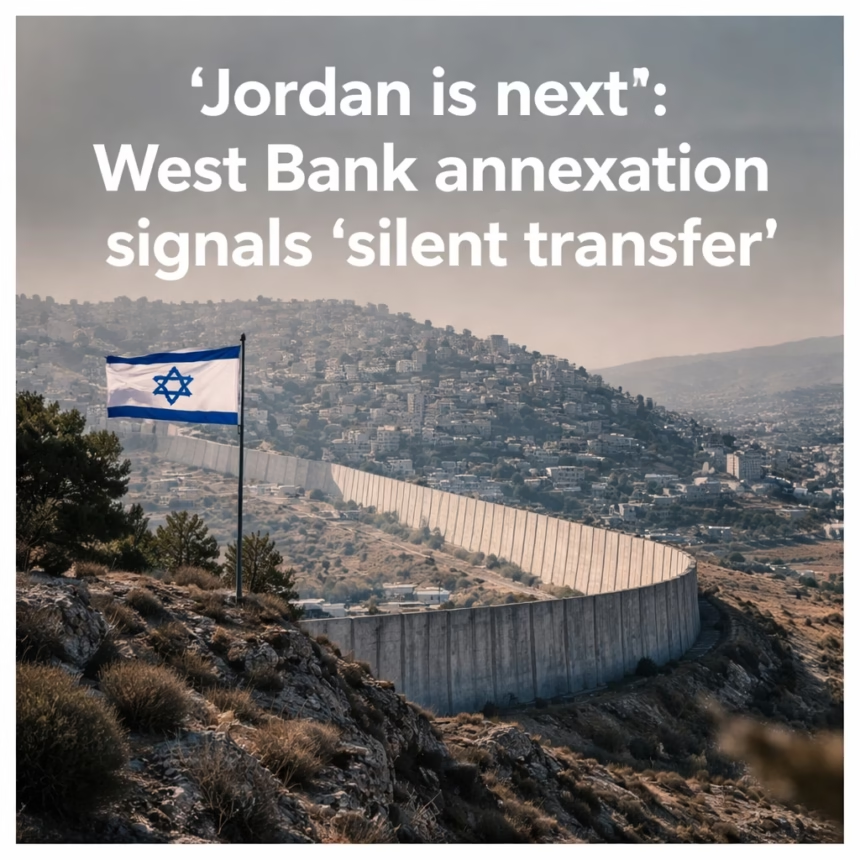
A concerning shift is underway in the West Bank, where a combination of Israeli policies and demographic pressures is fueling fears of a "silent transfer" of Palestinians. This evolving situation raises profound questions about the future of the Israeli-Palestinian conflict, the viability of a two-state solution, and the stability of the Hashemite Kingdom of Jordan, which watches with growing apprehension.
Background: Decades of Occupation and Division
The West Bank, a territory west of the Jordan River, has been under Israeli military occupation since the 1967 Six-Day War. This conflict saw Israel capture the area, along with East Jerusalem, from Jordan. The international community largely views these territories as occupied, and Israeli settlements built there are considered illegal under international law.
Following the 1993 Oslo Accords, the West Bank was divided into three administrative areas:
* Area A: Under full Palestinian Authority (PA) civil and security control, comprising roughly 18% of the West Bank.
* Area B: Under PA civil control and shared Israeli-Palestinian security control, making up about 22% of the West Bank.
* Area C: Under full Israeli civil and security control, encompassing approximately 60% of the West Bank. This area includes all Israeli settlements, major bypass roads, and significant natural resources.
Since 1967, Israeli settlement expansion in the West Bank has been a continuous and contentious issue. Hundreds of thousands of Israeli settlers now reside in these communities, often built on land confiscated from Palestinians. Successive Israeli governments, particularly those on the right, have often supported and facilitated this expansion, viewing the West Bank as an integral part of Israel. Calls for the formal annexation of parts, or all, of Area C have become increasingly prominent within Israeli political discourse, especially among nationalist and religious factions. Historically, some Israeli political figures have also floated the "Jordanian Option," suggesting that Jordan could absorb West Bank Palestinians, a notion vehemently rejected by Amman.
Key Developments: The Mechanisms of ‘Silent Transfer’
Recent years have seen an intensification of policies and actions that critics argue constitute a de facto, if not de jure, annexation of West Bank territory, particularly Area C. This process, often termed "silent transfer," involves a series of administrative, economic, and security measures designed to make Palestinian life in Area C increasingly untenable, thereby encouraging emigration.
More Read

One primary mechanism is the severe restriction on Palestinian construction and development in Area C. Israeli authorities routinely deny building permits to Palestinians, even for essential infrastructure like homes, schools, and water cisterns. This often leads to demolitions of structures built without permits, displacing families and disrupting communities. For instance, in Masafer Yatta in the southern Hebron Hills, hundreds of Palestinians face ongoing displacement threats due to military training zone declarations and demolition orders.
Concurrently, Israeli authorities have significantly expanded settlement construction and infrastructure projects, including roads, which primarily serve Israeli settlers. This disparity in planning and development effectively isolates Palestinian communities and fragments their land. Access to natural resources, such as water and agricultural land, is also disproportionately allocated, favoring settlements over Palestinian villages.
Increased settler violence against Palestinians and their property has also been a growing concern. Reports from human rights organizations detail incidents of harassment, destruction of crops, and physical assaults, often occurring with limited intervention from Israeli security forces. Such incidents contribute to an atmosphere of fear and insecurity, pressuring Palestinians to leave their ancestral lands.
More Read

Furthermore, the Israeli military has expanded its designation of land in Area C as closed military zones or nature reserves, further restricting Palestinian access and use. In the Jordan Valley, a fertile agricultural region, Palestinian farmers face severe limitations on land use, water access, and movement, while Israeli agricultural settlements thrive. These combined pressures create a coercive environment, making it exceedingly difficult for Palestinians to sustain their livelihoods and remain in Area C.
Impact: A Shifting Reality for Palestinians and Jordan
The implications of these developments are far-reaching, fundamentally altering the demographic and political landscape of the West Bank and posing significant challenges to regional stability.
For Palestinians, the "silent transfer" translates into a gradual but relentless erosion of their presence and rights in Area C. Loss of land, homes, and economic opportunities diminishes the prospects for a viable, contiguous Palestinian state, a cornerstone of the internationally recognized two-state solution. It exacerbates humanitarian concerns, leading to increased poverty, food insecurity, and displacement. The fragmentation of Palestinian communities also hinders social cohesion and access to essential services, deepening a sense of despair and statelessness. The future of millions of Palestinians within the West Bank, already living under military occupation, becomes even more precarious.
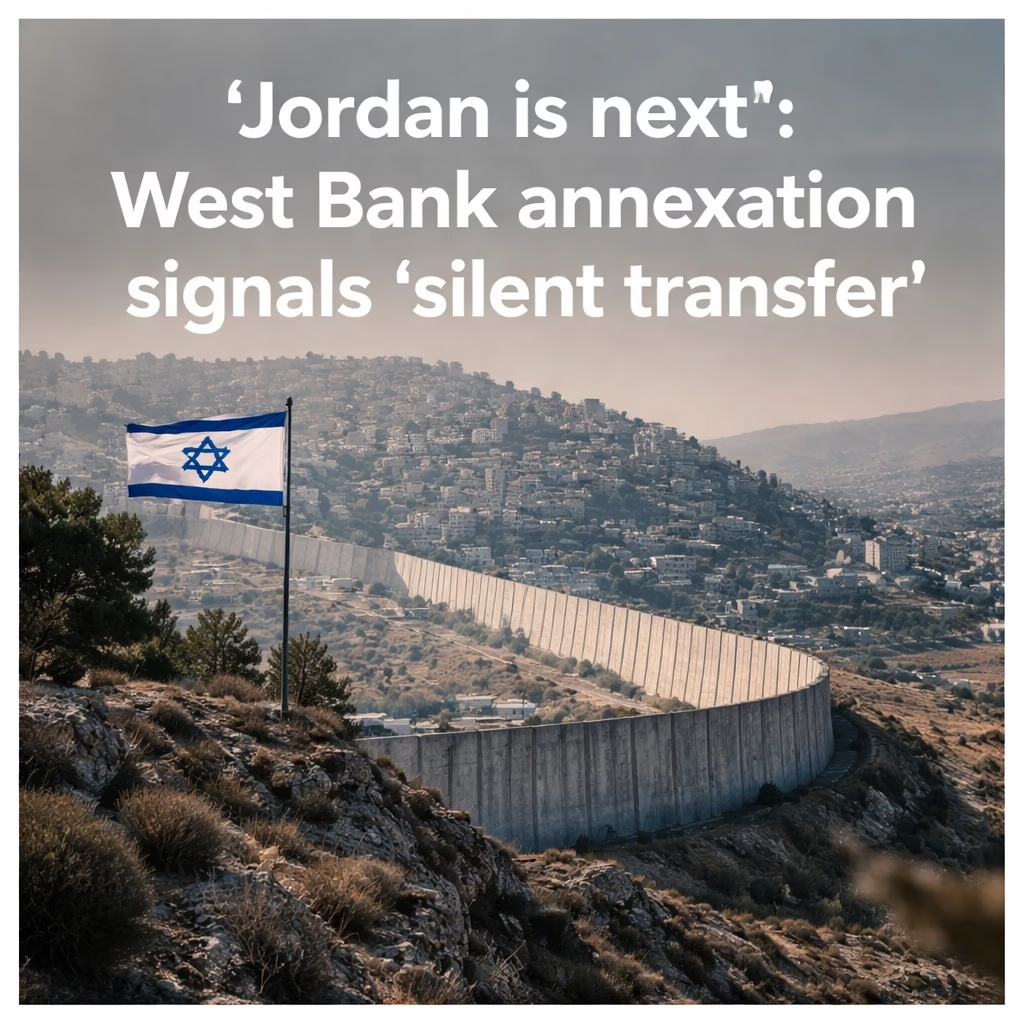
The Hashemite Kingdom of Jordan views these trends with profound alarm. Jordan shares its longest border with the West Bank and has historical ties to the territory. Approximately half of Jordan's population is of Palestinian origin, including a significant number of refugees from the 1948 and 1967 wars. A large-scale displacement of Palestinians from the West Bank into Jordan, whether overt or covert, would pose an existential threat to the kingdom. Such an influx would strain Jordan's already limited resources, including water and housing, and could destabilize its delicate demographic balance, potentially leading to internal unrest.
Beyond demographic concerns, Jordan's role as the custodian of Muslim holy sites in Jerusalem, enshrined in its 1994 peace treaty with Israel, is also at risk. Unilateral Israeli actions in the West Bank and East Jerusalem are seen by Amman as undermining its sovereignty and religious responsibilities. The erosion of the two-state solution also jeopardizes the peace treaty itself, which is predicated on the eventual establishment of an independent Palestinian state alongside Israel. Jordan's King Abdullah II has repeatedly warned against annexation and the "silent transfer," emphasizing its potential to ignite a regional explosion.

What Next: Navigating a Precarious Future
The trajectory of the West Bank remains highly uncertain, with several factors influencing its immediate and long-term future. The ongoing political landscape within Israel, particularly the composition and agenda of its government, will heavily dictate the pace and scope of annexationist policies. Right-wing factions continue to advocate for increased settlement expansion and formal annexation, potentially emboldened by internal political shifts.
Internationally, the response to these developments is varied. The United States, historically a key mediator, has maintained its opposition to unilateral annexation, but its diplomatic pressure has often been perceived as inconsistent. European Union nations and the United Nations consistently condemn settlement expansion and advocate for a two-state solution, yet their ability to effect change has been limited. Arab nations, particularly those that have normalized relations with Israel through the Abraham Accords, face a diplomatic tightrope, balancing regional interests with their historical support for the Palestinian cause.
Palestinian communities are expected to continue their resistance through protests, legal challenges, and international advocacy, despite the immense pressures they face. The Palestinian Authority, weakened and facing internal legitimacy challenges, struggles to counter Israeli policies effectively.
Jordan will likely intensify its diplomatic efforts, leveraging its relationships with the US, EU, and Arab states to prevent further annexation and mitigate the impact of the "silent transfer." This includes advocating for the protection of Palestinian rights and the preservation of the two-state solution as the only viable path to lasting peace.
The coming months and years will be critical in determining whether the "silent transfer" continues to reshape the West Bank, potentially leading to a one-state reality with profound consequences for all parties involved, or if international and regional efforts can steer the situation back towards a negotiated resolution. The demographic shifts currently underway are creating facts on the ground that are increasingly difficult to reverse, making the calls from Amman about "Jordan is next" resonate with increasing urgency.