The World's Most Dangerous Choke Point: Why Hormuz Matters
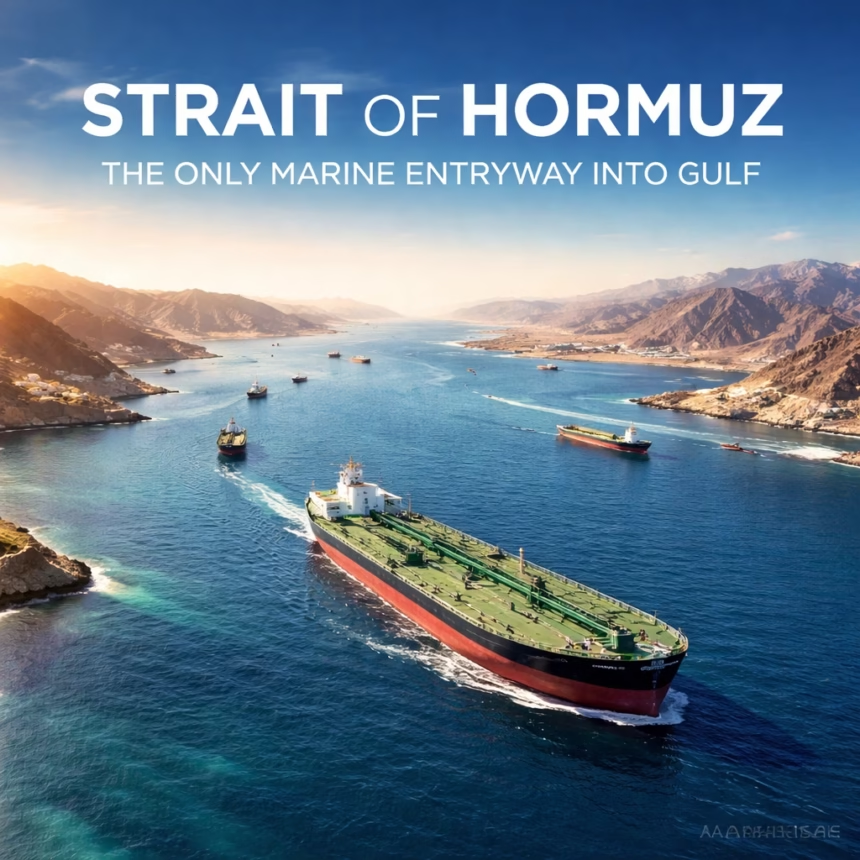
The Strait of Hormuz, a narrow waterway connecting the Persian Gulf to the Gulf of Oman and the Arabian Sea, is a critical global shipping route. Located between Iran and Oman, it handles a significant portion of the world's oil and gas exports. Its strategic importance makes it a focal point of geopolitical tension, particularly between the United States and Iran.
Background
The Strait of Hormuz has been vital for centuries. Historically, it connected the Persian Gulf with the wider Indian Ocean, facilitating trade between East and West. In the 20th century, the region’s vast oil reserves amplified its importance. Following the 1979 Iranian Revolution, tensions escalated as Iran asserted control over the strait, viewing it as a key element of its national security. The Iran-Iraq War (1980-1988) saw numerous naval skirmishes in the strait, highlighting its vulnerability and strategic value. The US Navy has maintained a significant presence in the region since then, ostensibly to ensure freedom of navigation.
Key Developments
Recent years have witnessed a sharp increase in tensions. The withdrawal of the United States from the Joint Comprehensive Plan of Action (JCPOA), or Iran nuclear deal, in May 2018 under the Trump administration significantly impacted the region. This led to the reimposition of US sanctions on Iran's oil and financial sectors. In response, Iran has gradually rolled back its commitments under the JCPOA, including increasing its uranium enrichment levels. Several incidents have occurred involving tankers in the strait, with accusations and counter-accusations flying between the US, Iran, and other regional actors. These incidents, including those in April and May 2019, raised concerns about potential military escalation.
In January 2020, a US drone strike killed Iranian General Qassem Soleimani near Baghdad International Airport, further escalating tensions. Iran retaliated with missile strikes against US bases in Iraq. While direct military conflict was averted, the incident underscored the fragility of the situation in the Strait of Hormuz. More recently, heightened tensions have flared following the 2022 Israel-Hamas conflict, with increased rhetoric and naval activity in the region. Iran has conducted naval exercises in the strait, signaling its readiness to defend its territorial waters. The US has also increased its naval presence, deploying additional warships to the region.
More Read

Impact
The Strait of Hormuz’s strategic importance translates into far-reaching economic and political consequences. Approximately 20% of the world's oil supply passes through the strait daily. Disruptions to shipping in Hormuz could send global oil prices soaring, impacting economies worldwide. The US, as a major importer of oil, is particularly vulnerable. However, the impact extends beyond the US. Europe, Asia, and other nations reliant on Middle Eastern oil would also face significant economic repercussions.
Beyond the economic impact, the strait’s volatility poses a threat to regional stability. The ongoing tensions between Iran and the US have implications for broader geopolitical dynamics in the Middle East, influencing conflicts in Yemen, Syria, and Iraq. The risk of miscalculation or unintended escalation remains a significant concern, potentially drawing in other regional powers.
What Next
The future of the Strait of Hormuz remains uncertain. Negotiations aimed at reviving the JCPOA have stalled, with both sides expressing skepticism about reaching a comprehensive agreement. Iran continues to pursue its nuclear program, while the US maintains sanctions pressure. Military posturing by both sides is likely to continue, creating a tense and unpredictable environment.

Potential Scenarios
One potential scenario involves a continued stalemate, with tensions remaining elevated but avoiding direct military conflict. This could lead to periodic crises and disruptions to shipping. Another, more concerning scenario, is a miscalculation or accidental incident that triggers a military confrontation. A third possibility is a negotiated resolution to the nuclear issue, which could ease tensions and improve stability in the region. However, achieving such a resolution will require significant compromises from both sides.
International efforts to de-escalate tensions and ensure freedom of navigation in the Strait of Hormuz are crucial. The United Nations and other international organizations play a vital role in facilitating dialogue and promoting peaceful resolution of disputes. However, the ultimate responsibility for preventing conflict rests with Iran and the United States.