Ukraine War: A Year Later – The Unfolding Story
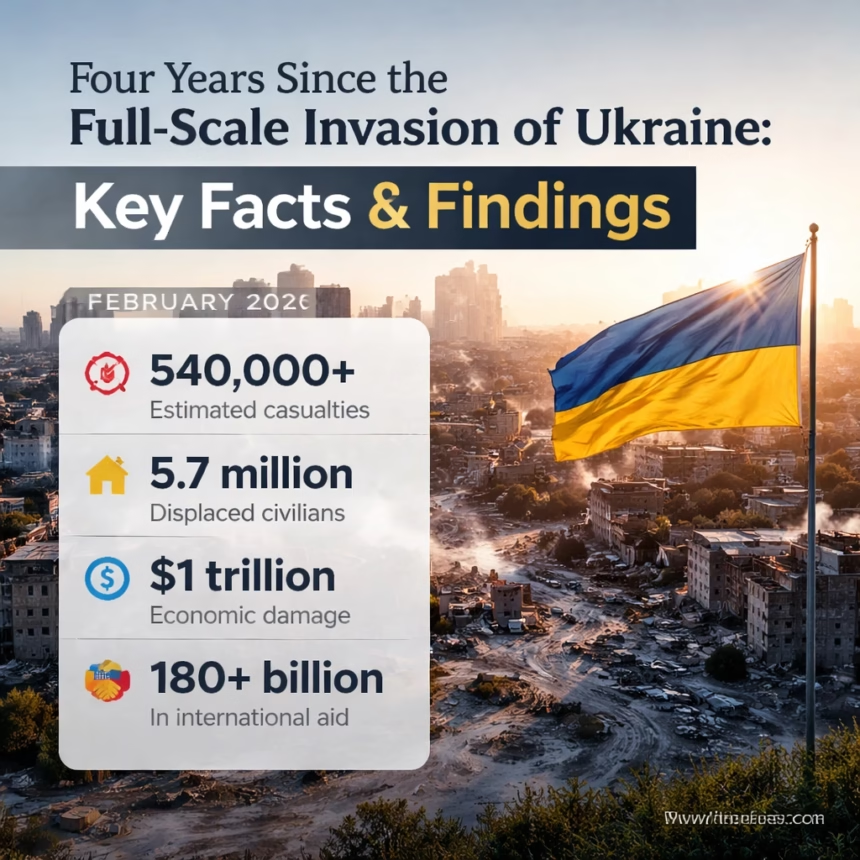
Four years after Russia’s full-scale invasion began on February 24, 2022, the war in Ukraine remains a defining global conflict. The conflict has reshaped geopolitics, devastated communities, and triggered a humanitarian crisis of immense scale. This article examines key developments, the impact on Ukraine and the world, and potential future scenarios as of February 2026.
Background
The current conflict escalated dramatically in February 2022, following a period of heightened tensions that began in 2014 with Russia's annexation of Crimea and support for separatists in the Donbas region of eastern Ukraine. In late 2021, Russia amassed troops along the Ukrainian border, citing security concerns related to NATO expansion. On February 24, 2022, Russia launched a multi-pronged invasion, targeting major cities including Kyiv, Kharkiv, and Mariupol.
Initial Russian aims appeared to include regime change in Kyiv and the occupation of significant territory. However, Ukrainian forces, bolstered by Western military aid and fierce national resistance, successfully repelled the initial offensive. The conflict transitioned into a protracted war of attrition, primarily focused on the eastern and southern regions of Ukraine.
Key Developments
Over the past year, the war has evolved significantly. A major Russian offensive aimed at capturing Bakhmut, Donetsk Oblast, lasted for months, resulting in heavy casualties on both sides, and ultimately concluding with a Russian victory in May 2023. However, the gains were costly, and the offensive significantly depleted Russia's manpower and resources.
More Read

In late 2023, Ukraine launched a counteroffensive, focusing on the Zaporizhzhia and Kharkiv regions. While initial progress was slow, Ukrainian forces have since liberated a number of towns and villages, regaining some territory previously occupied by Russian forces. The counteroffensive continues, with ongoing battles for strategic control of the Donbas region.
Diplomatic efforts to find a peaceful resolution have stalled. Multiple rounds of negotiations, including those mediated by Turkey and the United Nations, have failed to produce a lasting ceasefire or comprehensive peace agreement.

The Black Sea Grain Initiative
The Black Sea Grain Initiative, brokered by the UN and Turkey in July 2022, allowed for the safe export of Ukrainian grain through the Black Sea. The agreement expired in July 2023, and Russia subsequently withdrew from it. While alternative export routes have been established, the disruption to Ukrainian agricultural exports has had a significant impact on global food security.
Impact
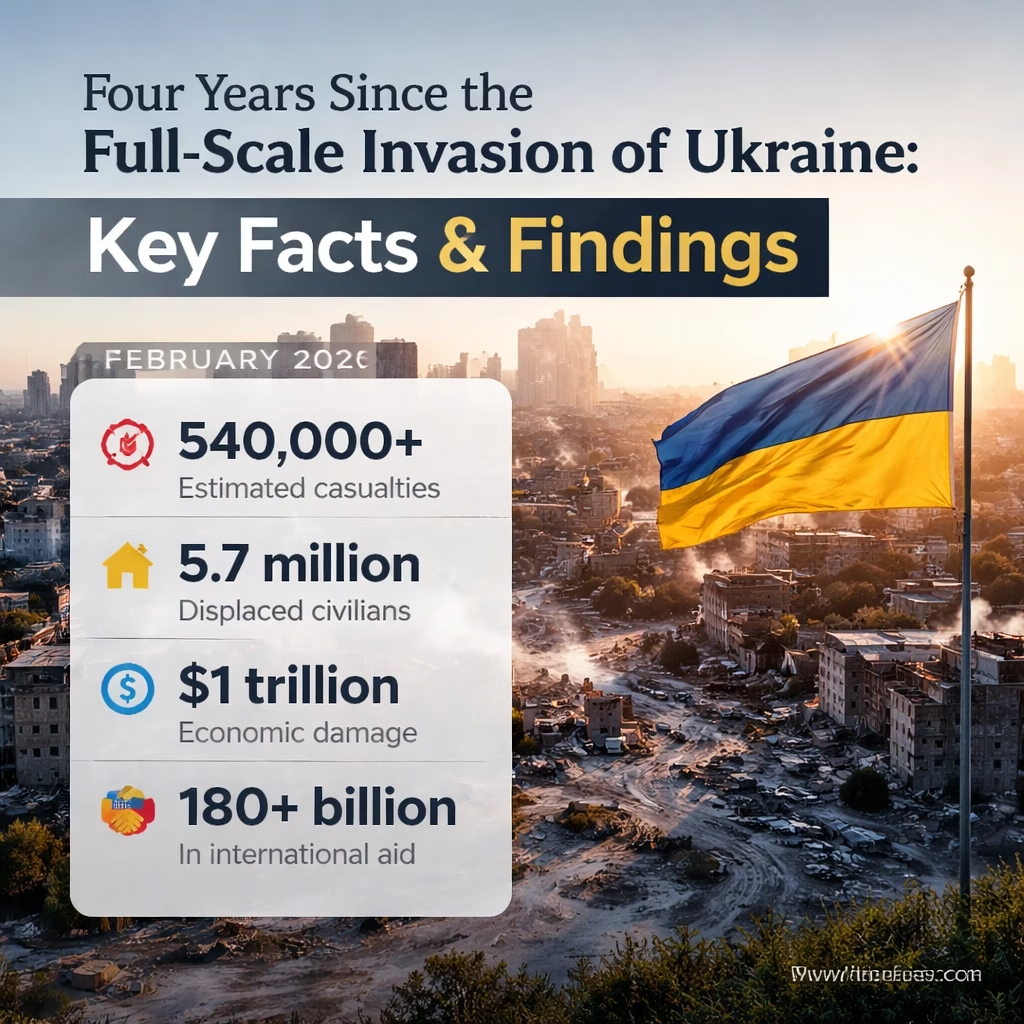
The war has had a devastating impact on Ukraine. Millions of Ukrainians have been displaced internally and as refugees in neighboring countries, particularly Poland, Romania, and Moldova. According to the UN Refugee Agency (UNHCR), over 6 million Ukrainians remain refugees in Europe as of February 2026.
Infrastructure has suffered widespread damage, with critical systems like power grids and water supplies regularly targeted by Russian forces. Estimates of the total cost of reconstruction range from hundreds of billions to over a trillion US dollars. The conflict has also caused significant environmental damage, including pollution from damaged industrial sites and the destruction of protected areas.
The global economy has also been affected. The war has contributed to rising energy prices, disruptions to supply chains, and increased inflation. Food insecurity has been a major concern, particularly in developing countries that rely on Ukrainian grain exports.
What Next?
The future of the conflict remains uncertain. Several potential scenarios are being discussed, ranging from a protracted stalemate to a negotiated settlement. A decisive military breakthrough by either side remains unlikely in the short term.
Potential Outcomes
- Stalemate: Continued fighting along existing front lines, with neither side able to achieve a decisive victory.
- Negotiated Settlement: A peace agreement involving territorial concessions, security guarantees, and a neutral status for Ukraine.
- Escalation: A widening of the conflict, potentially involving NATO or other international actors.
The ongoing Western military and financial aid to Ukraine will continue to be a key factor in determining the course of the conflict. The strength and unity of international support for Ukraine will be crucial in sustaining its resistance and facilitating a future peace process.
More Read

As of February 2026, the war in Ukraine remains a complex and evolving situation, with no easy solutions in sight. The long-term consequences of the conflict will continue to be felt for years to come.