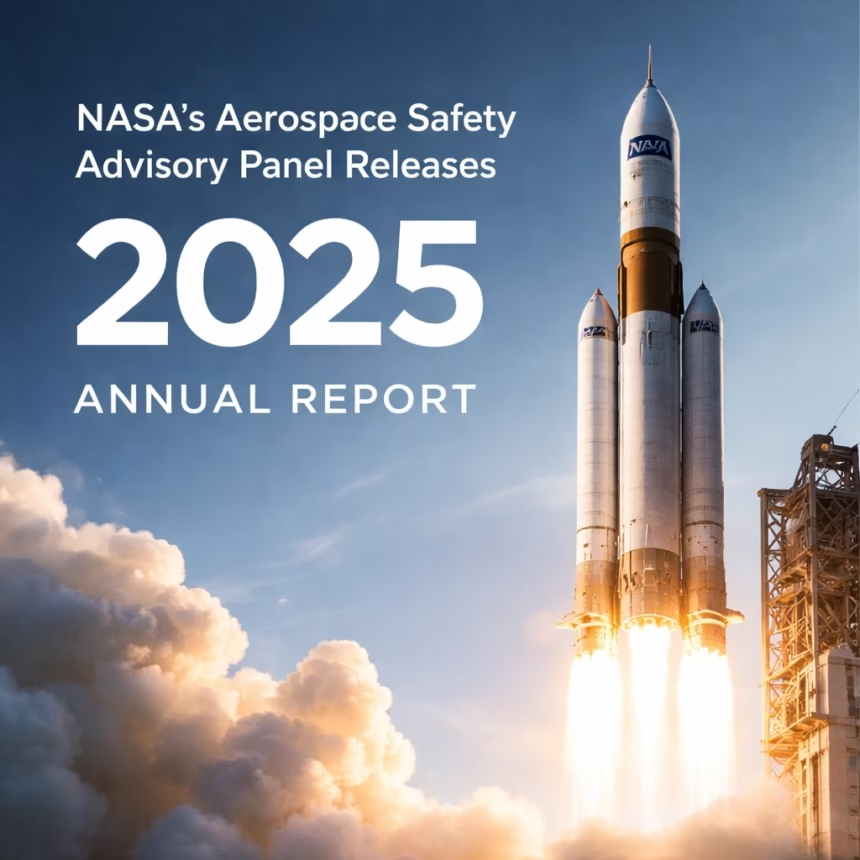
NASA’s Aerospace Safety Advisory Panel (ASAP) today released its comprehensive 2025 Annual Report, detailing crucial observations and recommendations aimed at bolstering safety across the agency’s ambitious human spaceflight and aeronautics programs. Presented from NASA Headquarters in Washington D.C., the report highlights strategic priorities and identifies potential vulnerabilities that could impact upcoming missions and long-term objectives. Its findings are poised to influence policy and operational adjustments throughout the coming year.
Background: A Legacy of Vigilance
The Aerospace Safety Advisory Panel was established by Congress in 1968, following the tragic Apollo 1 fire. Its mandate is to provide independent safety oversight and advice to the NASA Administrator and Congress, ensuring the highest safety standards for all agency endeavors. Comprised of experts from diverse fields including engineering, operations, medicine, and management, ASAP conducts regular reviews, site visits, and interviews across NASA centers and its commercial partners. The panel's annual report serves as a critical barometer for the agency's safety culture and operational readiness, reflecting an unbroken commitment to learning from past incidents and proactively addressing future risks. Over decades, ASAP's recommendations have led to significant design changes, procedural improvements, and a robust safety infrastructure underpinning every NASA mission, from the Space Shuttle era to the International Space Station and the burgeoning Artemis program. This 2025 report continues that vital tradition, scrutinizing the evolving complexities of space exploration.
Key Developments: Navigating New Frontiers and Enduring Challenges
The 2025 ASAP report underscores several critical areas of focus, reflecting both the advancements and inherent risks of modern spaceflight. A prominent theme is the continued maturation of the Artemis program, particularly as it approaches crewed lunar missions. The panel noted the immense technical complexity of integrating multiple new systems, including the Space Launch System (SLS), Orion spacecraft, Human Landing System (HLS) provided by commercial partners, and the Gateway lunar outpost. Specific concerns were raised regarding the rigorous verification and validation of integrated software systems across these diverse platforms, emphasizing the need for robust end-to-end testing protocols to mitigate interface risks.
Another significant area of scrutiny involved the evolving landscape of commercial spaceflight. With NASA increasingly relying on private industry for crew and cargo transport to the International Space Station (ISS) and for future lunar infrastructure, ASAP highlighted the challenges in maintaining consistent safety oversight across multiple commercial providers. The report recommended enhanced transparency in commercial certification processes and a more standardized approach to sharing critical safety data between NASA and its partners, ensuring that commercial innovation does not inadvertently compromise safety margins. Workforce readiness also emerged as a key concern. The panel observed a demographic shift within NASA, with a significant number of experienced engineers and managers nearing retirement. While acknowledging efforts to recruit new talent, the report cautioned against potential knowledge gaps in critical areas such as propulsion system design, life support systems, and complex mission operations. Recommendations included accelerated mentorship programs and improved knowledge transfer mechanisms to preserve institutional memory.
Furthermore, the report addressed the long-term sustainability and safety of the International Space Station as it nears its planned retirement and potential transition to commercial platforms. ASAP emphasized the ongoing need for diligent maintenance and anomaly resolution for the aging station, particularly concerning life support systems and structural integrity. Cybersecurity threats to ground systems and space assets also received heightened attention, with the panel advocating for continuous investment in advanced threat detection and mitigation strategies, given the increasing sophistication of cyber adversaries targeting critical infrastructure.

Impact: Shaping Future Missions and Safeguarding Personnel
The findings of the 2025 ASAP report carry substantial weight, directly influencing NASA’s strategic planning, budget allocations, and operational procedures for the upcoming fiscal year and beyond. Immediate impacts are expected on the Artemis program’s development timeline, potentially leading to extended testing phases for critical software and hardware components, particularly for the Artemis II crewed lunar flyby and the Artemis III lunar landing missions. Program managers will likely be tasked with providing detailed responses to ASAP’s recommendations, outlining specific actions and implementation schedules.
For commercial partners involved in the Human Landing System and other lunar infrastructure, the report’s emphasis on enhanced transparency and standardized safety data sharing could lead to more stringent reporting requirements and collaborative safety reviews. This will necessitate closer integration between NASA and commercial safety teams, fostering a more unified approach to risk management across the entire lunar ecosystem. The recommendations concerning workforce readiness are expected to prompt accelerated initiatives in talent development, including expanded training programs, mentorship opportunities, and knowledge retention strategies. This could involve creating specialized academies for critical skill sets and incentivizing experienced personnel to extend their tenure or participate in focused knowledge transfer activities.
Ultimately, the report's impact extends to the safety of astronauts, ground crews, and the integrity of multi-billion-dollar space assets. By proactively identifying potential hazards and advocating for robust mitigation strategies, ASAP helps protect human lives and ensures the continued success of NASA’s ambitious exploration goals. Public trust in NASA’s capabilities and its commitment to safety also hinges on the agency’s transparent and effective response to these independent safety assessments. International partners, including the European Space Agency (ESA), Japan Aerospace Exploration Agency (JAXA), and Canadian Space Agency (CSA), who are integral to the ISS and Artemis programs, will also closely monitor NASA’s actions in response to the report, as their personnel and hardware are directly affected by these safety considerations.

What Next: Charting a Course for Safe Exploration
In the wake of the 2025 ASAP report, NASA Administrator Bill Nelson is expected to formally address the panel’s findings, outlining the agency’s initial response and commitment to implementing key recommendations. This will likely involve a series of internal directives to program offices and center directors, mandating reviews of current safety protocols and the development of action plans. Congress, which receives a copy of the report, may also schedule hearings to discuss the implications for future appropriations and oversight.
Looking ahead, significant milestones for the Artemis program remain a focal point. The Artemis II mission, a crewed test flight around the Moon, is currently targeting a launch in late 2025 or early 2026. The ASAP report’s insights into software integration and commercial partner oversight will be crucial in the final preparations for this mission. Following this, the Artemis III mission, aiming for the first human lunar landing in over 50 years, is anticipated in late 2026 or 2027. The panel's recommendations regarding human factors for long-duration lunar surface operations and the safe deployment of the Human Landing System will directly influence its readiness.
Beyond lunar exploration, the future of the International Space Station and the transition to commercial Low Earth Orbit (LEO) destinations will continue to evolve. ASAP's ongoing vigilance will be vital in ensuring that the commercialization of LEO maintains the stringent safety standards established over decades of government-led spaceflight. The Aerospace Safety Advisory Panel will continue its independent oversight, conducting quarterly meetings and site visits throughout 2025, culminating in its next annual report, which will assess NASA's progress in addressing the concerns raised today. The continuous cycle of evaluation and improvement remains paramount as NASA pushes the boundaries of human exploration further into the cosmos.