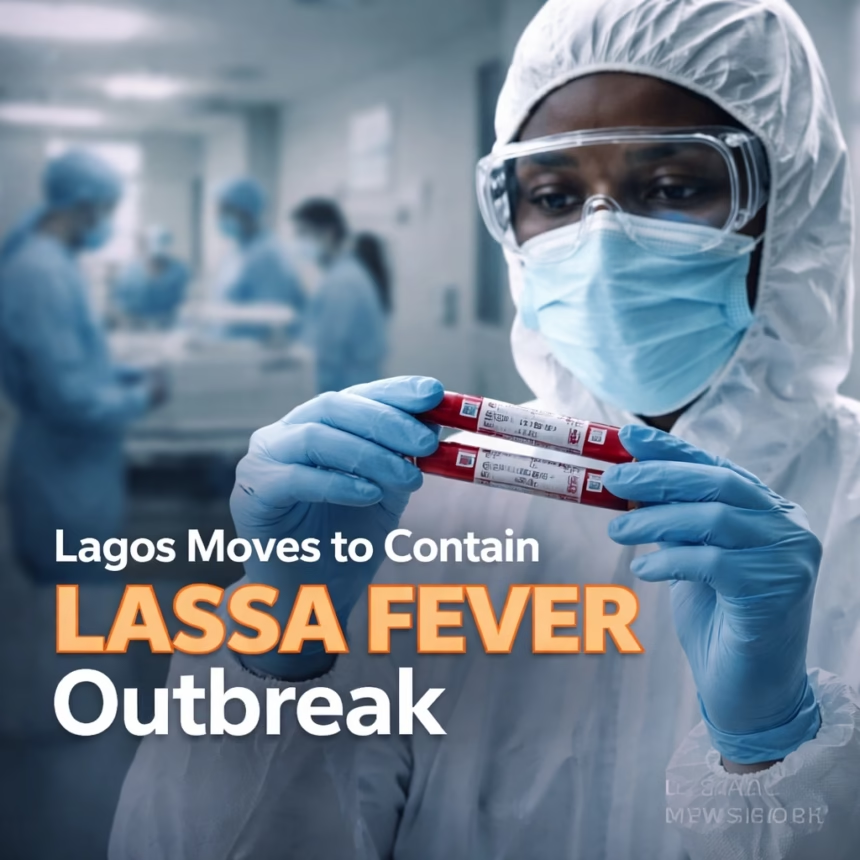
Lagos State is intensifying its public health response to a concerning surge in Lassa fever cases, as Nigeria grapples with a widespread outbreak. The highly contagious viral hemorrhagic fever, endemic in many parts of West Africa, has seen an increase in reported infections across several states since late 2023, prompting authorities in the nation’s commercial hub to activate emergency protocols. This concerted effort aims to mitigate local transmission and protect its dense population from the escalating health crisis.
Background: A Familiar Foe Returns
Lassa fever, caused by the Lassa virus, is a zoonotic disease primarily transmitted to humans through contact with food or household items contaminated with urine or faeces of infected multi-mammate rats (Mastomys natalensis). Person-to-person transmission can also occur through direct contact with the blood, urine, faeces, or other bodily secretions of an infected person. The disease is endemic in Nigeria, with outbreaks typically peaking during the dry season, from November to May, when rats are more likely to seek shelter in human dwellings. Nigeria has consistently recorded Lassa fever cases for decades, with major outbreaks occurring almost annually, challenging its healthcare infrastructure. For instance, the 2018 outbreak was one of the most severe, with over 3000 suspected cases and more than 100 fatalities nationwide. Each year, the Nigeria Centre for Disease Control (NCDC) issues advisories, but the scale of the current national spread has raised particular alarm, pushing states like Lagos, despite its relatively lower endemicity compared to others, to heighten its preparedness and response mechanisms.
Key Developments: Lagos Mobilizes Rapid Response
In response to the escalating national figures and a rise in suspected cases within its borders, the Lagos State Ministry of Health has swiftly implemented a robust emergency plan. On January 23, 2024, the Commissioner for Health, Professor Akin Abayomi, convened an emergency meeting with key stakeholders, including medical directors of general hospitals and representatives from the Lagos State Environmental Protection Agency (LASEPA). This meeting led to the immediate activation of the Lagos State Public Health Emergency Operations Centre (PHEOC) to coordinate all response activities.
Enhanced Surveillance and Contact Tracing
A cornerstone of Lagos's strategy is the significant enhancement of its surveillance system. Disease surveillance officers across all 20 local government areas (LGAs) have been retrained and deployed to actively seek out and report suspected cases. Special attention is being paid to healthcare facilities, where rapid diagnostic tests are now readily available. Furthermore, a dedicated team for contact tracing has been established, tasked with identifying and monitoring individuals who may have come into contact with confirmed cases. This meticulous process involves daily check-ins and health assessments for a minimum of 21 days, the maximum incubation period for the virus. The goal is to quickly isolate new cases and prevent further community spread.
Public Enlightenment Campaigns
Recognizing the critical role of public awareness, the state government has launched an aggressive public enlightenment campaign. Through various media channels—radio jingles, television spots, social media advisories, and community engagements—residents are being educated on preventive measures. Key messages emphasize the importance of maintaining proper hygiene, safe food storage, and effective rodent control. Specific advice includes covering dustbins, storing food in rodent-proof containers, and disposing of refuse properly. The campaign also urges citizens to report any symptoms such as fever, body aches, sore throat, or general malaise, and to seek immediate medical attention, particularly if they have come into contact with suspected cases or reside in areas with known rodent infestations. Mobile public address systems are also being deployed in markets and densely populated areas like Mushin and Oshodi to disseminate these vital messages.

Treatment and Isolation Facilities
To ensure adequate capacity for patient management, the Lagos State University Teaching Hospital (LASUTH) and the Infectious Disease Hospital (IDH) in Yaba have been designated as primary treatment and isolation centers for confirmed Lassa fever cases. Both facilities have dedicated isolation wards equipped with specialized medical equipment and trained personnel. Additional resources, including personal protective equipment (PPE), essential medicines like Ribavirin (an antiviral drug used for Lassa fever), and laboratory reagents, have been procured and distributed to these centers. The state is also exploring contingency plans for expanding isolation capacity should the need arise, including identifying secondary facilities that can be rapidly converted.
Resource Mobilization and Inter-Agency Collaboration
Beyond medical supplies, Lagos State is mobilizing financial and human resources. Emergency funds have been allocated to support the response, and healthcare workers, including doctors, nurses, and laboratory scientists, are undergoing refresher training on Lassa fever case management, infection prevention, and control (IPC) protocols. The state is also working in close coordination with the NCDC, sharing epidemiological data, collaborating on surveillance efforts, and leveraging national resources and expertise to strengthen its local response. This multi-sectoral approach ensures a comprehensive and integrated strategy against the outbreak.
Impact: A Growing Threat to Public Health
The current Lassa fever outbreak poses a significant threat to public health in Lagos, a city with over 20 million residents. As of February 15, 2024, the NCDC reported over 150 confirmed cases nationwide, with more than 20 fatalities. While Lagos has recorded fewer confirmed cases compared to states like Ondo, Edo, and Bauchi, the potential for rapid spread in its densely populated environment is a major concern.
More Read

Confirmed Cases and Fatalities in Lagos
Lagos State has reported a handful of confirmed Lassa fever cases since the beginning of the year, primarily linked to individuals with travel history to endemic states or those who had contact with infected persons outside Lagos. For instance, the first confirmed case in late January involved a 32-year-old male who recently traveled from Ebonyi State. Tragically, one fatality has been recorded within Lagos, a 45-year-old female healthcare worker who contracted the virus while attending to a patient from an endemic state, highlighting the severe risks faced by frontline medical personnel. The number of suspected cases under investigation currently stands at 12, with results pending from the designated reference laboratories. These figures, though relatively low, underscore the need for vigilance and robust containment strategies to prevent local transmission from escalating.
Healthcare Worker Vulnerability
Healthcare workers remain particularly vulnerable to Lassa fever infection due to their direct contact with patients. The recent fatality of a healthcare worker in Lagos has heightened awareness and reinforced the urgency of strict adherence to infection prevention and control (IPC) measures in all healthcare settings. Training sessions on proper use of personal protective equipment (PPE), waste management, and patient isolation protocols are being intensified across public and private hospitals. The state government is also ensuring adequate provision of PPE to minimize occupational hazards for medical staff.
Community Response and Economic Implications
The outbreak has inevitably generated a level of public anxiety. While public enlightenment campaigns aim to inform, there is also the risk of misinformation and panic. Markets, a crucial part of Lagos's economy, could face disruptions if fear of transmission leads to reduced patronage or stricter regulations. Furthermore, the strain on the healthcare system, already battling other infectious diseases and routine medical needs, is palpable. Resources diverted to Lassa fever containment could impact other essential health services, creating a ripple effect across the state's public health infrastructure.
What Next: Sustaining the Fight and Future Preparedness
Lagos State's immediate priority is to contain the current outbreak, reduce mortality, and prevent further spread. However, the long-term vision extends to building resilience against future public health emergencies.
Sustained Public Health Measures
The enhanced surveillance, contact tracing, and public awareness campaigns will continue indefinitely, especially throughout the dry season. The Lagos State Ministry of Health plans to sustain its vigilance, ensuring that all suspected cases are promptly investigated and managed. Community health workers will maintain active engagement with local populations, reinforcing messages on hygiene and rodent control. The state also intends to conduct regular assessments of its response effectiveness, adapting strategies based on epidemiological data and emerging challenges.
More Read

Research and Development
Looking ahead, Lagos aims to collaborate with research institutions and the NCDC to better understand local transmission dynamics of Lassa fever. This includes studies on rodent populations, environmental factors contributing to outbreaks, and the genetic sequencing of circulating virus strains. Such research is crucial for developing more targeted and effective prevention and control interventions tailored to the specific context of Lagos and Nigeria. While a vaccine for Lassa fever is still under development globally, Lagos will actively monitor progress and prepare for potential future vaccination campaigns if a viable candidate becomes available.
Inter-Agency and International Collaboration
Continued collaboration with national bodies like the NCDC, as well as international partners such as the World Health Organization (WHO) and the US Centers for Disease Control and Prevention (CDC), will be paramount. These partnerships provide access to technical expertise, additional resources, and best practices from around the world. Lagos seeks to strengthen its laboratory diagnostic capabilities further, potentially becoming a regional reference center for Lassa fever testing and research. The goal is not just to react to outbreaks but to proactively build a robust public health system capable of anticipating, preventing, and effectively responding to infectious disease threats, ensuring the health and safety of its vibrant population.