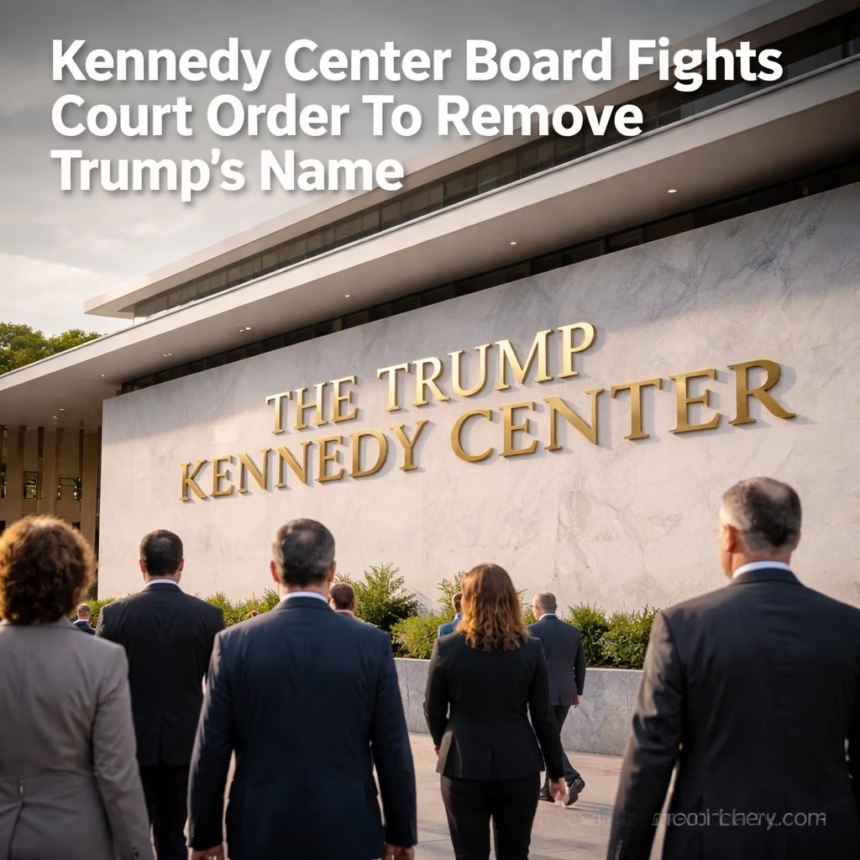
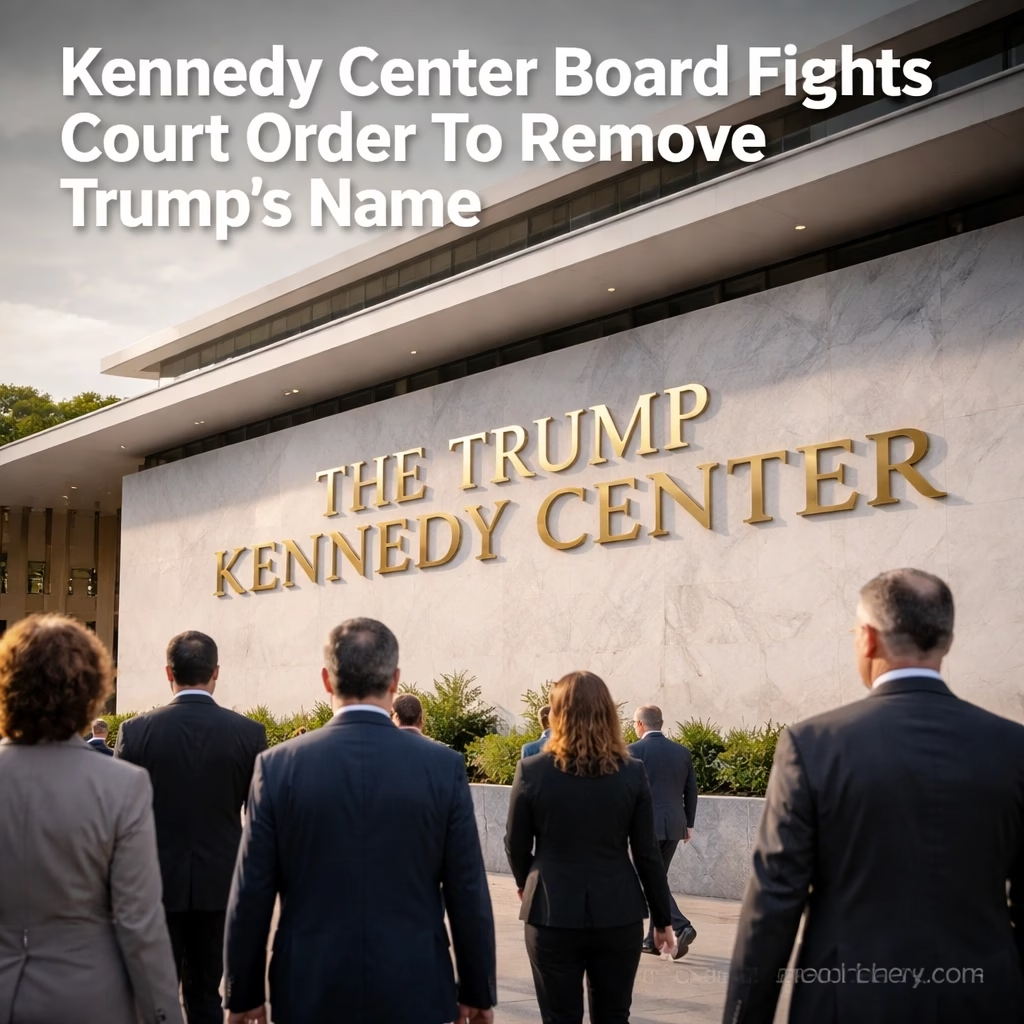
The esteemed John F. Kennedy Center for the Performing Arts in Washington D.C. is embroiled in a significant legal battle, with its Board of Trustees actively challenging a recent court order mandating the removal of former President Donald Trump’s name from a prominent dedication within its facilities. This high-stakes dispute, unfolding over recent months, pits judicial authority against the institution's governance, sparking widespread debate about artistic integrity, political influence, and donor recognition.
Background: The Naming Controversy and Legal Genesis
The controversy began during the Trump administration when, in late 2018, the Kennedy Center announced the dedication of the "Donald J. Trump Grand Foyer" within its newly renovated Eisenhower Theater wing. This naming was reportedly in recognition of a substantial, undisclosed private donation made to the Center in the former President’s name, alongside his administration's support for the National Endowment for the Arts and the National Endowment for the Humanities through key legislative appropriations. While the Center’s leadership at the time lauded the move as a gesture of bipartisan support for the arts, it immediately drew criticism from a segment of the artistic community and patrons who argued it politicized a non-partisan cultural institution.
Genesis of the Naming
The decision to honor former President Trump with such a prominent dedication was formalized following a Board of Trustees vote in November 2018. While the exact figures of the private donation remain confidential, sources close to the Center indicated it was among the largest individual contributions received in recent years, earmarked specifically for the Eisenhower Theater renovations. The dedication plaque, prominently displayed, was unveiled in March 2019, cementing the former President's association with the iconic cultural landmark.
Legal Challenge Emerges
The legal challenge against the naming was initiated in early 2023 by a coalition of artists, patrons, and public interest groups, collectively known as "Citizens for Artistic Integrity" (CAI). Their lawsuit, filed in the Superior Court of the District of Columbia, argued that the naming violated specific clauses within the Kennedy Center Act of 1964, which established the Center, emphasizing its role as a living memorial to President Kennedy and a non-political beacon for the performing arts. CAI contended that the prominent display of a living former President's name, especially one as polarizing as Trump, compromised the Center's non-partisan mission and its foundational principles.
After months of legal filings and arguments, D.C. Superior Court Judge Eleanor Vance issued a landmark ruling on September 12, 2023. Judge Vance found that the dedication, as it stood, indeed contravened the spirit and, in part, the letter of the Kennedy Center Act by creating an appearance of political endorsement or affiliation. The court ordered the Kennedy Center Board to remove all references to Donald J. Trump from the Grand Foyer and any associated official signage or documentation within 90 days.

Key Developments: The Board’s Defiance and Appellate Battle
In a move that surprised many observers, the Kennedy Center Board of Trustees, led by Chairman David M. Rubenstein, voted unanimously on September 29, 2023, to appeal Judge Vance's order. The Board asserted that the court had overstepped its authority in dictating internal naming conventions, which they argued fall under the purview of the Center’s governance and donor agreements. This decision set the stage for a contentious legal battle in the D.C. Court of Appeals.
Appellate Arguments
The Kennedy Center’s legal team, led by prominent constitutional attorney Sarah Jenkins, filed its appeal brief on October 27, 2023. Their primary arguments centered on the autonomy of the Board of Trustees in managing the Center's facilities and recognizing benefactors. They contended that the Superior Court's interpretation of the Kennedy Center Act was overly broad and that the naming was a standard practice of donor recognition, distinct from political endorsement. The brief emphasized the potential chilling effect on future philanthropy if such dedications could be retroactively undone by judicial decree.
Conversely, CAI's legal representatives, led by civil rights lawyer Marcus Thorne, submitted their response on November 15, 2023. They reiterated that the Center's unique status as a national memorial and a public trust required a stricter adherence to non-partisanship than a typical private institution. Thorne argued that the sheer prominence of the dedication, coupled with the political climate, constituted an undue political influence that undermined the Center's mission to unite, not divide, through art.

Board’s Internal Debate
While the public vote to appeal was unanimous, internal discussions within the Board of Trustees have been reportedly intense. Sources indicate that some board members expressed concerns about the escalating legal costs and the potential for prolonged reputational damage. However, the prevailing sentiment, championed by Chairman Rubenstein, has been to defend the principle of the Board's authority and to uphold donor agreements, which they view as crucial for the Center's financial stability and future fundraising efforts. A special board meeting on December 5, 2023, reaffirmed the commitment to the appeal, with several members issuing statements emphasizing the importance of protecting the Center's operational independence.
The D.C. Court of Appeals heard oral arguments from both sides on January 10, 2024. The three-judge panel rigorously questioned both legal teams on the scope of judicial review over cultural institutions and the precise interpretation of the Kennedy Center Act's non-partisanship clauses. A decision from the appellate court is expected in the coming months.
Impact: Repercussions Across Spheres
The ongoing legal fight has sent ripples through various communities, affecting the Kennedy Center's standing, its donor base, and the broader cultural landscape. The dispute has become a microcosm of the larger national debate surrounding public spaces, historical memory, and political symbolism.
Reputational Fallout
The Kennedy Center's reputation, typically seen as a bastion of artistic excellence and national pride, has faced scrutiny. Critics argue that the Board's decision to fight the court order reflects an insensitivity to public sentiment and a prioritization of donor relations over ethical principles. Supporters, however, commend the Board for defending its autonomy and the sanctity of philanthropic agreements. This division has led to increased public discourse, with op-eds and social media campaigns emerging from both sides.
Donor Community Reaction
The philanthropic community is closely watching the outcome. Some major donors have reportedly expressed concern that a precedent set by the court could jeopardize future naming rights and dedications, potentially chilling large-scale donations to cultural institutions across the country. Conversely, a segment of donors and patrons has signaled support for the court's decision, emphasizing that public institutions must maintain strict neutrality to earn and retain broad public trust. The Center's annual fundraising gala in February 2024, usually a non-controversial affair, saw a noticeable undercurrent of tension among attendees regarding the ongoing legal battle.
More Read

Artistic Programming and Staff Morale
Within the Kennedy Center itself, the legal fight has cast a shadow over artistic programming. While performances continue, staff morale has been affected by the uncertainty and the public controversy. Artists scheduled to perform at the Center have, in some instances, faced questions about their stance on the naming dispute, adding an unexpected political dimension to their engagements. The Center's leadership has publicly reiterated its commitment to artistic excellence, attempting to shield the creative endeavors from the legal fray.
What Next: The Path Ahead
The legal journey for the "Donald J. Trump Grand Foyer" is far from over. The D.C. Court of Appeals' upcoming decision will be a pivotal moment, but it is unlikely to be the final word in this contentious dispute. Both sides are preparing for potential further appeals, potentially reaching the highest court in the land.
Judicial Path Ahead
Should the D.C. Court of Appeals uphold the Superior Court’s order, the Kennedy Center Board has indicated its strong intent to appeal the decision to the U.S. Supreme Court. Such a move would elevate the case to a national stage, potentially setting a precedent for how public cultural institutions navigate political affiliations and donor recognition. Conversely, if the appellate court sides with the Kennedy Center, CAI has vowed to pursue all available legal avenues, including a Supreme Court appeal, to ensure what they describe as the Center's "uncompromised integrity." A decision from the D.C. Court of Appeals is anticipated by late April 2024.
Potential for Resolution
Despite the current adversarial stance, some observers suggest that a negotiated settlement could still be possible. Discussions might involve alternative forms of recognition for the donation, such as a named fund or a less prominent dedication, that satisfy both the Board's commitment to its donors and the public's demand for political neutrality. However, neither side has publicly indicated a willingness to enter into such negotiations at this stage, preferring to let the legal process play out.
Future Board Dynamics
The composition of the Kennedy Center Board of Trustees itself could become a factor. Several terms for board members are set to expire in late 2024, and upcoming appointments by the President could shift the internal dynamics and influence future decisions regarding the naming dispute. The ongoing controversy may also affect the pool of candidates willing to serve on the Board, potentially attracting individuals with strong views on institutional independence or political neutrality.
As the nation watches, the Kennedy Center's battle over a name continues to highlight the complex interplay between culture, politics, and the law in America's most prominent institutions.