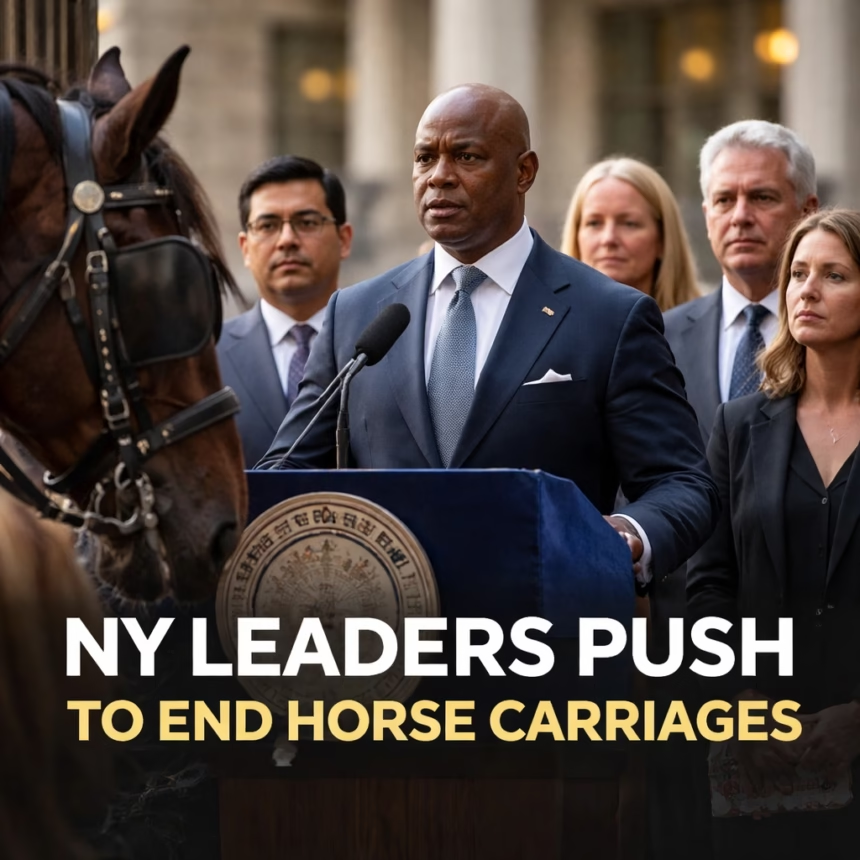
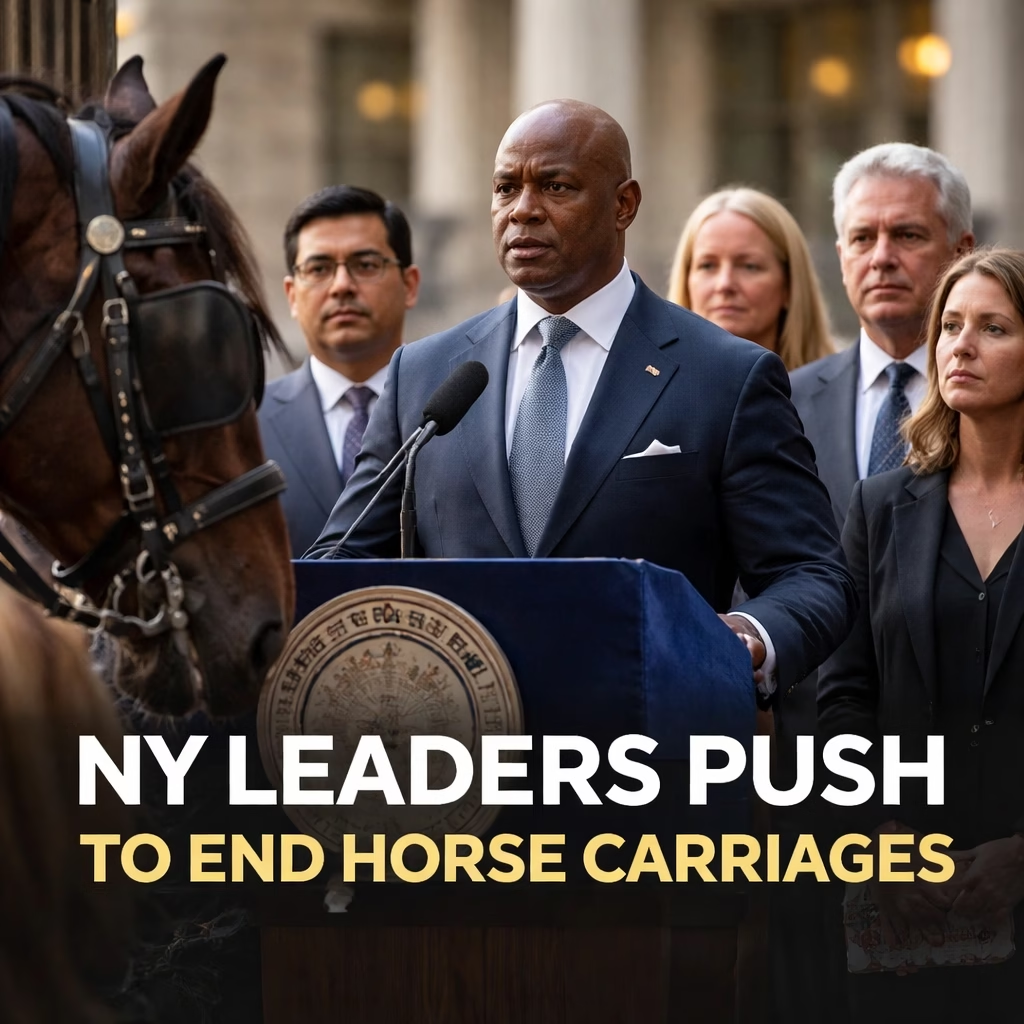
New York City's long-standing horse carriage industry faces its most significant challenge yet, as city leaders, including Mayor Eric Adams, intensify calls for a ban following the recent death of an Indian teenager. The tragic incident, which saw a young life lost after a collision involving a horse-drawn carriage, has reignited the decades-old debate about animal welfare and public safety in the heart of Manhattan. City officials are now actively working to advance legislation that would phase out horse-drawn carriages in favor of electric alternatives.
A Century of Tradition Meets Modern Scrutiny
The horse carriage industry has been an emblematic part of New York City's tourism landscape for over 150 years, offering rides through Central Park. For generations, these carriages have been a quintessential experience for visitors, evoking a bygone era amidst the bustling metropolis. However, the industry has also been a continuous flashpoint for animal rights advocates, who argue that keeping horses in urban environments is inherently cruel and unsafe.
The Decades-Long Battle for the Horses
Organizations like NYCLASS (New Yorkers for Clean, Livable, and Safe Streets) and the ASPCA have consistently campaigned for the abolition of horse-drawn carriages. They cite concerns about horses' living conditions, exposure to heavy traffic, extreme weather, and the potential for accidents in a dense urban setting. These groups advocate for replacing the horses with electric, vintage-style vehicles, which they argue would preserve jobs and the tourist experience without animal exploitation.
Previous Attempts at Reform and Ban
Efforts to ban or severely restrict the industry have surfaced repeatedly over the past few decades. Former Mayor Bill de Blasio made a campaign promise to ban them, but faced significant opposition from the Teamsters Local 553, which represents the carriage drivers, and some factions within the City Council. These attempts often stalled due to strong lobbying efforts, economic considerations, and the perceived historical and cultural value of the carriages.
The Tragic Incident: Harman Singh’s Death
On May 24, 2024, the debate took a somber and urgent turn with the death of 17-year-old Harman Singh from India. Singh, a tourist, was riding an e-bike when he collided with a horse-drawn carriage on West 59th Street near Central Park South. While the initial collision was with the e-bike, reports indicate he was subsequently pinned under the carriage, sustaining fatal injuries. He was rushed to New York-Presbyterian Hospital and later succumbed to his injuries on May 29, 2024. The incident sparked immediate outrage and renewed calls for action from city officials and advocacy groups, pushing the issue to the forefront of public discourse.

Political Momentum Builds for a Ban
In the wake of Harman Singh's death, there has been a noticeable shift in the political landscape regarding the horse carriage industry. Mayor Eric Adams, who previously expressed openness to the industry, has now publicly stated his support for phasing out horse-drawn carriages. This marks a significant development, as the mayor's office holds considerable sway in city policy and legislative initiatives.
Mayor Adams’ Shifting Stance and Urgent Calls
Mayor Adams, speaking at a press conference following the tragedy, emphasized the need for modern solutions and expressed concern for both human safety and animal welfare. He pointed to the recent tragedy as a catalyst for re-evaluating the industry's place in a 21st-century city. His administration is now actively working with City Council members to advance legislation that would address these concerns comprehensively.
City Council Speaker’s Endorsement and Proposed Legislation
City Council Speaker Adrienne Adams has also voiced strong support for ending the practice. She highlighted the inherent dangers posed by horses operating amidst dense urban traffic and the availability of viable, modern alternatives. The primary legislative vehicle for this change is expected to be Introduction 573, a bill that proposes replacing the horse-drawn carriages with electric, replica vintage cars. This bill aims to transition the current drivers to operating the new electric vehicles, preserving jobs while eliminating the use of live animals.
More Read

Advocacy Groups Intensify Pressure
Animal rights organizations, invigorated by the political momentum, have amplified their campaigns. NYCLASS, PETA, and other groups have held rallies, issued statements, and engaged in direct lobbying efforts, presenting the electric carriage model as a humane and economically sound solution. They argue that the technology for electric alternatives is mature and that other major cities around the world have successfully transitioned away from horse-drawn carriages, setting a precedent for New York.
The Impact: A City on the Brink of Change
The potential ban of horse carriages would have wide-ranging impacts, affecting drivers, horses, tourists, and the broader New York City economy. The transition would require careful planning and execution to mitigate negative consequences and ensure a smooth shift for all involved parties.
For the Horse Carriage Drivers and Industry
The most immediate impact would be on the approximately 130 licensed horse carriage drivers and their families. The industry, represented by Teamsters Local 553, has historically resisted bans, citing concerns about job loss and the destruction of a cultural icon. The proposed legislation, Intro 573, attempts to address this by mandating that existing drivers be prioritized for permits to operate the new electric carriages, and by providing necessary training. However, concerns remain among drivers about the viability of the electric carriage business and whether all current drivers would be able or willing to make the transition.
The Fate of the Horses
A key component of any ban would be the safe retirement and rehoming of the approximately 200 horses currently working in the industry. Animal welfare organizations are advocating for these horses to be sent to reputable sanctuaries where they can live out their lives in natural environments, away from the stresses of city life and traffic. The cost and logistics of such an undertaking would be substantial, requiring cooperation between the city, animal welfare groups, and potentially the current stable owners.
Redefining the Tourist Experience
For millions of tourists who visit Central Park annually, the horse carriage ride has been a cherished bucket-list item. An end to the horse carriages would fundamentally alter this experience. The introduction of electric carriages aims to fill this void, offering a similar aesthetic and scenic tour without the use of live animals. The success of this transition will depend on public acceptance, the appeal of the new vehicles, and effective marketing by the city and operators.
More Read

Economic Ripple Effects
Beyond the immediate impact on drivers, the ban could affect related businesses, including feed suppliers, farriers (horseshoe specialists), veterinarians specializing in urban equines, and stable employees. While some services might adapt to the electric carriage model (e.g., vehicle maintenance), others would see a decline in demand. Conversely, the electric carriage manufacturing and maintenance sectors could see a boost in activity and job creation.
The Road Ahead: Legislative Battles and Transition Plans
The path to a full ban and transition is fraught with potential challenges, requiring further legislative action, robust public engagement, and meticulous logistical planning. The process will involve multiple stages, each with its own set of hurdles.
City Council Deliberations and Vote
Introduction 573 is currently under review by the City Council. It will need to pass through committee hearings, where stakeholders from all sides – including animal rights advocates, industry representatives, and concerned citizens – will present their arguments and provide testimony. Following committee approval, it would proceed to a full Council vote. Given the Mayor's and Speaker's public support, the bill has a stronger chance of passing than previous attempts, but strong opposition from the industry and some council members is expected to continue.
Implementation Timeline and Logistics
If the bill passes, a detailed implementation plan would be necessary. This would include setting a definitive timeline for phasing out the horse carriages, establishing a transparent system for licensing and training electric carriage operators, and developing a comprehensive strategy for the humane retirement of the horses. The bill currently proposes a transition period, likely a few years, to allow for the procurement of new electric vehicles and the thorough training of existing drivers for their new roles.
Potential Legal Challenges
The horse carriage industry, supported by the Teamsters, has a history of mounting legal challenges against proposed bans or significant restrictions. Should the City Council pass Intro 573, it is highly probable that the industry would initiate legal action, arguing issues such as economic hardship, unfair labor practices, or even questioning the city's authority to enact such a ban. These potential legal battles could delay or complicate the transition process, extending the period of uncertainty for all involved.
Public Acceptance and Future of Central Park Tours
Ultimately, the success of replacing horse carriages with electric ones will depend significantly on public acceptance and tourist demand. The city and electric carriage operators will need to market the new experience effectively, highlighting its benefits in terms of safety, modernity, and animal welfare. The long-term vision aims to create a safer, more humane, and equally enjoyable way to experience Central Park's iconic beauty, aligning New York City with modern animal welfare standards while preserving a beloved tourist tradition in a new, sustainable form.