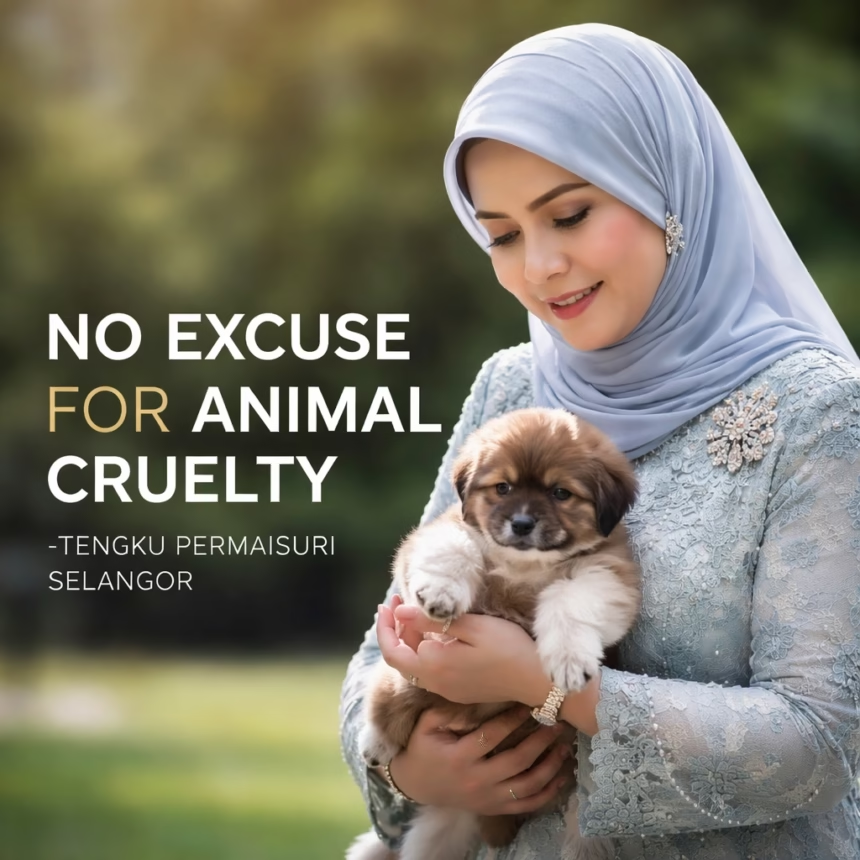
Tengku Permaisuri Selangor, Tengku Permaisuri Norashikin Abdul Rahman, recently issued a powerful condemnation of animal cruelty, asserting unequivocally that there is "no excuse" for such heinous acts. Her Royal Highness's statement, delivered during a virtual address on October 26, 2023, underscored the urgent need for enhanced enforcement of existing animal welfare legislation across Selangor and the entire nation. This compelling message resonates deeply with animal rights advocates and the wider Malaysian public, signaling a heightened royal concern for the voiceless.
Background: A Nation’s Striving for Animal Welfare
Malaysia's journey in animal welfare advocacy has seen significant milestones, though challenges persist. Prior to 2015, animal protection laws were largely enshrined within the outdated Animals Act 1953, which carried relatively lenient penalties, often failing to deter perpetrators of abuse. This period was marked by a growing public awareness of cruelty cases, frequently highlighted by local animal rescue groups and grassroots activists who campaigned tirelessly for stronger legal frameworks. These efforts culminated in the landmark enactment of the Animal Welfare Act 2015 (Act 772), a progressive piece of legislation designed to provide more comprehensive protection for animals.
The Animal Welfare Act 2015 introduced stringent provisions, including mandatory duties of care for animal owners, prohibitions against various forms of cruelty, and significantly enhanced penalties. Under the Act, individuals found guilty of animal cruelty can face fines ranging from RM20,000 to RM100,000, imprisonment for up to three years, or both. This legislative overhaul was celebrated as a crucial step forward, reflecting a societal shift towards greater empathy for animals. However, the implementation and enforcement of the Act have presented their own set of hurdles. The Department of Veterinary Services (DVS), tasked with overseeing animal welfare, often grapples with resource limitations, public reporting inconsistencies, and the complexities of investigations and prosecutions. Despite the legal framework, incidents of abandonment, neglect, torture, and illegal animal trade continue to surface, prompting continuous calls from civil society for more robust action. The royal family in Malaysia, particularly figures like Tengku Permaisuri Norashikin, often serves as a moral compass, lending their voice and influence to critical social issues, including the ethical treatment of animals.
Key Developments: Royal Intervention Amid Rising Concerns
Tengku Permaisuri Norashikin's recent pronouncement arrives at a critical juncture, following a period marked by increased public exposure of animal cruelty incidents across Malaysia. Social media platforms have become instrumental in bringing these cases to light, often galvanizing public outrage and demand for justice. In recent months, several high-profile instances, ranging from the brutal beating of stray dogs to the abandonment of pets and the neglect of farm animals, have circulated widely online, intensifying the national conversation around animal rights. Animal welfare organisations, such as SPCA Selangor and PAWS Malaysia, have reported a discernible uptick in cruelty reports and rescue operations, particularly in urban and suburban areas of Selangor.
These organisations have consistently advocated for stronger enforcement mechanisms, arguing that while the Animal Welfare Act 2015 provides a solid legal foundation, its effectiveness is hampered by insufficient resources for investigation and prosecution, as well as a perceived lack of public awareness regarding reporting channels. There have also been ongoing discussions among legal experts and activists about the adequacy of current penalties, with some suggesting that maximum sentences are rarely imposed, potentially undermining the deterrent effect of the law. The Tengku Permaisuri's statement is a significant development, as it elevates the issue of animal cruelty from a civil society concern to a matter of royal attention and endorsement. This royal intervention is expected to provide a substantial boost to the ongoing efforts of animal welfare advocates, adding considerable weight to their calls for more proactive and decisive action from enforcement agencies, including the DVS and local councils. It signifies a clear royal directive for authorities to re-evaluate their approaches and intensify their efforts in safeguarding animal well-being within the state and beyond.
More Read
Impact: A Ripple Effect for Animals and Society
The strong stance taken by Tengku Permaisuri Norashikin is anticipated to have a profound and far-reaching impact across multiple facets of Malaysian society, most notably on the animals themselves. As direct victims of cruelty, animals stand to benefit from the heightened attention and potential for more rigorous enforcement of their rights. The royal decree serves as a powerful validation for the voiceless, emphasizing that their suffering will not be ignored. For the general public, the statement is expected to raise awareness and foster a greater sense of responsibility towards animal welfare. It encourages citizens to be more vigilant, to report instances of abuse through official channels such like the e-AWAS system operated by DVS, and to actively participate in creating a more compassionate environment.
Law enforcement agencies, particularly the Department of Veterinary Services (DVS) and local municipal councils, will likely face increased pressure and scrutiny to act decisively on reported cases. This royal endorsement could translate into a renewed mandate for these bodies to allocate more resources, conduct thorough investigations, and pursue prosecutions more diligently. For animal welfare NGOs such as SPCA Selangor, PAWS Malaysia, and others, the Tengku Permaisuri's statement offers invaluable support and recognition. It can galvanise increased public donations, attract more volunteers, and amplify their advocacy efforts, providing them with a stronger platform to push for policy changes and community engagement initiatives. Furthermore, the statement reinforces ethical values within Malaysian society, promoting empathy, kindness, and respect for all living creatures. This cultural shift is crucial for fostering a society that not only protects animals from harm but also nurtures a harmonious coexistence between humans and the animal kingdom, ultimately reflecting positively on the nation's moral fabric.
What Next: Towards Enhanced Protection and Awareness
Looking ahead, Tengku Permaisuri Norashikin's powerful statement is expected to catalyse a series of actions aimed at strengthening animal welfare in Selangor and potentially inspiring similar initiatives nationwide. A primary expected outcome is a significant intensification of enforcement efforts by the Department of Veterinary Services (DVS) and local authorities. This will likely involve more proactive investigations into reported cruelty cases, a swifter response mechanism for emergencies, and a more consistent approach to prosecuting offenders under the Animal Welfare Act 2015. Animal welfare organisations anticipate increased collaboration with these agencies, potentially leading to joint task forces or more streamlined reporting and rescue protocols.
More Read

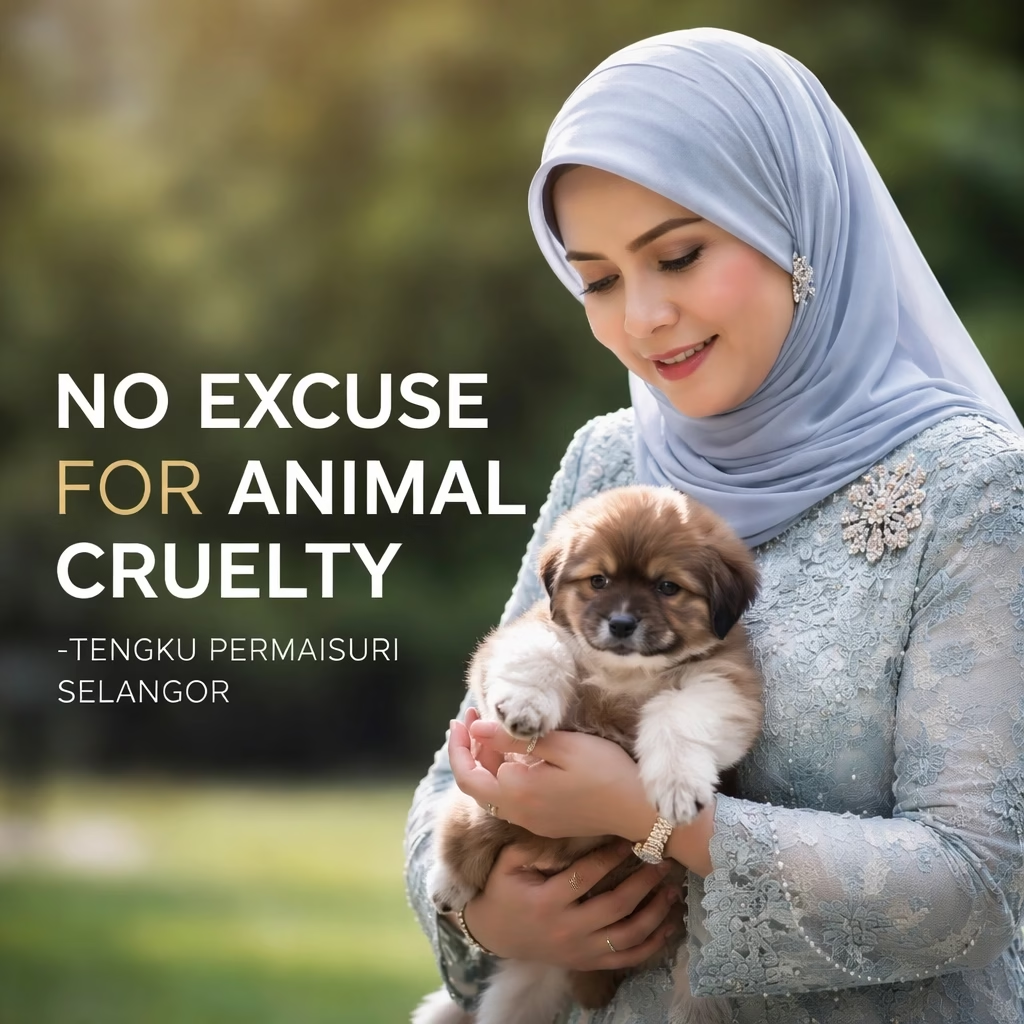
Furthermore, a renewed focus on public awareness campaigns is highly probable. These campaigns, spearheaded by DVS, NGOs, and potentially the Selangor state government, will aim to educate the public on responsible pet ownership, the legal ramifications of animal cruelty, and how to effectively report abuse. Such initiatives could utilise various media platforms, community outreach programs, and educational workshops to instill a deeper understanding of animal welfare principles from a young age. Discussions may also resurface regarding potential amendments or enhancements to the Animal Welfare Act 2015. This could include reviewing the efficacy of current penalties, exploring measures to prevent repeat offences, or broadening the scope of protection to encompass a wider range of animal species. The call for "no excuse" from the Tengku Permaisuri could also spur greater resource allocation to animal shelters and rescue centres, many of which operate on limited budgets and rely heavily on public generosity. The long-term vision is to foster a pervasive culture of compassion and respect for animals, ensuring that Selangor, and indeed Malaysia, becomes a safer and more humane environment for all living beings, reflecting the deep concern articulated by Her Royal Highness.