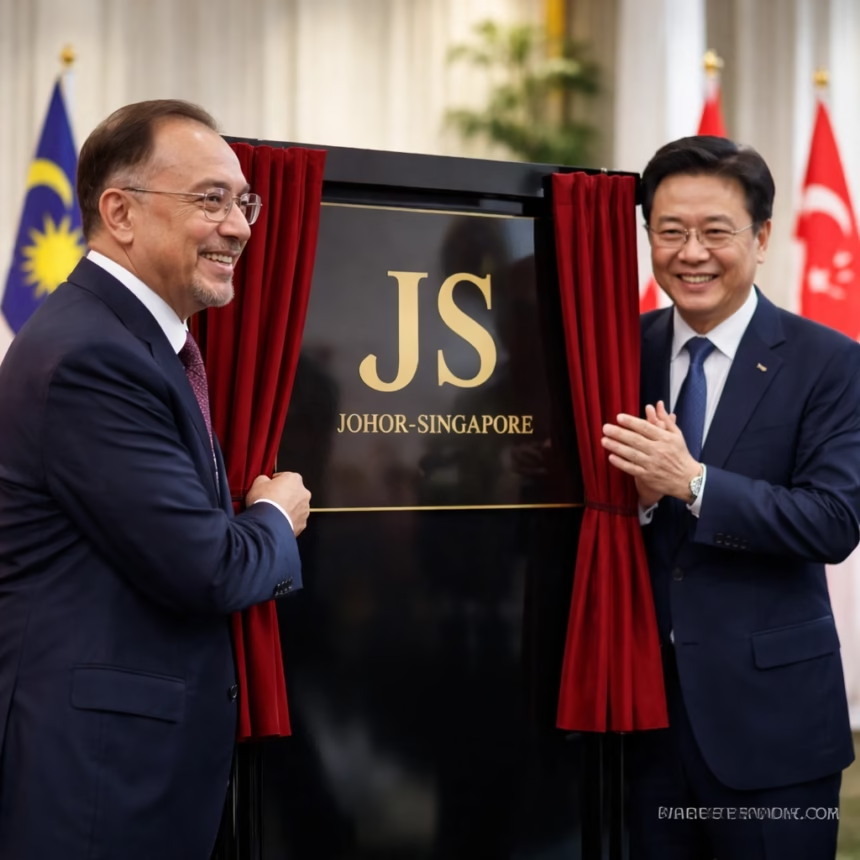
Malaysian Prime Minister Anwar Ibrahim and Singapore Prime Minister Lee Hsien Loong are poised to unveil the master plan for the much-anticipated Johor-Singapore Special Economic Zone (JS-SEZ) in December. This landmark announcement is expected to detail the strategic framework for a new era of cross-border economic collaboration, promising significant implications for both nations, particularly the southern Malaysian state of Johor and the city-state of Singapore. The joint unveiling marks a pivotal moment in bilateral relations, aiming to harness synergies and drive shared prosperity.
A Legacy of Interdependence and New Ambitions
The economic relationship between Johor and Singapore has long been characterised by deep interdependence, symbolised by the daily flow of hundreds of thousands of commuters across the Causeway and Second Link. This intricate connection has fostered robust trade, investment, and cultural exchange for decades. The concept of a special economic zone, however, represents a significant escalation of this partnership, moving beyond mere connectivity to integrated development.
Discussions for a dedicated economic zone have simmered for years, evolving from earlier concepts like the Iskandar Malaysia development region, which launched in 2006. While Iskandar Malaysia successfully attracted significant investment and infrastructure, the JS-SEZ aims for a more direct and streamlined integration with Singapore's economy, leveraging proximity and complementary strengths. The formal impetus for the JS-SEZ gained substantial momentum during the 10th Singapore-Malaysia Leaders' Retreat in October 2023. During this high-level meeting, both prime ministers affirmed their commitment to exploring the establishment of such a zone, recognising its potential to unlock new growth avenues and enhance regional competitiveness.
The leaders tasked officials from both countries with conducting a detailed feasibility study and developing a comprehensive master plan. This accelerated timeline underscores the strategic importance both governments place on the initiative, viewing it as a critical component for future economic resilience and innovation in the face of global economic shifts. The historical context of shared infrastructure projects, such as the upcoming Johor Bahru-Singapore Rapid Transit System (RTS Link), further illustrates a readiness for large-scale, collaborative undertakings.
Key Developments Towards Integration
Since the October Leaders' Retreat, a dedicated joint task force, comprising senior officials from Malaysia's Ministry of Economy and Singapore's Ministry of Trade and Industry, has been working intensively. Their mandate has been to formulate the operational framework and strategic pillars of the JS-SEZ. This includes identifying specific economic sectors for collaboration, proposing regulatory enhancements, and outlining necessary infrastructure upgrades.
More Read

Pillars of the New Economy
The master plan is expected to focus on several key economic pillars designed to attract high-value investments and foster innovation. These likely include:
Digital Economy: Promoting collaboration in areas such as artificial intelligence, data analytics, cybersecurity, and digital trade platforms. This leverages Singapore's robust tech ecosystem and Malaysia's growing digital talent pool.
* Green Economy: Driving investments in renewable energy, sustainable manufacturing, green technology, and environmental services, aligning with global sustainability goals.
* Advanced Manufacturing: Encouraging high-tech manufacturing, automation, and industrial innovation, building on existing strengths in electronics and precision engineering.
* Logistics and Supply Chain Management: Enhancing cross-border logistics efficiency through streamlined customs procedures, improved freight movement, and integrated supply chain solutions, capitalising on Johor's strategic location and Singapore's port facilities.
* Tourism and Services: Developing integrated tourism offerings and enhancing professional services to support the SEZ's growth.
Streamlining Cross-Border Operations
A crucial aspect of the JS-SEZ's success hinges on significantly easing the movement of goods, capital, and talent. The joint task force has reportedly explored innovative solutions to reduce friction at the border. These could include:
More Read

Customs and Immigration Facilitation: Implementing expedited clearance processes, potentially leveraging digital platforms and pre-approved traveller programmes for business visitors and skilled workers.
* Business Registration and Licensing: Creating a "one-stop shop" or harmonised regulatory framework to simplify the process for companies looking to establish operations within the SEZ.
* Talent Mobility: Developing mechanisms to facilitate the cross-border movement of skilled professionals, potentially through special visa arrangements or mutual recognition of qualifications.
* Digital Connectivity: Ensuring seamless digital infrastructure, including high-speed broadband and secure data exchange, to support digital industries.
The December unveiling is anticipated to provide concrete details on these proposed measures, offering clarity to potential investors and businesses. The master plan will serve as the foundational blueprint for legislative changes and policy adjustments required to bring the JS-SEZ to fruition.
Transformative Impact on Both Sides
The establishment of the JS-SEZ is projected to have a profound and multi-faceted impact on the economies and populations of both Malaysia and Singapore. The strategic integration aims to create a more competitive and resilient economic bloc in Southeast Asia.
Economic Growth and Investment
For Johor, the JS-SEZ is expected to be a major catalyst for foreign direct investment (FDI), particularly in the identified high-growth sectors. This influx of capital will drive economic growth, create new industries, and diversify the state's economic base beyond traditional manufacturing and agriculture. Singapore, in turn, stands to benefit from access to a larger land area, a diverse talent pool, and potentially lower operational costs, allowing its businesses to expand and scale more effectively within the region. The synergy could attract global companies seeking a strategic gateway to Southeast Asia.
Job Creation and Talent Development
A primary benefit for local populations will be significant job creation. The JS-SEZ is envisioned to generate tens of thousands of new employment opportunities across various skill levels, from advanced manufacturing and tech roles to logistics and service sector positions. This will necessitate robust talent development programmes and vocational training initiatives in Johor to equip the local workforce with the requisite skills. For Singapore, the SEZ could alleviate labour constraints and provide new avenues for its professionals and entrepreneurs.
Infrastructure and Connectivity
The SEZ will likely necessitate substantial investment in infrastructure, including enhanced transportation networks, digital infrastructure, and utilities. This could involve upgrades to existing road and rail links, potentially new cross-border connections, and improved public transport within the zone. Better connectivity will not only facilitate business operations but also improve the daily lives of commuters and residents, reducing travel times and enhancing overall quality of life.
More Read

Potential Challenges and Considerations
While the benefits are substantial, the implementation of the JS-SEZ will also present challenges. These include:
Regulatory Harmonisation: Ensuring seamless integration requires overcoming differences in legal and regulatory frameworks.
* Environmental Sustainability: Managing the environmental impact of increased industrial activity and urbanisation will be crucial.
* Social Equity: Ensuring that the benefits of the SEZ are broadly distributed and do not exacerbate existing social inequalities.
* Talent Attraction and Retention: Competing for global talent and retaining skilled workers within the zone will be an ongoing effort.
* Housing and Cost of Living: Increased economic activity could lead to higher demand for housing and services, potentially impacting the cost of living in Johor Bahru.
Addressing these challenges proactively will be key to the long-term success and sustainability of the JS-SEZ.
Beyond the Blueprint: The Road Ahead
The December unveiling of the master plan is just the first major step in a multi-year endeavour. Following the announcement, a detailed roadmap for implementation will be crucial, outlining specific milestones, timelines, and responsibilities for both governments.
Legislative and Policy Frameworks
The master plan will likely be followed by the drafting and enactment of new legislation or amendments to existing laws in both Malaysia and Singapore. These will establish the legal and regulatory foundations for the SEZ, including provisions for investment incentives, special tax regimes, and streamlined administrative procedures. The creation of a dedicated, high-powered authority or joint committee to oversee the SEZ's development and operations is also highly probable, ensuring coordinated governance and efficient decision-making.
Phased Implementation and Project Tenders
The development of the JS-SEZ is expected to be a phased process, with initial focus areas identified for rapid development. This could involve specific industrial parks, innovation hubs, or logistics centres. Public and private sector partnerships will be vital, with tenders for infrastructure projects, development contracts, and operational services anticipated in the months following the master plan's release. Investment roadshows targeting both local and international investors will likely follow to attract the necessary capital and expertise.
Monitoring and Evolution
Given the dynamic nature of global economies, the JS-SEZ framework will need to be flexible and adaptive. Mechanisms for continuous monitoring, evaluation, and periodic review will be essential to ensure the zone remains competitive and relevant. This iterative approach will allow both nations to respond to emerging opportunities and challenges, ensuring the JS-SEZ evolves to meet future economic demands.
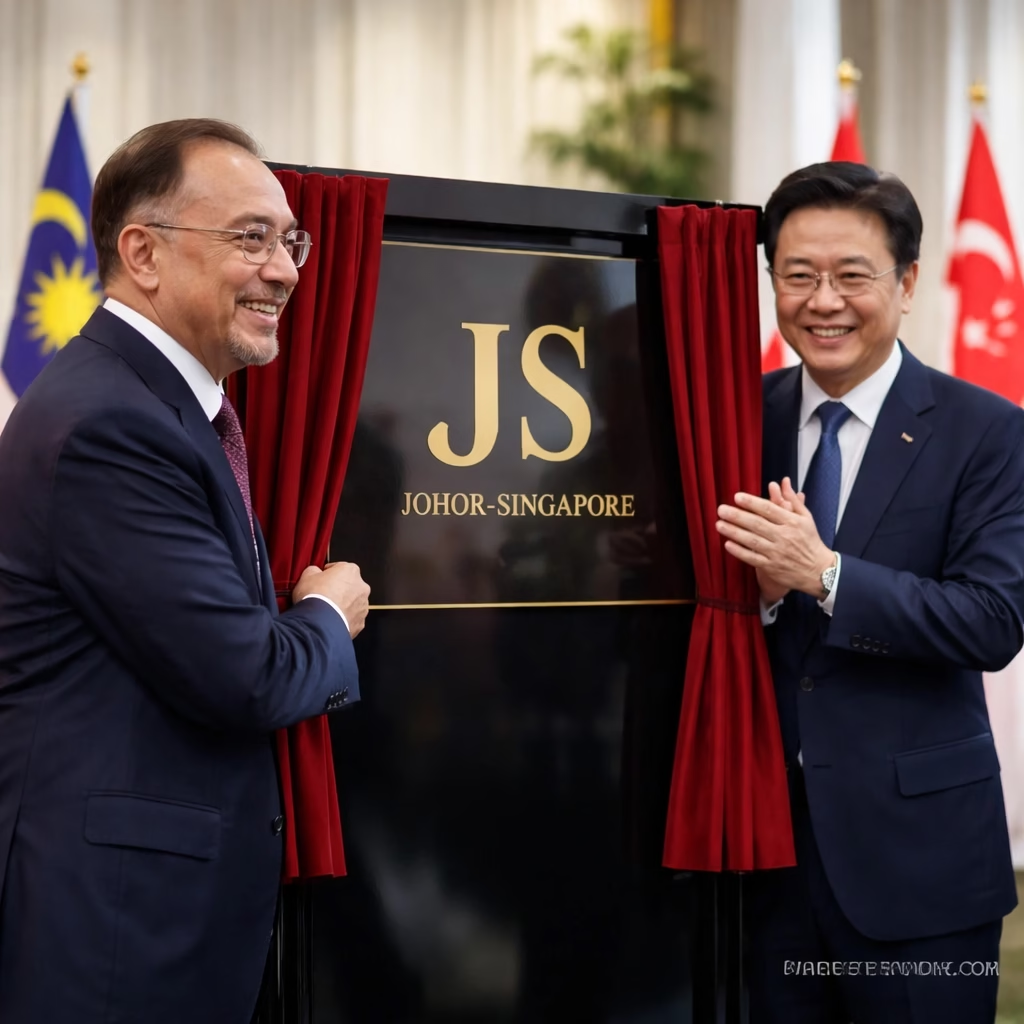
The joint unveiling by Prime Ministers Anwar Ibrahim and Lee Hsien Loong this December represents more than just a ceremonial act; it signifies a shared vision for a future of enhanced economic integration and prosperity. The Johor-Singapore Special Economic Zone holds the promise of transforming the regional economic landscape, setting a new benchmark for cross-border cooperation in Southeast Asia.