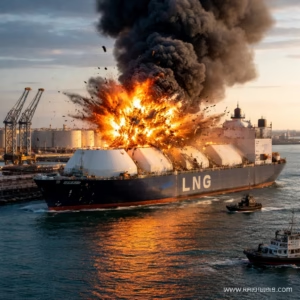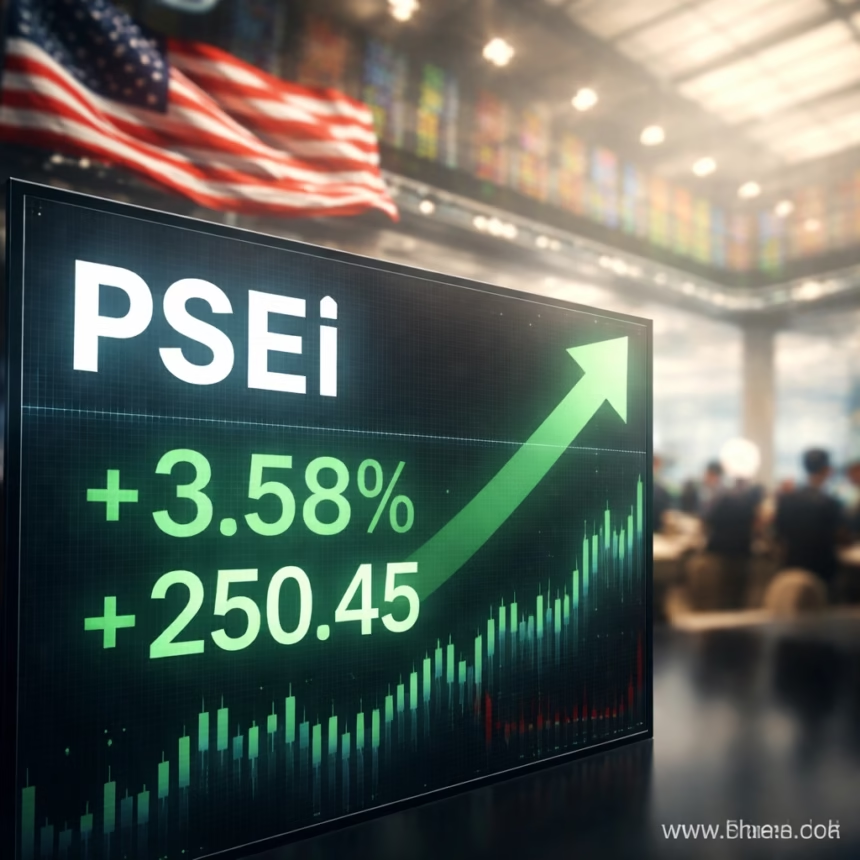
The Philippine Stock Exchange index (PSEi) experienced a significant upswing in recent trading sessions, propelled by burgeoning optimism surrounding a potential de-escalation of tensions between the United States and Iran. This renewed hope for geopolitical stability reverberated across global markets, finding a particularly strong echo in Manila as investors re-evaluated risk premiums and inflation outlooks.
Background: A Volatile History and Global Ripples
The relationship between the United States and Iran has been fraught with tension for decades, marked by periods of intense confrontation and fragile attempts at diplomacy. A significant turning point came in July 2015 with the signing of the Joint Comprehensive Plan of Action (JCPOA), commonly known as the Iran nuclear deal, which saw Iran agree to curb its nuclear program in exchange for sanctions relief. This accord ushered in a brief period of reduced regional volatility and improved investor confidence.
A Decade of Escalating Tensions
However, this détente was short-lived. In May 2018, the US unilaterally withdrew from the JCPOA, subsequently re-imposing and expanding sanctions aimed at crippling Iran's oil exports and financial system. This move triggered a rapid deterioration in relations, leading to a series of dangerous incidents in the Persian Gulf. Throughout 2019 and early 2020, the region witnessed attacks on oil tankers, drone shoot-downs, and the targeted killing of Iranian General Qassem Soleimani by the US, which Iran retaliated against with missile strikes on US bases in Iraq. These events consistently sent crude oil prices soaring, injected immense uncertainty into global trade routes, and kept international investors on edge, fearing a wider regional conflict that could disrupt a significant portion of the world's oil supply.
Philippines’ Economic Vulnerability
The Philippines, a net importer of oil, is particularly sensitive to fluctuations in global crude prices and geopolitical stability. High oil prices translate directly into increased import costs, higher domestic fuel prices, and elevated inflation, which in turn erodes consumer purchasing power and increases operational expenses for businesses. The constant threat of regional instability in the Middle East, a vital source of global energy, has historically dampened investor sentiment in emerging markets like the Philippines, leading to capital outflows and a more cautious approach to local equities. Therefore, any perceived movement towards de-escalation between these two global powers is keenly watched and often met with a positive market reaction in Manila.
Key Developments: Whispers of Peace Spark a Rally
Recent weeks have seen a notable shift in the diplomatic landscape, moving away from the brinkmanship that characterized much of the past few years. While no official breakthrough has been announced, a series of subtle signals and indirect communications have fueled speculation that both Washington D.C. and Tehran are exploring avenues for de-escalation and potential rapprochement.
Diplomatic Overtures and Subtle Signals
The underlying shift began with reports of diplomatic backchannels, reportedly facilitated by intermediaries such as Oman and Qatar. These discussions are believed to have touched upon issues ranging from prisoner exchanges to potential pathways for sanctions relief and a return to some form of nuclear deal compliance. Public rhetoric from both sides has also softened, with officials hinting at a willingness to engage, albeit cautiously. For instance, recent statements from US State Department officials have emphasized diplomacy over confrontation, while Iranian counterparts have expressed openness to negotiation under certain conditions, primarily the lifting of sanctions. These developments, though incremental, have been interpreted by market participants as significant steps away from outright conflict.
Market’s Immediate Response
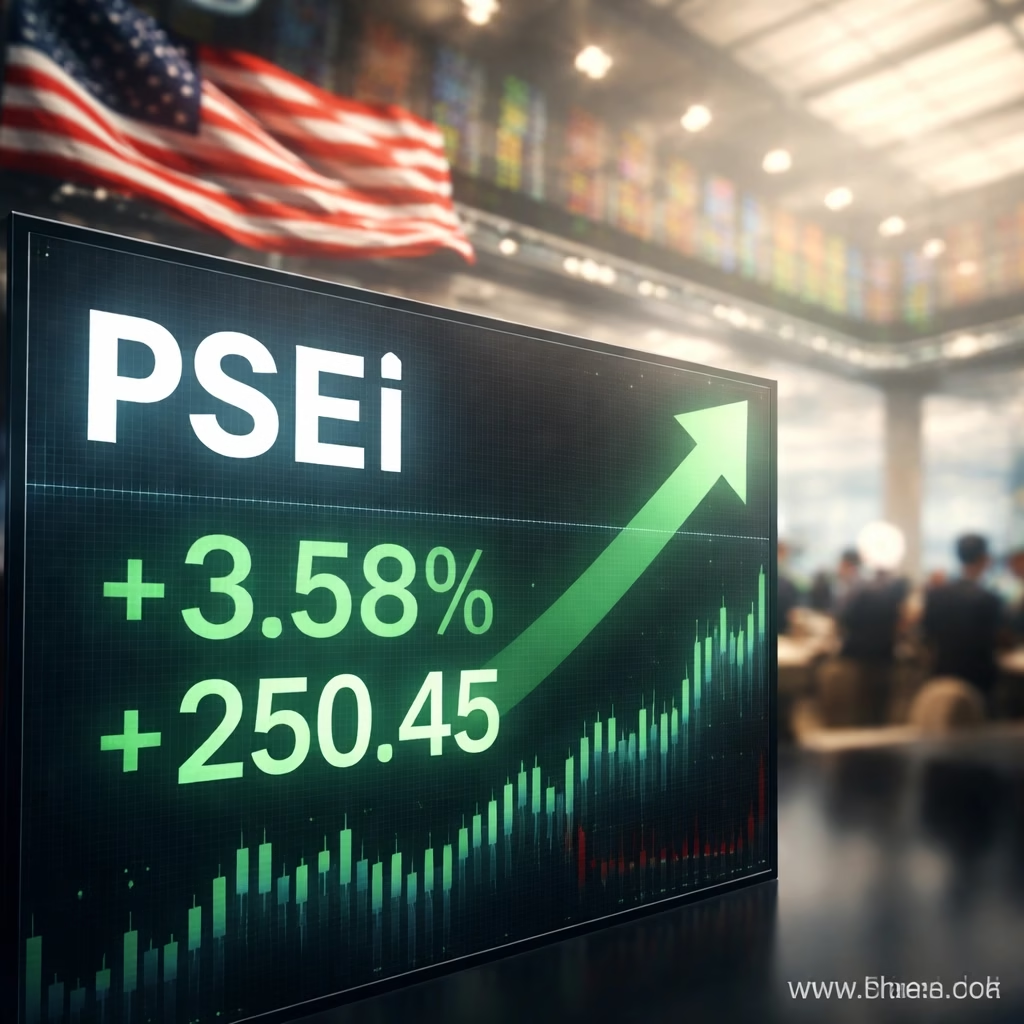
The Philippine Stock Exchange responded with vigor to these positive geopolitical tremors. Over the past week, the PSEi added over 200 points, closing above the 6,800-point level, a significant gain from its earlier position. On a particular trading day, the index surged by 1.8%, marking one of its strongest single-day performances in months. Trading volumes also saw a noticeable increase, indicating heightened investor activity and confidence. Leading the charge were blue-chip companies, particularly those in the industrial, financial, and property sectors, which are often seen as barometers of economic health and investor sentiment. Ayala Corporation and SM Investments Corporation, for example, registered substantial gains, reflecting renewed optimism in the broader economy. Foreign investors, who had previously been net sellers, showed signs of returning to the market, contributing to the upward momentum and signaling a potential shift in international capital flows towards Philippine equities.
More Read
Impact: From Investor Portfolios to Everyday Consumers
The rally triggered by US-Iran peace hopes has far-reaching implications, touching various segments of the Philippine economy and its populace. The immediate beneficiaries are investors, but the ripple effects extend to businesses and everyday consumers.
Investor Sentiment and Sectoral Gains
For both retail and institutional investors, the PSEi's surge has translated into tangible portfolio gains. The reduced geopolitical risk premium makes Philippine assets more attractive, encouraging both local and foreign capital inflows. Sectors that are highly sensitive to oil prices and overall economic stability have seen the most pronounced benefits. Transportation and logistics companies, which bear significant fuel costs, stand to gain from potentially lower crude prices. Manufacturing firms, whose input costs are often tied to energy, also see improved margins. Banks anticipate healthier loan growth as business confidence improves, while property developers could benefit from increased consumer spending and investment. This renewed optimism tends to foster a "risk-on" environment, where investors are more willing to allocate capital to growth-oriented assets.
Broader Economic Implications
Beyond the stock market, the prospect of US-Iran de-escalation holds substantial promise for the broader Philippine economy. The most direct impact would be on inflation. A stable or declining global oil price would significantly ease inflationary pressures, which have been a persistent concern for the Bangko Sentral ng Pilipinas (BSP). Lower inflation could provide the central bank with more flexibility in its monetary policy decisions. Furthermore, a stronger peso, bolstered by reduced demand for US dollars for expensive oil imports and increased foreign investment, would make imports cheaper across the board. Businesses would experience lower operational costs, potentially leading to higher profits, increased capital expenditure, and job creation. Consumers, in turn, would benefit from more stable prices for goods and services, and potentially higher disposable income, stimulating domestic demand and contributing to overall economic growth.
What Next: Navigating the Path to Lasting Peace and Market Stability
While the recent market rally reflects significant optimism, the path to a lasting resolution between the US and Iran remains complex and fraught with potential pitfalls. Investors and policymakers alike are now keenly watching for concrete developments that could either solidify or undermine the current peace hopes.
The Road to Rapprochement
The immediate focus will be on the continuation of diplomatic efforts. Key milestones could include the announcement of direct talks between US and Iranian officials, even if initially at a technical level. Any tangible agreements, such as further prisoner exchanges, specific steps towards sanctions relief, or a commitment to de-escalate regional proxy conflicts, would be crucial. The role of international mediators, including European powers and regional players, will remain vital in bridging the divide. However, the political landscapes in both Washington D.C. and Tehran are complex, and domestic pressures could easily derail fragile diplomatic progress. Any new regional incidents, hardening rhetoric, or perceived violations of nascent agreements could quickly reverse the current positive momentum.
Analyst Projections and Market Volatility
For the Philippine market, analysts are cautiously optimistic. Should the geopolitical thaw continue, the PSEi could see sustained upward momentum, potentially challenging higher resistance levels. Lower oil prices would significantly improve the inflation outlook, allowing the BSP more room to support economic growth. This could also attract more foreign direct investment (FDI) as the Philippines is perceived as a more stable and predictable investment destination. However, market experts also warn against complacency. The rally could be subject to profit-taking, especially if concrete diplomatic progress lags behind market expectations. Any significant reversal in US-Iran relations could trigger a sharp sell-off, reminiscent of past periods of heightened tension. Investors are advised to monitor official statements and geopolitical developments closely, as market volatility is likely to remain a feature of this evolving situation. The long-term economic implications for the Philippines hinge on the durability of any peace initiatives and their capacity to foster a more stable global energy landscape.