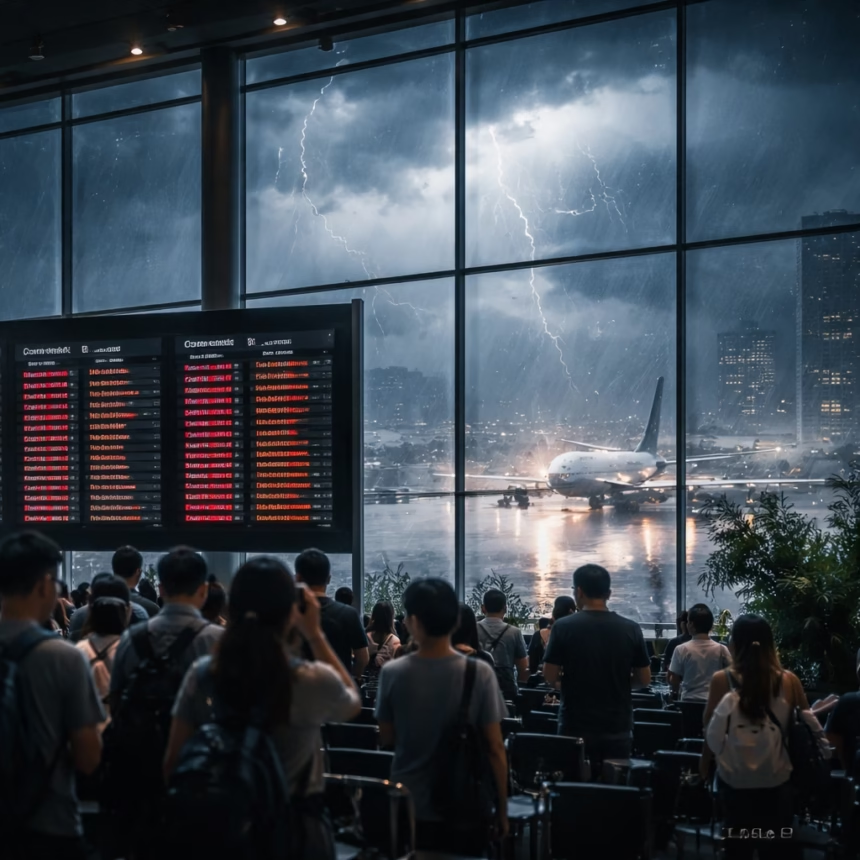
Shanghai's bustling skies fell silent on Sunday, August 9th, as Typhoon Dolphin, a formidable tropical cyclone, made landfall along China's eastern coast. The severe weather event prompted an unprecedented wave of flight cancellations, with at least 1,300 services grounded across the city's two major international airports. This widespread disruption left tens of thousands of travelers stranded and significantly impacted one of the world's busiest aviation hubs.
Background: A Brewing Storm Threatens Eastern China
Typhoon Dolphin originated in the western Pacific Ocean, rapidly intensifying as it tracked northwestward towards the Chinese mainland. Meteorological agencies across the region began issuing warnings days in advance, with the China Meteorological Administration (CMA) elevating its typhoon alert system to an orange warning by Saturday, August 8th. This indicated a high probability of significant impact on coastal areas, including Shanghai and Zhejiang province.
Shanghai’s Aviation Hub Status
Shanghai is home to two critical aviation gateways: Shanghai Pudong International Airport (PVG) and Shanghai Hongqiao International Airport (SHA). Together, these airports handle hundreds of thousands of passengers and vast quantities of cargo daily, serving as a vital link in both domestic and international travel networks. Their strategic importance meant that any disruption would have far-reaching consequences, a reality underscored by Dolphin's impending arrival. The city's coastal location, while advantageous for trade, also places it directly in the path of seasonal typhoons that frequently sweep across the Pacific during summer months. Historically, the region has developed robust disaster preparedness protocols, yet the sheer scale and intensity of individual storms can still present formidable challenges.
Key Developments: Dolphin’s Direct Hit and Immediate Fallout
Typhoon Dolphin made landfall in the early hours of Sunday, August 9th, initially hitting coastal areas of Zhejiang province before tracking northeastward towards Shanghai. The storm brought sustained winds exceeding 120 kilometers per hour near its center, accompanied by torrential rainfall that quickly led to localized flooding and dangerous conditions. The Shanghai Meteorological Bureau reported wind gusts of up to Force 10 in some coastal districts by late Sunday afternoon.

Pudong and Hongqiao Bear the Brunt
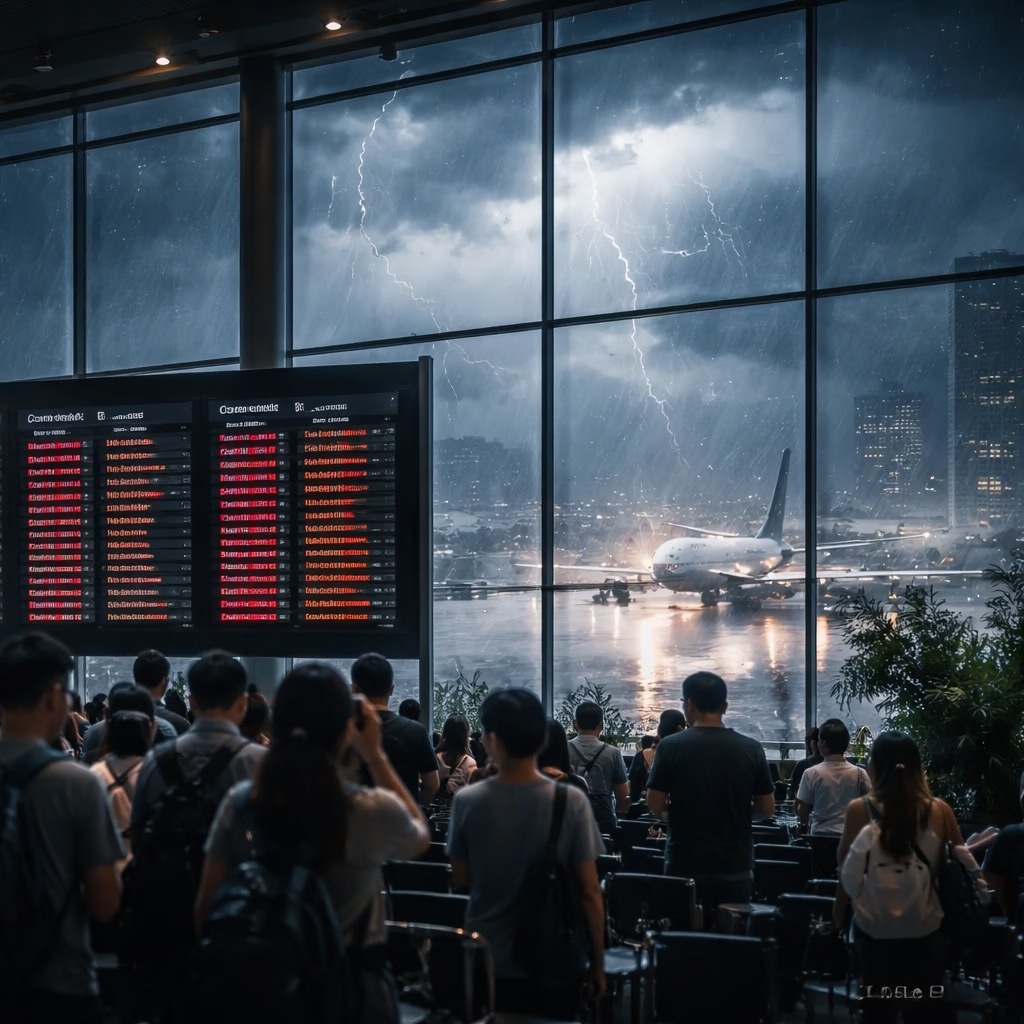
As the typhoon approached, airport authorities at both Pudong and Hongqiao began implementing phased operational restrictions. By Sunday morning, the Civil Aviation Administration of China (CAAC) issued directives to airlines, advising them to adjust schedules. Major carriers, including China Eastern Airlines, Shanghai Airlines, and Air China, preemptively canceled a significant portion of their Sunday and early Monday flights. The cumulative total quickly surpassed 1,300 cancellations, affecting both domestic and international routes. Runways were temporarily closed, air traffic control operations were scaled back, and ground handling services faced severe limitations due to the hazardous weather. Terminal buildings, usually bustling with activity, became quiet save for the announcements of further delays and cancellations.
Wider Infrastructure Disruptions
Beyond air travel, Typhoon Dolphin's impact extended to other critical infrastructure. High-speed rail services connecting Shanghai to other eastern cities experienced delays and cancellations, with some routes temporarily suspended for safety reasons. Local public transportation, including parts of the Shanghai Metro system and numerous bus lines, also faced disruptions. Coastal expressways were closed, and port operations in Shanghai, one of the world's busiest container ports, were either halted or significantly curtailed, causing ripple effects through global supply chains. Emergency services were placed on high alert, with personnel deployed to vulnerable areas to manage potential flooding and assist residents.
Impact: Thousands Stranded, Economic Repercussions
The immediate and most visible impact of the flight cancellations was felt by the tens of thousands of passengers whose travel plans were abruptly derailed. Travelers found themselves stranded at airports, struggling to rebook flights, secure accommodation, or find alternative means of transport.
More Read

Passenger Predicament and Logistical Headaches
Domestic travelers faced the challenge of securing train tickets or bus services, which were also heavily affected by the storm. International passengers encountered more complex issues, including visa restrictions for extended stays, missed connecting flights in other countries, and the logistical nightmare of rearranging multi-leg journeys. Families on holiday, business executives with critical meetings, and students returning to school all experienced significant disruptions. Airlines faced an immense task of rescheduling passengers, managing luggage, and communicating with affected individuals, often under challenging operational conditions. The sudden surge in demand for hotel rooms near the airports, combined with limited availability, led to further frustration for many.
Economic Ripple Effects
The economic fallout from Typhoon Dolphin's impact on Shanghai's aviation sector is substantial. Airlines incurred significant losses from canceled flights, passenger compensation, and operational inefficiencies. Airports faced reduced revenue from landing fees and concessions. The disruption to supply chains, particularly through Shanghai's air cargo and sea freight operations, affected businesses reliant on timely imports and exports. Tourism, already facing headwinds, suffered another blow, as visitors canceled or postponed trips to the region. The broader economic impact extended to industries dependent on travel, such as hospitality, logistics, and retail, underscoring Shanghai's pivotal role in China's economy. Coastal communities in Zhejiang and Jiangsu provinces also reported agricultural damage, power outages affecting thousands of households, and some property damage, adding to the regional economic strain.
What Next: Recovery and Ongoing Vigilance
As Typhoon Dolphin began to weaken and move northward, authorities shifted their focus from immediate emergency response to recovery and restoration. The immediate forecast indicated a gradual improvement in weather conditions over Shanghai by Monday, August 10th, though lingering rain and strong winds were expected in some areas.
Phased Resumption of Services
Airport authorities announced a phased resumption of flight operations. While some flights were expected to depart by Monday afternoon, full recovery was projected to take several days. Airlines faced the complex task of clearing the backlog of stranded passengers, which would likely involve operating extra flights and deploying larger aircraft on popular routes. Travelers were advised to check with their respective airlines for the latest updates and to anticipate continued delays as the system normalized. The Civil Aviation Administration of China emphasized that safety would remain the paramount concern during the recovery phase, with stringent checks on aircraft and airport infrastructure.
Long-Term Preparedness and Assessment
In the aftermath, a comprehensive assessment of the typhoon's impact on infrastructure and public services was initiated. While Shanghai's robust flood defenses largely held, lessons would be drawn from any vulnerabilities exposed during the storm. Authorities would review emergency response protocols and communication strategies to enhance future preparedness. For a city that serves as a global economic powerhouse and a major transportation nexus, continuous investment in resilient infrastructure and advanced meteorological forecasting remains crucial. The incident serves as a stark reminder of the persistent challenges posed by climate change and extreme weather events, necessitating ongoing vigilance and adaptation strategies for coastal megacities like Shanghai.