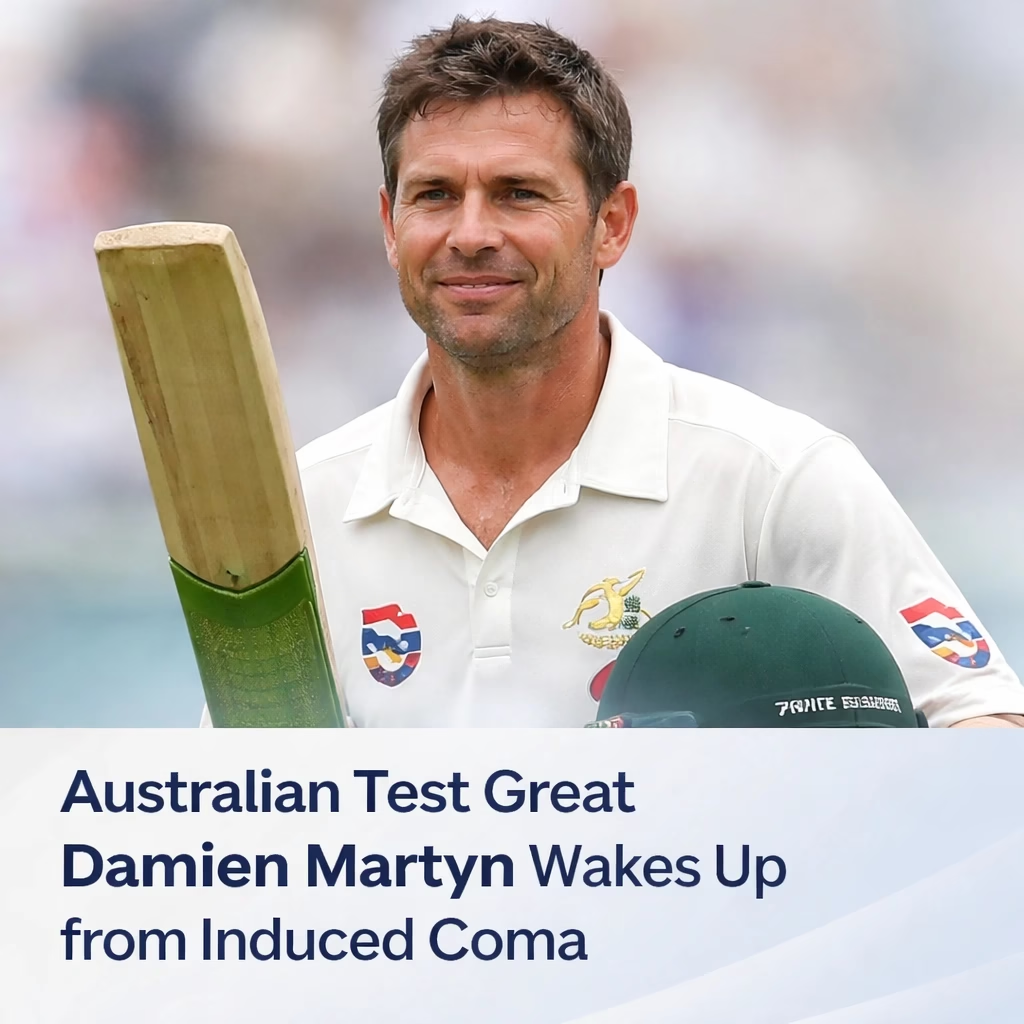
Former Australian Test cricketer Damien Martyn has emerged from an induced coma at Perth's Fiona Stanley Hospital, medical staff confirmed Tuesday morning. The development marks a critical turning point in his recovery following a severe cerebrovascular event that saw him hospitalised last week. His family expressed profound relief, noting the long road to full recovery now begins for the elegant right-hander.
Background: A Distinguished Career and Sudden Crisis
Damien Martyn, 53, carved out a distinguished career for Australia, renowned for his elegant stroke play and composed temperament. Born in Perth, Western Australia, Martyn's journey to the pinnacle of cricket was marked by both immense talent and periods of perseverance. He made his Test debut for Australia against Pakistan in Karachi in 1992, at the age of 21, but it was after a significant hiatus that he truly cemented his place in the national side.
His second coming in Test cricket began in 2000, and from then until his unexpected retirement in 2006, Martyn was a mainstay in one of Australia's most dominant eras. He played 67 Tests, scoring 4,406 runs at an average of 46.37, including 13 centuries and 23 half-centuries. His highest Test score of 165 came against New Zealand in Auckland in 2000. Martyn was celebrated for his wristy flicks, cover drives, and an ability to perform under pressure, often contributing crucial runs in challenging conditions.
Beyond Test cricket, Martyn was an integral part of Australia's One Day International (ODI) squad, playing 208 matches and scoring 5,346 runs at an average of 40.80. He was a key member of the victorious Australian team at the 2003 ICC Cricket World Cup in South Africa, contributing significantly with both bat and in the field. His career spanned a golden age for Australian cricket, playing alongside legends such as Steve Waugh, Ricky Ponting, and Shane Warne.
Following his retirement from international cricket in December 2006, Martyn remained connected to the sport. He pursued various ventures, including occasional commentary stints, coaching roles at grassroots and academy levels, and participating in charity matches. He was a popular figure on the speaking circuit, often sharing anecdotes from his illustrious career and insights into the mental fortitude required at the elite level. Martyn also dedicated time to his family, residing in Perth with his wife and children, maintaining a relatively private but active life.

The Medical Incident
The sudden turn in Martyn's health began last Thursday, October 24, when he experienced a severe medical episode at his Perth home. Details remain scarce, but it is understood he suffered a significant cerebrovascular accident, commonly known as a stroke. His wife, Sarah Martyn, found him unresponsive and immediately called emergency services. Paramedics arrived swiftly, providing initial stabilisation before transporting him to Fiona Stanley Hospital, a leading medical facility in Western Australia.
Upon arrival at the hospital's emergency department, Martyn's condition was assessed as critical. Doctors quickly identified the severity of the stroke, which had impacted a crucial area of his brain. To protect brain function, reduce swelling, and allow the brain to recover from the initial trauma, medical specialists made the decision to place him in an induced coma. This measure is a standard medical protocol in such severe cases, aiming to minimise metabolic demand on the brain and prevent further damage. The induced coma was initiated on Thursday evening, placing the cricketing community and his family in a state of anxious waiting for nearly six days.
Key Developments: Signs of Life and Gradual Awakening
The past 24 to 48 hours have brought the first significant positive developments in Damien Martyn's critical care journey. On Monday evening, medical staff at Fiona Stanley Hospital began the process of gradually reducing the sedation that had kept him in an induced coma. This careful, measured approach is crucial to monitor the patient's neurological responses and ensure their stability throughout the awakening process.

The Awakening Process
Dr. Eleanor Vance, head of the Neurology Department at Fiona Stanley Hospital, addressed a brief press conference this morning, confirming the positive news. "Mr. Martyn began showing initial signs of responsiveness yesterday evening as we commenced the sedation withdrawal," Dr. Vance stated. "These early signs included subtle eye movements and a flicker of response to verbal commands. This morning, he has fully emerged from the induced state."
The process of awakening was closely monitored by a multidisciplinary team, including neurologists, intensivists, and specialist nurses. Dr. Vance elaborated on the sequence of events. "Once sedation levels were sufficiently reduced, Mr. Martyn began to open his eyes spontaneously. He was able to track movements and, crucially, respond to simple commands such as 'squeeze my hand' or 'wiggle your toes.' While communication is still very limited, these are extremely encouraging indicators of brain activity."
Family members, including his wife Sarah and children, were present during these critical hours. Sarah Martyn shared a brief statement through the hospital's media liaison, expressing immense relief. "Seeing his eyes open and knowing he's back with us, even if it's just the beginning, is an overwhelming feeling. We are incredibly grateful to the medical team for their tireless work and expertise."
Current Medical Status
As of Tuesday afternoon, Damien Martyn remains in the Intensive Care Unit (ICU) for continued close monitoring. Dr. Vance confirmed his vital signs are stable, and there are no immediate concerns regarding his cardiovascular or respiratory systems. "His neurological status will be our primary focus over the coming days," she explained. "We need to conduct further assessments to understand the full extent of the stroke's impact on his cognitive and motor functions."
Initial observations suggest some weakness on one side of his body, a common consequence of stroke, but the medical team is optimistic about his potential for recovery given his age and previous physical fitness. "It's important to manage expectations," Dr. Vance cautioned. "While this is a significant step forward, the journey ahead will be challenging and will require extensive rehabilitation. We are taking it one day at a time."
Further diagnostic imaging, including MRI scans, are planned for the coming days to provide a more detailed picture of the brain injury and to guide the subsequent rehabilitation strategy. The hospital has requested privacy for Martyn and his family during this critical early phase of recovery, emphasising the need for a calm and stable environment for his recuperation.
More Read
Impact: A Wave of Support and Cautious Optimism
The news of Damien Martyn's awakening has sent a wave of relief and cautious optimism through the Australian and international cricketing communities, as well as among his wider network of friends and admirers. The initial reports of his critical condition had prompted an outpouring of concern, highlighting the deep respect and affection held for the former Test star.
Family and Friends
For his immediate family, the past week has been an emotional rollercoaster. Sarah Martyn spoke of the "unbearable anxiety" of seeing her husband in such a fragile state. "Every small sign of improvement, every positive word from the doctors, was something we clung to," she shared. "Today's news is a massive weight lifted, but we know this is just the first hurdle in a very long race. Our focus now is entirely on his recovery and being there for him every step of the way."
Close friends, many of whom are former teammates, have been in constant contact with the family. Ricky Ponting, a long-time teammate and friend, expressed his profound relief. "It's the best news we could have hoped for," Ponting said in a statement. "Marto is a fighter, and he's shown that throughout his career. This is a different kind of fight, but knowing he's awake and responsive gives everyone so much hope. Our thoughts are with Sarah and the kids, and we're all here to support them."
Adam Gilchrist, another close colleague, echoed these sentiments. "Damien has always been a man of immense character and resilience. This news is incredibly heartening. We've all been praying for this outcome. The cricketing fraternity stands united in wishing him strength for the recovery journey ahead."
The Cricket Community
Cricket Australia issued a statement acknowledging the positive development. "Cricket Australia is relieved to hear the encouraging news regarding Damien Martyn's condition," the statement read. "Damien was a phenomenal cricketer and an integral part of Australian cricket history. We extend our continued support to his family and wish him a comprehensive and swift recovery."
Messages of support have flooded social media platforms from fans, former players, and current cricketers alike. Glenn McGrath, Brett Lee, and Justin Langer were among many who publicly shared their well wishes. The sentiment across the board is one of admiration for Martyn's strength and a collective hope for his full recuperation. This incident has also served as a stark reminder of the fragility of health, even for individuals who have maintained high levels of fitness throughout their lives.
Broader Awareness
Beyond the immediate cricketing sphere, Martyn's health crisis has inadvertently brought a spotlight onto stroke awareness. Medical professionals and health organisations have taken the opportunity to remind the public about the importance of recognising the signs of a stroke (using the FAST acronym: Face drooping, Arm weakness, Speech difficulty, Time to call emergency services) and the critical need for immediate medical intervention. Early detection and treatment significantly improve outcomes for stroke patients, and Martyn's case underscores the life-saving impact of prompt action.
What Next: The Long Road to Rehabilitation
While the immediate crisis of Damien Martyn's induced coma has passed, the medical team and his family are now bracing for the extensive and often arduous process of rehabilitation. The journey ahead will be characterised by intensive therapy, continuous medical monitoring, and a strong support system.
Immediate Medical Plan
In the short term, Martyn will remain in the Intensive Care Unit at Fiona Stanley Hospital for several more days. This period is crucial for continued neurological assessment and to ensure his overall physical stability. Doctors will be closely monitoring for any potential complications, such as infections or further cerebrovascular events.
A series of comprehensive diagnostic tests, including repeat MRI scans and possibly further angiography, will be conducted to gain a more precise understanding of the extent of the brain injury caused by the stroke. These images will help pinpoint the specific areas affected and guide the tailored rehabilitation program. Neurologists will also assess his cognitive functions, including memory, speech, and executive functions, as well as his motor skills.
Transition to Rehabilitation
Once deemed medically stable enough to leave the ICU, Martyn will be transferred to a specialised neurological rehabilitation ward within Fiona Stanley Hospital or a dedicated rehabilitation facility. This transition is a significant step, marking the shift from acute medical care to active recovery.
His rehabilitation program is expected to be multifaceted and highly intensive, likely involving:
– Physiotherapy: To regain strength, coordination, and mobility, particularly addressing any weakness or paralysis on one side of his body. This will involve exercises to improve balance, walking, and fine motor skills.
– Occupational Therapy: To help him relearn and adapt to daily living activities, such as dressing, eating, and personal hygiene. Occupational therapists will work on practical skills and potentially recommend adaptive equipment if necessary.
– Speech Pathology: If the stroke has affected his speech or swallowing abilities (dysarthria or dysphagia), speech pathologists will work with him to improve communication and ensure safe eating and drinking.
– Neuropsychology: To address any cognitive deficits, such as memory problems, attention difficulties, or changes in mood and behaviour. This therapy aims to help him develop coping strategies and improve cognitive function.
Long-Term Prognosis and Family’s Role
The medical team, led by Dr. Vance, remains cautiously optimistic about Damien Martyn's long-term prognosis, largely due to his pre-existing fitness levels and the prompt medical intervention he received. However, they stress that recovery from a severe stroke is a highly individual process, and the extent of his recovery will only become clear over many months, if not years. Some residual deficits are possible, but the goal is to maximise his functional independence and quality of life.
The role of his family, particularly his wife Sarah, will be paramount throughout this journey. They will be integral in his daily care, providing emotional support, advocating for his needs, and participating in therapy sessions to learn how best to assist him at home. The hospital's social work team will also provide resources and support for the family, helping them navigate the complexities of long-term care and rehabilitation.
Public communication regarding Martyn's health is expected to be limited in the initial phases of rehabilitation, as the family has requested privacy to allow him to focus entirely on his recovery without external pressures. While the cricketing world eagerly awaits further updates, the immediate priority is Damien Martyn's health and well-being, as he embarks on perhaps the toughest challenge of his life.