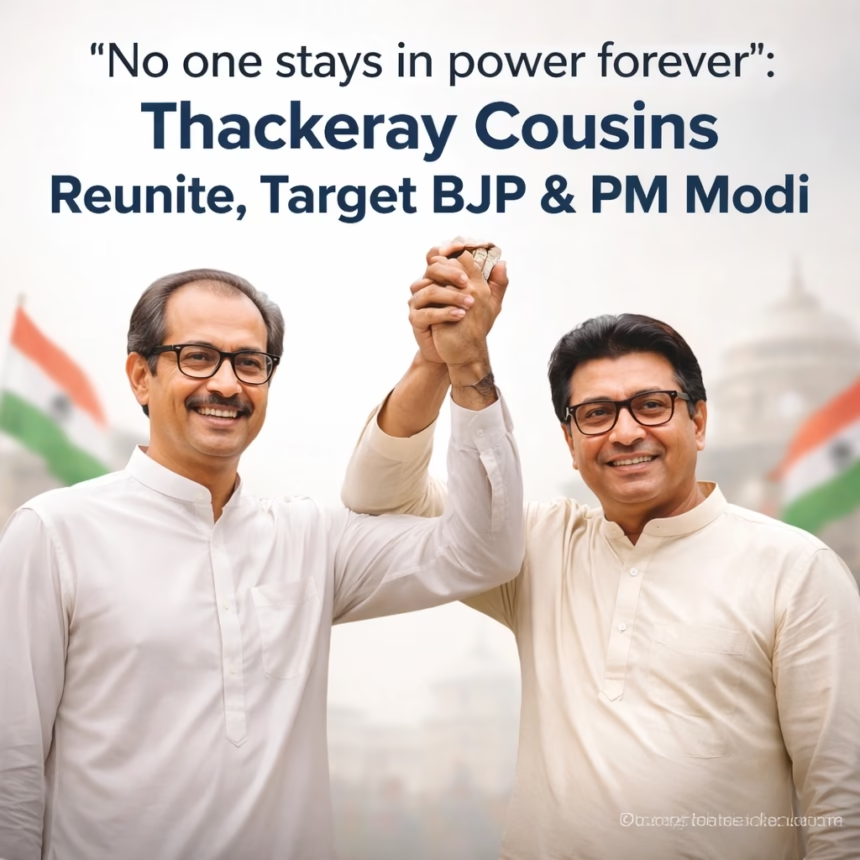
Recent political developments in Maharashtra have seen a significant reunion of estranged cousins Uddhav Thackeray and Raj Thackeray. Their convergence, marked by pointed criticism aimed at the Bharatiya Janata Party (BJP) and Prime Minister Narendra Modi, signals a potential realignment in the state's political landscape. This reconciliation, occurring ahead of crucial electoral cycles, has sparked widespread speculation regarding future alliances and power dynamics within the state.
Background and Historical Context
The Thackeray family's political journey is central to Maharashtra's identity politics. Bal Thackeray, founder of the Shiv Sena, built a formidable force on Marathi pride and Hindutva. However, internal rifts emerged, leading to a significant schism in 2006 when his nephew, Raj Thackeray, left to form the Maharashtra Navnirman Sena (MNS). This departure stemmed from leadership succession differences with Uddhav Thackeray, Bal Thackeray's son, and Raj's desire for a distinct 'Marathi manoos' (Marathi people) agenda.
For decades, Shiv Sena allied with the BJP. This alliance fractured after the 2019 Maharashtra Assembly elections over the Chief Minister's post. Uddhav Thackeray's Shiv Sena then formed the Maha Vikas Aghadi (MVA) with the Nationalist Congress Party (NCP) and Indian National Congress, making Uddhav Chief Minister.
The MVA government collapsed in June 2022 following a rebellion by Eknath Shinde, a prominent Shiv Sena leader. Shinde, aligning with the BJP, formed a new government. Since then, Uddhav's faction, Shiv Sena (Uddhav Balasaheb Thackeray) or Shiv Sena (UBT), has been a key opposition force, while Raj Thackeray's MNS has had a fluctuating political stance, at times supporting the BJP.

Key Developments and Recent Reunification
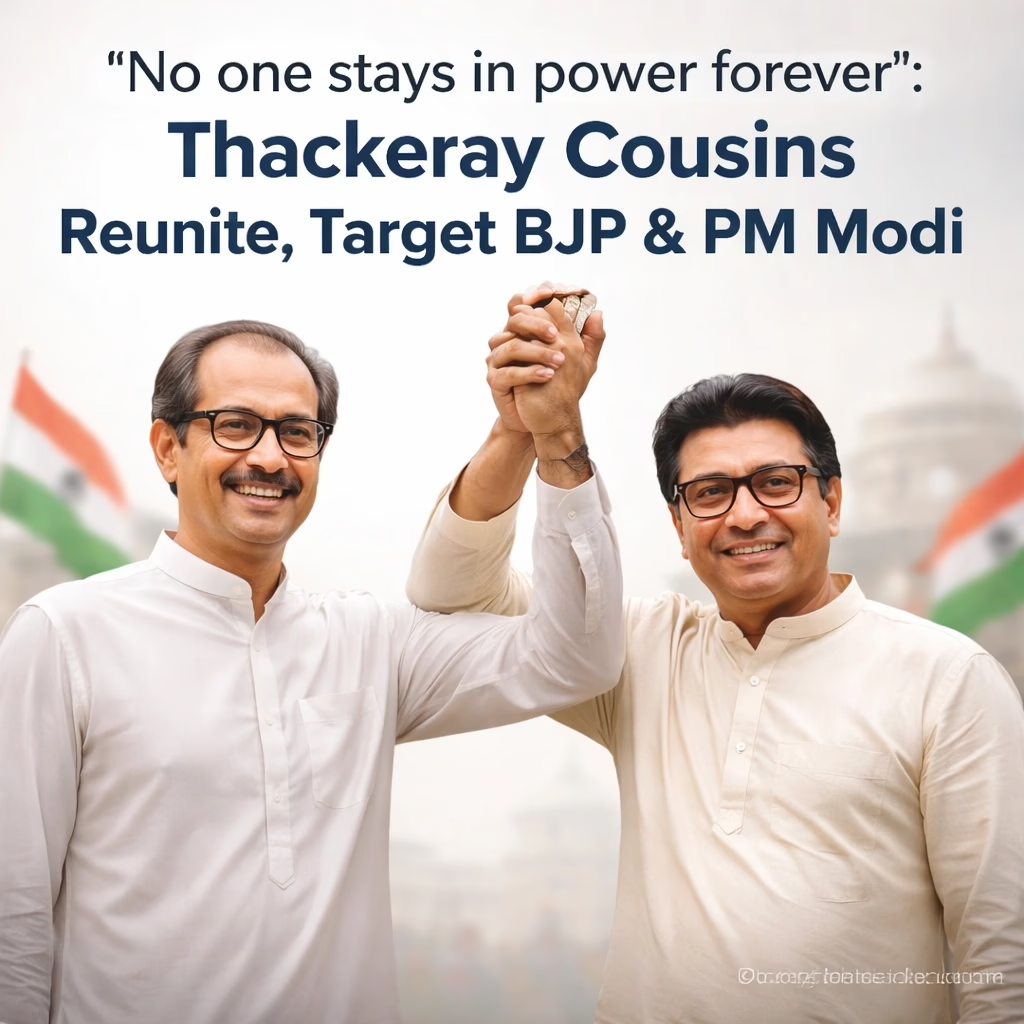
The recent reunion of Uddhav and Raj Thackeray has generated significant political interest. While details of their renewed closeness have emerged from family interactions and public gestures, the underlying message is distinctly political. A key moment was Raj Thackeray's recent public statement, "No one stays in power forever," a direct challenge to the BJP and central leadership.
This quote reflects a shared dissatisfaction with the BJP's perceived dominance and centralisation, a sentiment mirrored by Uddhav Thackeray's faction. Raj Thackeray, once a potential BJP ally and supporter of Prime Minister Modi, has notably shifted his stance. His recent criticisms target economic issues and perceived threats to regional identity, aligning him with Shiv Sena (UBT)'s opposition narrative.
This reunion is strategically timed, preceding the 2024 Lok Sabha and Maharashtra Assembly elections. For Uddhav, it consolidates the original Shiv Sena's base and leverages the Thackeray legacy against the Eknath Shinde faction. For Raj, it offers a chance to re-establish MNS's prominence by tapping into shared Marathi identity. Their combined voice, invoking Bal Thackeray's name, aims to amplify their political message, posing a formidable challenge to the ruling dispensation.

Potential Impact on Maharashtra Politics
The Thackeray cousins' reunification profoundly impacts Maharashtra's political landscape. For the Bharatiya Janata Party (BJP), this poses a significant challenge. Having aimed to consolidate its position with the Eknath Shinde faction, a united Thackeray front could now consolidate opposition votes, especially those rooted in Marathi identity. This complicates the BJP's electoral calculations in a crucial state.
The Eknath Shinde-led Shiv Sena faces further legitimacy erosion. Their claim to Bal Thackeray's legacy is undermined if Uddhav and Raj present a united front, potentially alienating Shinde's supporters loyal to the Thackeray name.
For the Maha Vikas Aghadi (MVA) — Shiv Sena (UBT), NCP, and Congress — the impact is nuanced. MNS's potential inclusion could strengthen the opposition, particularly in urban strongholds like Mumbai and Pune, with Raj Thackeray's oratorical appeal. However, MNS's past policies on migrants could create friction with the Congress and NCP's secular ideologies, necessitating careful negotiation and ideological compromises.
Beyond party politics, the reunion could re-energize Marathi identity politics. The Thackeray name, synonymous with Marathi pride, could rally voters around regional autonomy and cultural preservation, offering a renewed sense of direction for disillusioned voters.
What Lies Ahead: Expected Milestones
The path ahead for the Thackeray cousins involves critical junctures. The immediate question is the formalization of their political understanding: will MNS join the Maha Vikas Aghadi, or will they forge an independent, supportive alliance with seat-sharing agreements? Complex negotiations will be needed for seat adjustments, particularly in urban constituencies, considering MVA partners and MNS aspirations, alongside historical rivalries.
Campaign strategy for the 2024 Lok Sabha and Maharashtra Assembly elections will heavily leverage the Thackeray family's potent symbol. Expect strong emphasis on Bal Thackeray's legacy, regional pride, and a narrative of Maharashtra's interests being undermined. Joint rallies and public appearances could set a new tone.
More Read

The BJP and Eknath Shinde faction will monitor closely, devising counter-strategies to highlight past differences or question ideological consistency. Ultimately, the reunion's electoral efficacy is its true test. Whether the combined strength of Uddhav and Raj Thackeray translates into a significant advantage against the BJP-Shinde alliance remains to be seen, with the coming months crucial for Maharashtra's political future.