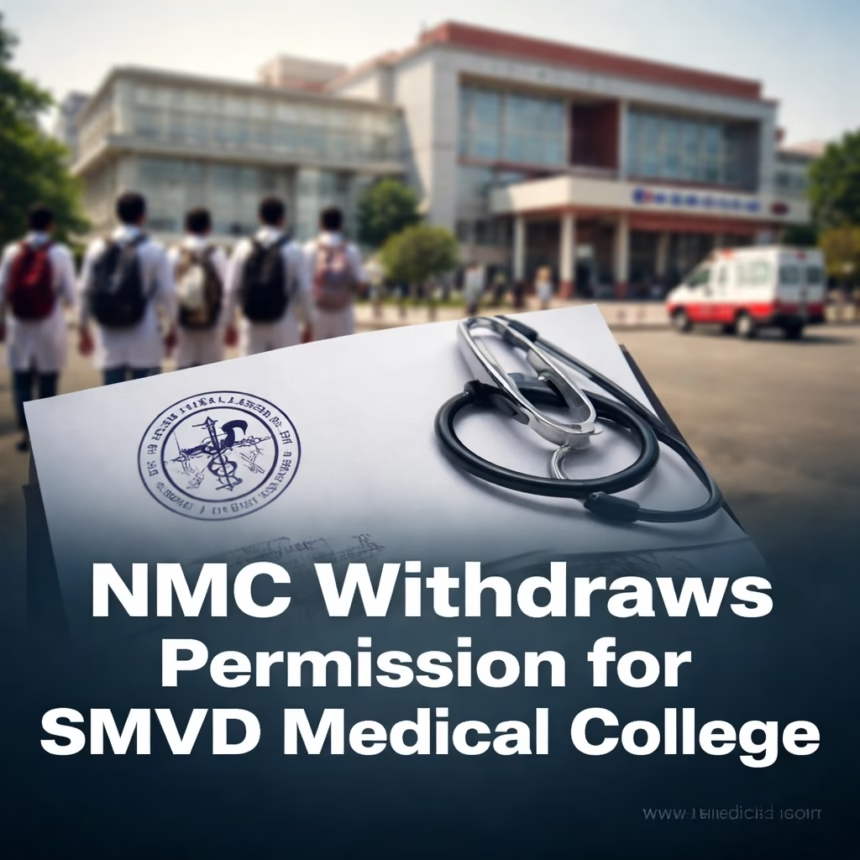
Jammu and Kashmir's medical education landscape has been significantly altered following the National Medical Commission's (NMC) decision to withdraw permission for the Shri Mata Vaishno Devi (SMVD) Medical College. This pivotal ruling, effective for the upcoming academic session, mandates the relocation of hundreds of current MBBS students to other approved institutions, sending ripples of uncertainty through the student community and the region's healthcare sector.
Background: Aspiration Meets Scrutiny
The Shri Mata Vaishno Devi Medical College and Hospital, located near Katra in Jammu and Kashmir, was established with the noble aim of providing quality medical education and healthcare services to the region. Inaugurated in the mid-2010s, the institution was seen as a beacon of progress, offering a significant number of MBBS seats to aspiring medical professionals in the union territory and beyond. It commenced its first academic batch with due approvals from the then-Medical Council of India (MCI), subsequently transitioning under the purview of the National Medical Commission (NMC) after the enactment of the NMC Act, 2019.
Establishment and Initial Approvals
The college, managed by the Shri Mata Vaishno Devi Shrine Board, aimed to provide a state-of-the-art learning environment and advanced medical facilities. From its inception, it received the necessary permissions to admit a specific number of MBBS students annually, typically around 100-150 seats, contributing substantially to the pool of medical professionals. Its affiliation with the University of Jammu underscored its academic legitimacy. The initial years saw the college making strides in infrastructure development and faculty recruitment, crucial for its operational continuity.
Regulatory Scrutiny Intensifies
However, like all medical institutions in India, SMVD Medical College remained subject to periodic inspections and assessments by the national regulatory body. With the transition from MCI to NMC, the assessment framework became more stringent, focusing on comprehensive adherence to prescribed standards for faculty, infrastructure, clinical material, and overall academic environment. The NMC’s Medical Assessment and Rating Board (MARB) is tasked with ensuring these standards are met, conducting regular evaluations to safeguard the quality of medical education across the country. This heightened scrutiny laid the groundwork for the recent decisive action.

Key Developments: The NMC’s Decisive Action
In a significant move, the National Medical Commission, through its Medical Assessment and Rating Board (MARB), recently communicated its decision to withdraw permission for the SMVD Medical College. This decision follows a series of inspections and evaluations that reportedly uncovered persistent deficiencies within the institution, leading to a critical assessment of its operational capabilities and adherence to regulatory norms.
NMC’s Findings and Justification
The NMC’s withdrawal of permission stems from a comprehensive review that highlighted several non-compliance issues. While specific details were outlined in official communications to the college administration, reports indicate that the deficiencies primarily revolved around critical areas such as an acute shortage of qualified faculty, inadequate clinical material for student training, deficiencies in essential infrastructure including lecture theatres and laboratories, and a lack of proper hostel facilities for students. These shortcomings were deemed significant enough to compromise the quality of medical education being imparted, thereby failing to meet the minimum standards prescribed by the NMC. The regulatory body emphasized its mandate to ensure that every medical college provides an environment conducive to producing competent healthcare professionals.
Formal Communication and Appeal Process
The decision was formally conveyed to the college management, the Shri Mata Vaishno Devi Shrine Board, and the concerned state authorities. Following the initial assessment and show-cause notices, the college was afforded an opportunity to rectify the identified deficiencies and present its case. It is understood that the college submitted a compliance report and an appeal against the preliminary findings. However, after reviewing the college’s response and conducting further verification, the MARB concluded that the deficiencies persisted or were not adequately addressed. Consequently, the appeal was rejected, and the final decision to withdraw permission for the upcoming academic year, specifically for the admission of new MBBS batches, was upheld. This firm stance by the NMC underscores its commitment to upholding rigorous standards across all medical institutions.

Impact: A Cascade of Consequences
The NMC’s decision has triggered a significant ripple effect, directly impacting a wide array of stakeholders, from the hundreds of enrolled students to the broader healthcare infrastructure of Jammu and Kashmir. The sudden withdrawal of permission creates immediate logistical and psychological challenges for those caught in the crossfire.
Student Uncertainty and Relocation Logistics
The most profoundly affected group are the approximately 500-600 MBBS students currently enrolled across various academic years at SMVD Medical College. These students now face an uncertain future, with their academic progression abruptly interrupted. The NMC has stipulated that these students must be relocated to other approved medical colleges to ensure the continuity of their education. This process, while necessary, presents a formidable logistical challenge. It requires careful coordination between the NMC, the state government, the University of Jammu, and multiple receiving institutions to identify available seats, manage transfer protocols, and ensure a smooth academic transition. Students are grappling with anxieties regarding their new institutions, potential disruption to their studies, and the personal upheaval of relocating. The psychological toll of this sudden change on young aspirants cannot be overstated.
Faculty and Local Healthcare Services
Beyond the students, the faculty and non-teaching staff of SMVD Medical College also face an uncertain professional future. With no new admissions, the operational scope of the college will diminish, potentially leading to questions about job security and redeployment. Furthermore, the SMVD Hospital, which served as a crucial clinical training ground for students and a significant healthcare provider for the local population around Katra and Vaishno Devi pilgrimage route, may experience disruptions. A reduction in the influx of junior doctors and medical trainees could impact patient care services, especially in a region where access to quality healthcare infrastructure is paramount. The college’s closure for admissions also means a reduction in the overall MBBS seats available in Jammu and Kashmir, affecting future medical aspirants from the region.
Economic and Regional Implications
The decision also carries economic implications for the region. A medical college is a hub of economic activity, supporting local businesses through student and staff expenditure, and contributing to the intellectual capital of the area. The Shrine Board, which manages the college, will also face significant financial and administrative challenges in managing the aftermath and potentially planning for future revival. The incident casts a shadow on the medical education infrastructure of the Union Territory, prompting broader discussions about regulatory compliance and quality assurance across all educational institutions.
What Next: Navigating the Path Forward
The immediate priority following the NMC’s decision is the systematic and fair relocation of the affected students. Beyond that, the future of SMVD Medical College itself and the broader implications for medical education in the region remain key areas of focus.
Student Relocation: A Coordinated Effort
The NMC, in conjunction with the Ministry of Health and Family Welfare, the J&K administration, and the University of Jammu, will oversee the complex process of student relocation. A dedicated committee is expected to be formed to manage this transition, identifying suitable vacancies in other government and private medical colleges across Jammu and Kashmir, and potentially in neighboring states if local capacity is insufficient. The criteria for relocation will likely prioritize academic compatibility, proximity to the students’ original location, and the availability of adequate infrastructure in the receiving institutions. A clear timeline for this process is crucial to minimize academic disruption for the students, with efforts to complete transfers before the next academic year commences. This monumental task requires transparent communication and meticulous planning to ensure no student’s career is unfairly jeopardized.
More Read

Path to Re-approval and Future Prospects
For SMVD Medical College, the immediate future involves a daunting challenge. While permission for new admissions has been withdrawn, the college may have the opportunity to reapply for recognition in subsequent academic years. This would necessitate a comprehensive overhaul of its existing infrastructure, significant recruitment of qualified faculty, and a robust plan to address all the deficiencies highlighted by the NMC. The Shrine Board would need to demonstrate sustained compliance with all regulatory standards over a period to regain trust and secure future approvals. This process is often lengthy and requires substantial investment and commitment. The incident serves as a stark reminder for all medical institutions about the imperative of continuous adherence to regulatory benchmarks.
Role of State Government and Long-term Vision
The J&K administration is expected to play a crucial role in facilitating the student transfers and potentially supporting the SMVD Medical College in its efforts to rectify deficiencies. The government’s intervention will be vital in ensuring that the region’s overall medical education capacity is not unduly impacted in the long run. This event also prompts a broader re-evaluation of medical education standards and oversight mechanisms within the Union Territory, emphasizing the need for robust internal quality control and proactive engagement with national regulatory bodies to prevent similar situations in the future. The ultimate goal remains to ensure that all medical colleges in the region are equipped to train competent and ethical healthcare professionals, safeguarding public health and the future of medical care.