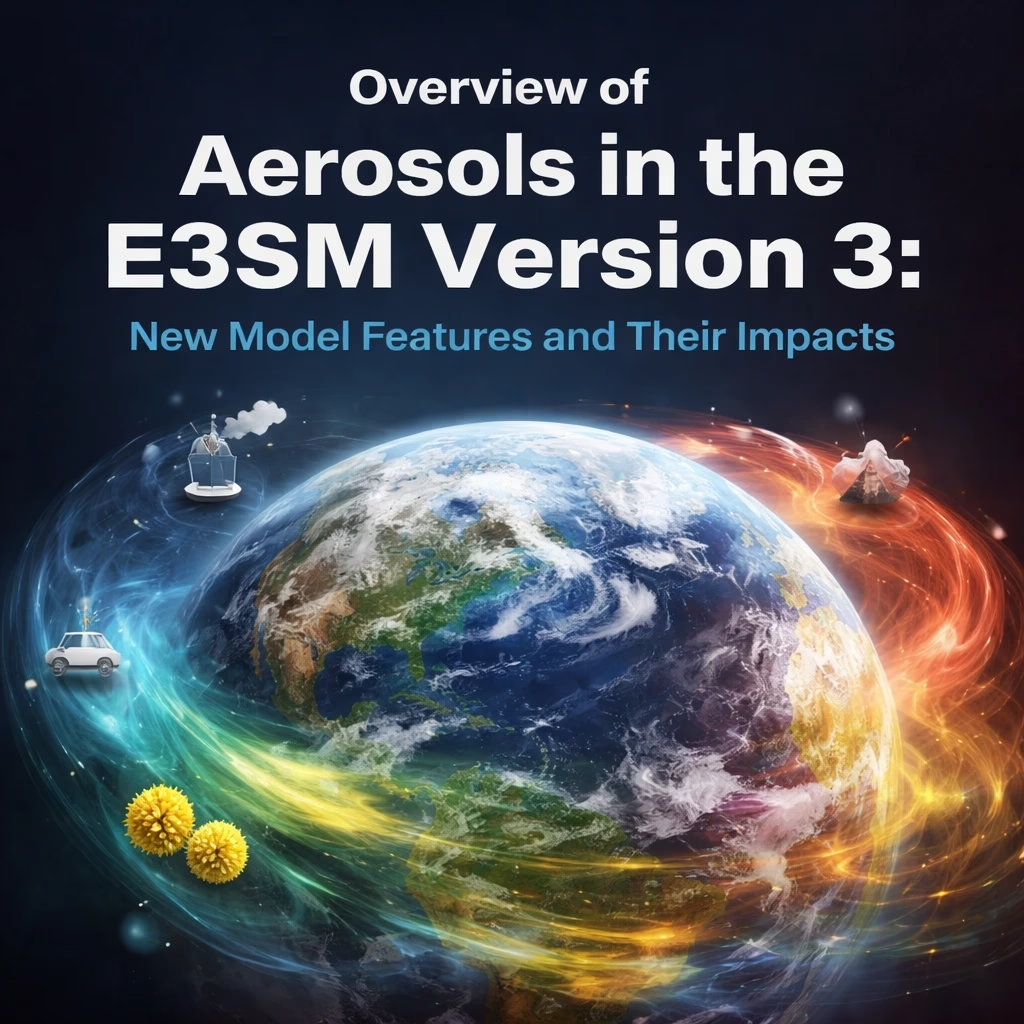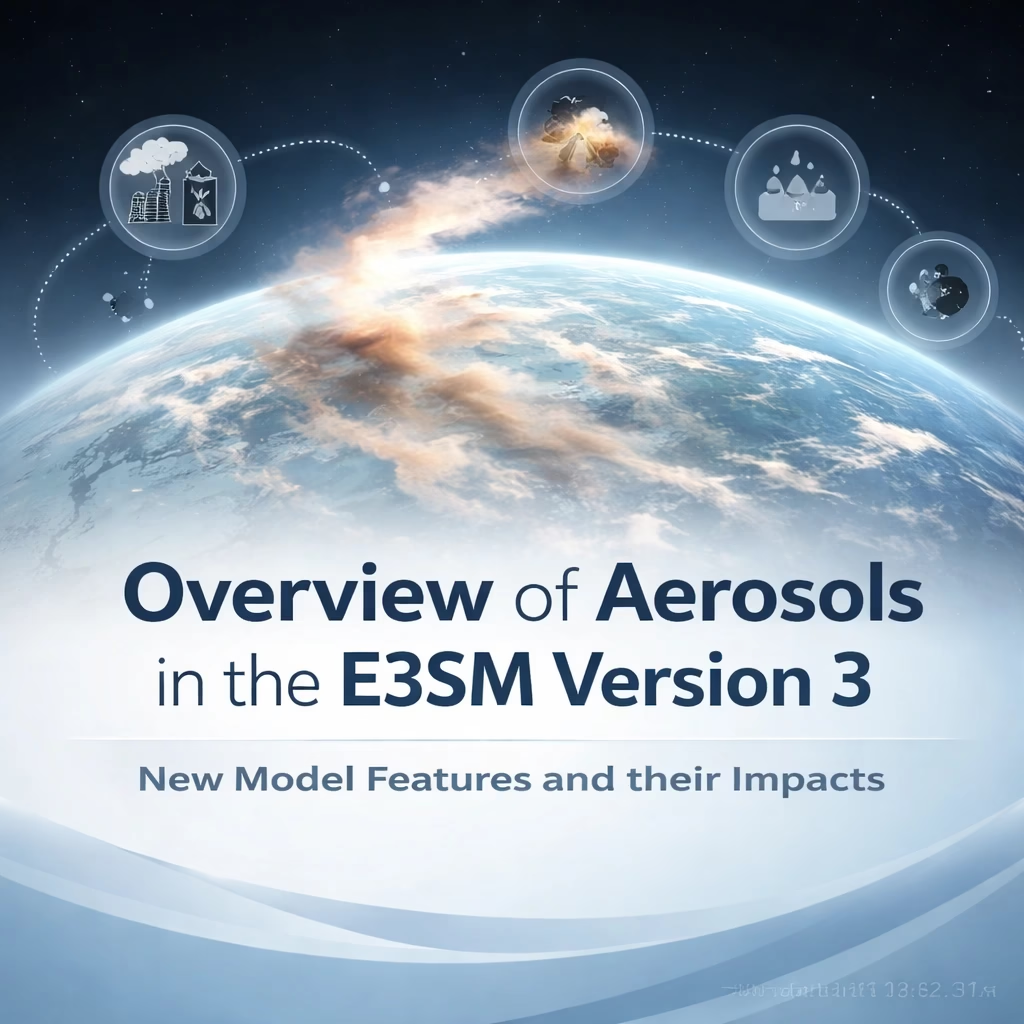
Breaking: E3SM Version 3 Unveils Game-Changing Aerosol Modeling Features
Breakthrough in Climate Modeling: E3SM Version 3 Revolutionizes Aerosol Science
In a major leap for climate science, the Energy Exascale Earth System Model (E3SM) has released Version 3, featuring groundbreaking updates to its aerosol modeling capabilities. Developed by the U.S. Department of Energy, this new version promises to improve climate projections and atmospheric research.
Background: The Evolution of Aerosol Modeling
The E3SM project, initiated in 2014, aims to provide a comprehensive Earth system model for climate research. Aerosols—tiny particles suspended in the atmosphere—play a critical role in cloud formation, precipitation, and climate change. Previous versions of E3SM relied on simplified aerosol representations, limiting their accuracy in simulating complex atmospheric interactions.
Version 2, released in 2021, laid the foundation for improved aerosol modeling, but researchers identified gaps in capturing the diversity and impact of aerosols on climate. The need for higher resolution and dynamic interactions with clouds and radiation spurred the development of Version 3.
Key Developments: What’s New in E3SM Version 3?
E3SM Version 3 introduces several pivotal enhancements to its aerosol modeling:
Advanced particle representation: The model now includes a more detailed classification of aerosols, such as sulfate, black carbon, and organic carbon, with improved interactions between these particles and atmospheric processes.
Enhanced cloud-aerosol interactions: New algorithms better simulate how aerosols influence cloud formation, lifetime, and precipitation, addressing a longstanding challenge in climate modeling.
Dynamic radiative effects: Version 3 refines the modeling of how aerosols absorb and scatter sunlight, improving estimates of their cooling or warming effects on the climate system.
Higher spatial resolution: The model now operates at finer grid scales, particularly in regions with significant aerosol emissions, such as industrial zones and wildfire-prone areas.
Impact: Who Stands to Gain?
These upgrades will benefit a wide range of stakeholders, from climate researchers to policymakers:
Scientists: Researchers studying aerosol-climate feedbacks, air quality, and weather patterns will gain more precise tools for their work.
Environmental agencies: Governments and organizations focused on air quality regulations and climate mitigation strategies will have access to better data for decision-making.
Industry: Energy and transportation sectors can use the improved models to assess the environmental impact of their operations and develop sustainable solutions.

What’s Next: The Future of E3SM
The release of Version 3 marks a significant milestone, but the E3SM team is already planning further advancements. Future updates will focus on:
Integration with machine learning: To enhance computational efficiency and predictive accuracy.
Expansion of global coverage: To include more remote and understudied regions.
Collaboration with observational networks: To ensure the model aligns with real-world data.
With these innovations, E3SM Version 3 sets a new standard for Earth system modeling, paving the way for more accurate climate predictions and informed global strategies.