Scientists Uncover Ancient Secret: The Dinosaur That Mastered the Art of the Grip
Scientists Uncover Ancient Secret: The Dinosaur That Mastered the Art of the Grip
A groundbreaking paleontological discovery in the remote Patagonian badlands of Argentina has revealed a dinosaur species possessing an unprecedented level of dexterity and grip strength in its forelimbs. Dating back approximately 210 million years to the Late Triassic period, this fossil challenges long-held assumptions about early dinosaur locomotion and predatory capabilities, offering a new perspective on the Mesozoic Era's evolutionary arms race.

Background: Redefining Early Dinosaur Capabilities
For decades, the popular image of dinosaur forelimbs has been largely defined by extremes: the massive, pillar-like legs of sauropods built for support, or the famously diminutive arms of tyrannosaurs, often perceived as functionally limited. While raptors like Velociraptor and Deinonychus are known for their grasping hands and formidable claws, these species emerged much later, during the Cretaceous period.
Prior to this discovery, evidence for highly specialized grasping forelimbs in early theropods, the group that includes all carnivorous dinosaurs, was sparse. Most early theropod hands were generally adapted for striking or raking, with limited capacity for precise manipulation or sustained holding of prey. The prevailing view suggested that significant forelimb dexterity evolved much later, coinciding with the diversification of bird-like dinosaurs.
The newly identified species, tentatively named Robustimanus patagonicus—meaning “robust hand from Patagonia”—pushes this timeline back by tens of millions of years. Its existence in the Late Triassic, a period of significant evolutionary experimentation following the Permian-Triassic extinction event, indicates a much earlier development of advanced predatory adaptations than previously understood. This period saw the rise of many dinosaur lineages, and Robustimanus now stands as a prime example of the diverse evolutionary paths being explored.
Initial analysis of the fossil site, first uncovered by local ranchers in 2022, suggested a small to medium-sized theropod, estimated to be around 3 to 4 meters in length. However, the exceptional preservation of its forelimb skeleton quickly set it apart from other contemporary finds, hinting at a specialized function that demanded further, meticulous investigation.
Key Developments: Unveiling the Mechanics of an Ancient Grip
The definitive revelation came from an exhaustive study led by Dr. Elena Rodriguez, head paleontologist at the University of Buenos Aires. Her team published their findings last month in the prestigious journal PaleoFrontiers. Utilizing advanced CT scanning and 3D reconstruction techniques, researchers meticulously mapped the internal and external structures of the fossilized forelimb.
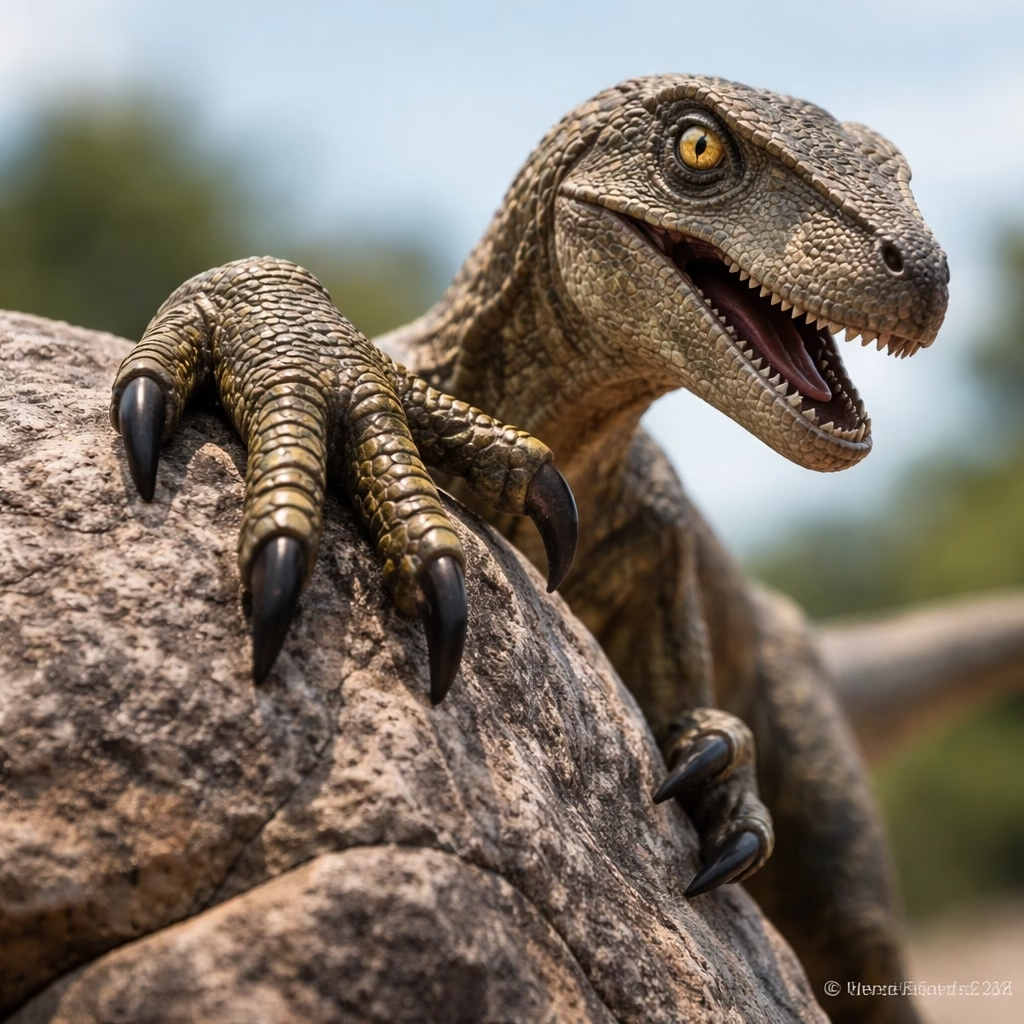
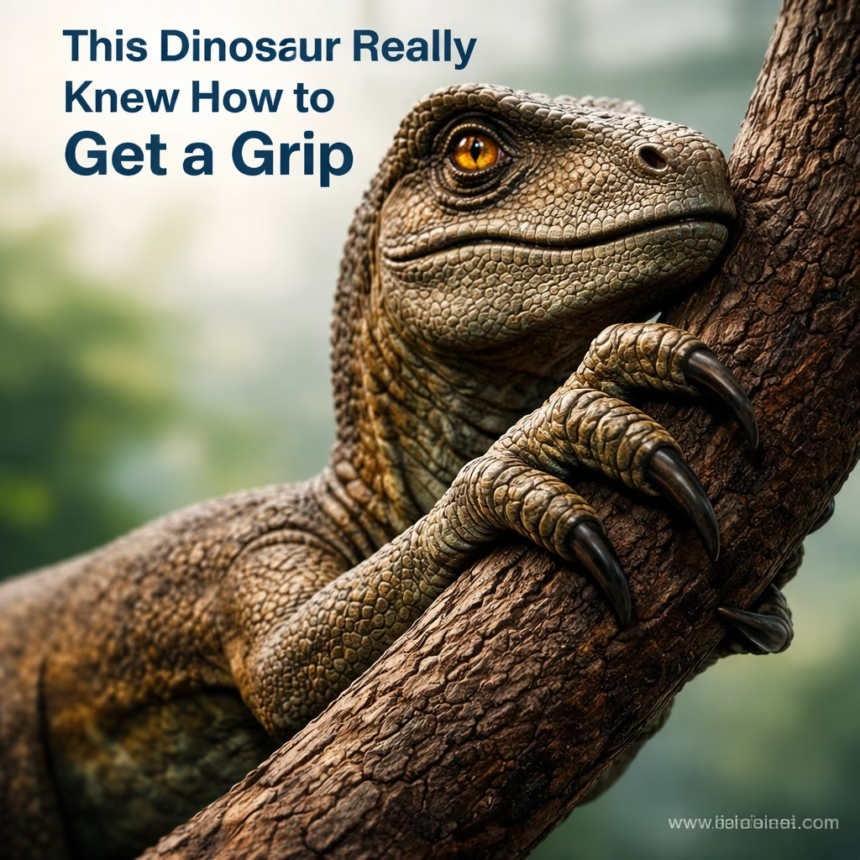
The findings are striking. Robustimanus patagonicus possessed an unusually robust set of carpal bones, the wrist bones, which were tightly articulated, providing a stable platform for powerful grasping. The metacarpals, or hand bones, were relatively short and thick, indicating significant muscle attachment points for strength. Crucially, the phalanges—the finger bones—exhibited an extraordinary range of motion, particularly in the first digit, which was opposable to a degree rarely seen outside of avian lineages or some later maniraptoran dinosaurs.
Dr. Rodriguez commented, “This isn’t just a strong claw; it’s a true grasping mechanism. The joint surfaces show clear evidence of extensive musculature enabling powerful flexion and adduction—movements essential for securing struggling prey. The opposable thumb-like digit, combined with the curvature of the other claws, would have allowed Robustimanus to lock onto its targets with incredible tenacity.”
Furthermore, the team identified unique ridges and grooves on the bone surfaces, indicative of ligaments and tendons structured to withstand immense stress. Biomechanical modeling, based on the reconstructed skeletal architecture, estimates that Robustimanus could exert a grip force far exceeding what would be expected for a dinosaur of its size, potentially comparable to modern raptorial birds or even some small primates.
This intricate design suggests a predator highly adapted to capturing and retaining prey, possibly small, agile reptiles or early mammals that were common in the Late Triassic ecosystem. The discovery of associated gastroliths, or stomach stones, near the skeleton further supports a predatory lifestyle, aiding in the digestion of tough tissues.
Impact: Reshaping Evolutionary Narratives
The unearthing of Robustimanus patagonicus has sent ripples throughout the paleontological community, prompting a significant re-evaluation of early dinosaur evolution and ecological roles. It suggests that advanced manipulative capabilities were not a late-stage development in dinosauria but rather an early, crucial adaptation that emerged in certain lineages.
Evolutionary biologists are now considering how such an advanced grip might have influenced the survival and diversification of Robustimanus and its relatives. A powerful, dexterous forelimb would have provided a distinct advantage in a competitive Late Triassic environment, allowing for the capture of diverse prey that might have eluded less specialized predators. This could have enabled Robustimanus to exploit ecological niches that were previously thought to be unavailable to early dinosaurs.
The find also challenges the prevailing narrative that early theropods were primarily generalized predators. Robustimanus presents compelling evidence for early specialization, indicating that different predatory strategies were evolving concurrently, long before the rise of iconic hunters like Tyrannosaurus rex or the dromaeosaurids.
For the public, this discovery adds another layer of complexity and wonder to the dinosaur story. It moves beyond the simple “big and scary” perception, highlighting the intricate evolutionary solutions that arose in ancient ecosystems. Museum exhibits and educational programs are expected to incorporate this new understanding, enriching the public’s appreciation for dinosaur biology.
Moreover, the discovery encourages a re-examination of existing, less-studied early dinosaur fossils. Scientists may now look for subtle indicators of similar forelimb specialization in specimens previously overlooked or misinterpreted, potentially unearthing further evidence of early dexterity across various dinosaur groups.
What Next: Future Research and Exhibitions
The University of Buenos Aires team, in collaboration with international partners, plans to return to the Patagonian site for further excavation. Dr. Rodriguez believes that additional skeletal elements, particularly those related to the shoulder girdle and hindlimbs, could provide a more complete picture of Robustimanus’s overall locomotion and predatory posture. There is also hope of finding more complete specimens, potentially including skull material, which would shed light on its sensory capabilities and brain structure.
Beyond fieldwork, the next phase of research will involve creating highly detailed robotic models of the Robustimanus forelimb. These biomechanical reconstructions will allow scientists to test various grip strengths, ranges of motion, and potential predatory behaviors in a controlled environment, offering unprecedented insights into the functional morphology of this ancient predator.
Plans are also underway for a major public exhibition of the Robustimanus patagonicus fossil at the Museo Argentino de Ciencias Naturales “Bernardino Rivadavia” in Buenos Aires. The exhibition, anticipated to open in late 2024, will feature 3D printed replicas, interactive displays, and detailed reconstructions of the dinosaur’s unique gripping abilities, aiming to engage both scientific visitors and the general public.
The discovery of Robustimanus patagonicus marks a pivotal moment in paleontology, underscoring the dynamic and often surprising nature of evolutionary history. It serves as a powerful reminder that even after centuries of study, the ancient world continues to yield secrets that reshape our understanding of life on Earth.