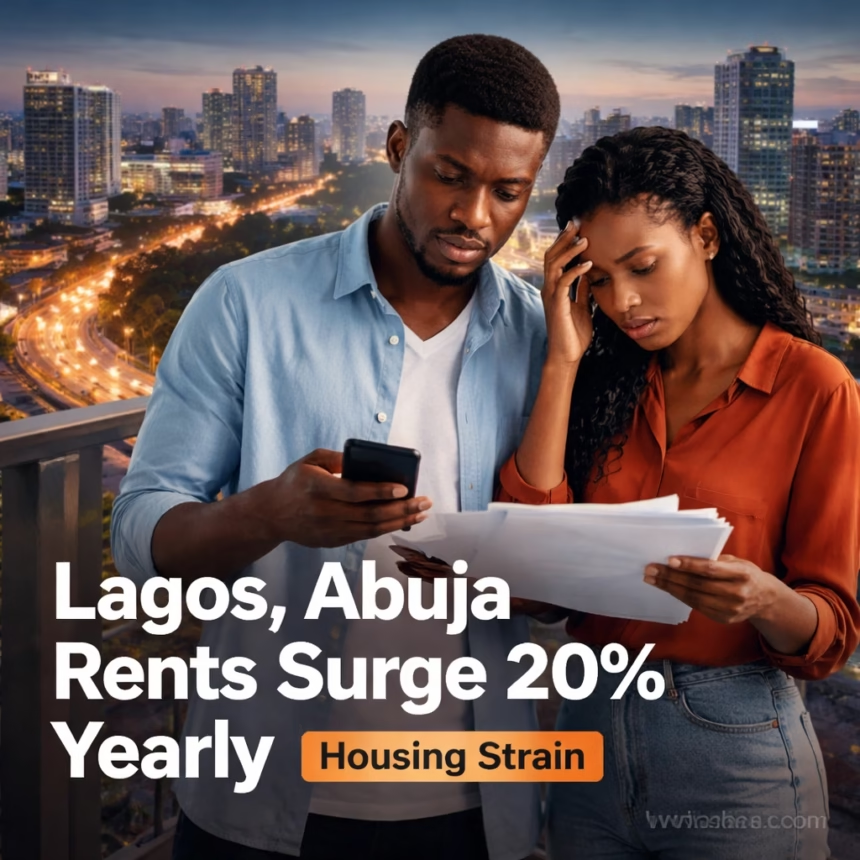
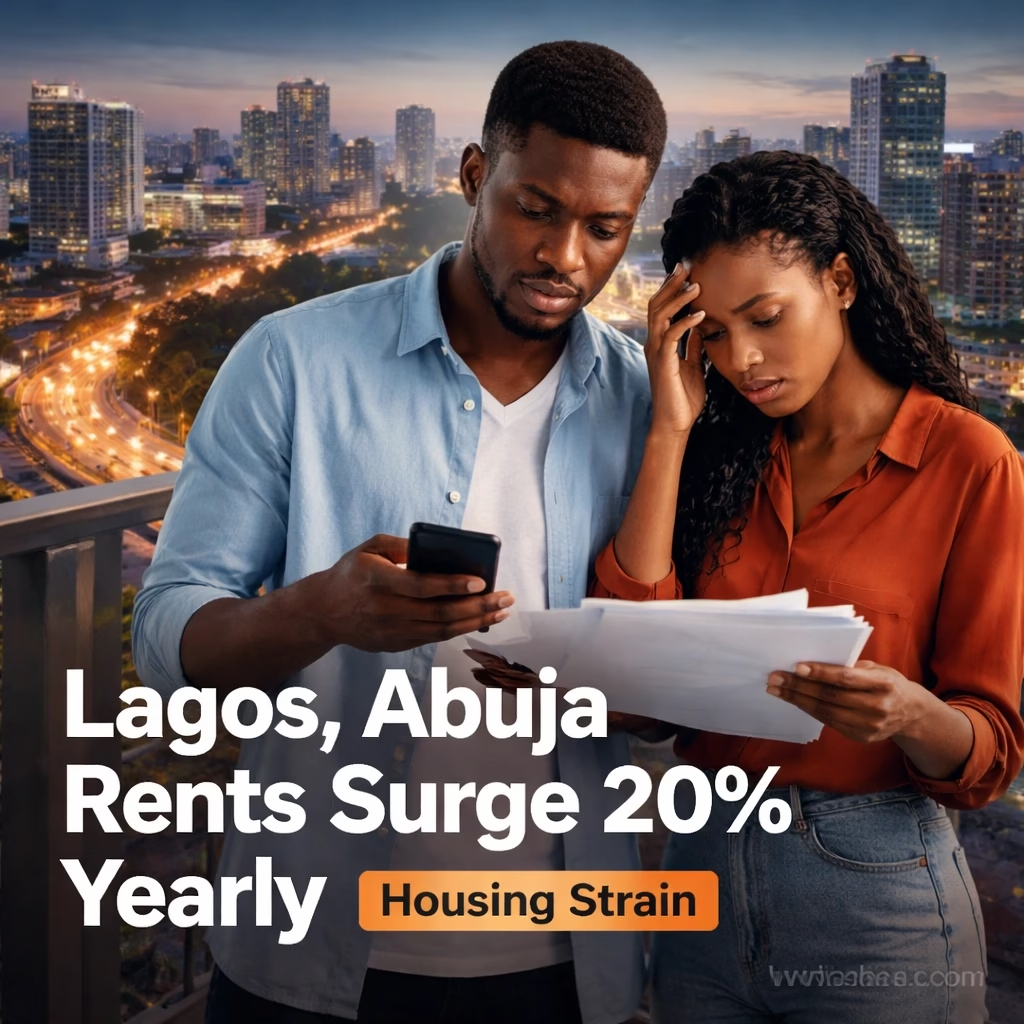
Rents in Nigeria's two major urban centers, Lagos and Abuja, are experiencing a significant annual surge, with recent reports indicating increases averaging 20%. This relentless upward trend, observed over the past year, is intensifying an already critical housing strain for millions of residents in these bustling cities. The escalating costs are forcing a reevaluation of living arrangements and financial planning across diverse demographics.
Background: A Deep-Rooted Housing Challenge
Nigeria's housing crisis is not a new phenomenon, but rather an issue exacerbated by rapid urbanization and economic pressures. Lagos, a sprawling megacity, has seen its population explode from an estimated 1.4 million in 1970 to over 20 million today, making it one of the fastest-growing urban areas globally. Abuja, the purpose-built capital, has also witnessed a steady influx of civil servants, businesses, and professionals since its designation in 1991.
Historical Context of Urban Growth
The sheer pace of population growth in both cities has consistently outstripped the development of adequate housing infrastructure. For decades, a significant housing deficit has persisted, estimated by various bodies to be in the millions of units nationwide. This deficit forms the bedrock of the current affordability crisis.
Economic Undercurrents
Recent economic conditions have significantly fueled the rent surge. Persistent inflation, which has hovered around 25-30% in recent months, directly impacts the cost of building materials. Cement, steel, and other construction inputs have seen their prices skyrocket, making new developments more expensive and driving up the value of existing properties. The devaluation of the Naira against major international currencies also plays a role, particularly for imported components used in modern construction.
Infrastructure and Land Scarcity
Limited developable land, particularly in prime areas of Lagos and Abuja, contributes to the problem. In Lagos, the geography of an island city restricts expansion, pushing development into reclaimed land or further into the mainland suburbs. Abuja, while planned, still faces challenges with land allocation and infrastructure provision in its newer districts. Existing infrastructure projects, while necessary, sometimes lead to displacement, further tightening the housing market.

Key Developments: The Current Surge Explained
The 20% annual increase in rents is a stark indicator of the intensifying pressure. This figure, derived from various real estate market analyses and tenant reports, reflects a consistent upward trajectory observed across different property types and districts.
District-Specific Increases
In Lagos, high-demand areas like Ikoyi, Victoria Island, and Lekki Phase 1 have seen luxury and mid-range apartment rents climb dramatically. A two-bedroom apartment in Lekki, for instance, that might have cost N2.5 million annually two years ago, now commands N3.5 million or more. Similar trends are evident in mainland areas such as Yaba, Surulere, and Ikeja, where more modest properties are also experiencing substantial hikes, pushing them out of reach for many middle-income earners.
Abuja mirrors this pattern. Wuse II, Maitama, and Garki districts, known for their executive residences, have seen premium properties command even higher prices. Even in satellite towns like Lugbe and Kubwa, which traditionally offered more affordable options, rents for one and two-bedroom apartments have risen sharply, driven by demand from those priced out of the city center.

Demand-Supply Imbalance
The core issue remains a severe imbalance between housing demand and supply. While some new developments emerge, they often cater to the high-end market, failing to address the needs of the majority. The slow pace of affordable housing construction, coupled with the rapid influx of people seeking opportunities, creates a highly competitive rental market. Landlords often receive multiple offers, enabling them to dictate prices.
Influence of Economic Shocks
Beyond general inflation, specific economic shocks have contributed. The removal of fuel subsidies in May 2023 led to an immediate surge in transportation costs, indirectly impacting rents as many tenants now factor commute distances into their housing choices, increasing demand in more central, albeit expensive, locations. The rising cost of living across the board means landlords also face increased operational costs, which they often pass on to tenants.
Impact: A Widespread Crisis
The escalating rent crisis has far-reaching consequences, affecting individuals, businesses, and the broader socio-economic landscape. The human element of this strain is particularly poignant, as families struggle to maintain their living standards.
Strain on Households and Individuals
For many, a 20% annual rent increase translates to a significant portion of their income being diverted solely to housing. This reduces disposable income, limiting spending on essential goods like food, education, healthcare, and transportation. Young professionals and entry-level workers are particularly vulnerable, often resorting to shared accommodations or moving to distant, underdeveloped suburbs, enduring arduous commutes. This financial pressure contributes to increased stress, mental health challenges, and a diminished quality of life.
Business Operations and Talent Retention
Businesses operating in Lagos and Abuja also face mounting pressure. Higher rents for office spaces and commercial properties directly increase operational costs. Furthermore, companies struggle to attract and retain talent, as prospective employees often cite the prohibitive cost of living, especially housing, as a deterrent. Some businesses are considering relocating parts of their operations to less expensive cities or embracing remote work models more extensively to mitigate these costs.
More Read

Exacerbated Inequality and Social Implications
The rent surge deepens existing socio-economic inequalities. Low-income earners and those in the informal sector are increasingly marginalized, pushed into substandard housing or informal settlements on the city fringes, often lacking basic amenities. This urban sprawl without adequate planning strains existing public services in these peripheral areas and can lead to increased social tensions and crime rates. The dream of homeownership for many Nigerians becomes even more distant, contributing to a sense of hopelessness.
What Next: Seeking Sustainable Solutions
Addressing the Lagos and Abuja rent surge requires a multi-faceted approach involving government intervention, private sector innovation, and community advocacy. The current trajectory is unsustainable and demands urgent action.
Government Interventions and Policy Reforms
Calls for government intervention are growing louder. Potential measures include:
Social Housing Schemes
Direct government investment in affordable housing projects, particularly for low and middle-income earners. Past initiatives have often fallen short due to funding issues and corruption, but renewed commitment and transparency could make a difference.
Rent Control Mechanisms
While controversial and often debated for their effectiveness, some advocate for policies to cap annual rent increases or regulate landlord-tenant agreements. Implementing and enforcing such policies effectively in a free market economy like Nigeria presents significant challenges.
Land Reforms and Urban Planning
Streamlining land allocation processes, reducing bureaucracy, and enforcing comprehensive urban planning are crucial. This includes designating more land for residential development, improving infrastructure in underserved areas, and decentralizing economic opportunities to reduce pressure on the core cities.
Incentives for Developers
Offering tax breaks, subsidies, or easier access to financing for developers focused on constructing affordable housing units could stimulate supply where it is most needed. This would require clear criteria and monitoring to ensure the benefits are passed on to tenants.
Private Sector Innovations
The private sector has a vital role to play through:
Alternative Housing Models
Development of more compact, efficient housing units, co-living spaces, and innovative financing options like rent-to-own schemes. Technology can also play a role in connecting tenants with verified properties and streamlining rental processes.
Modular and Sustainable Construction
Exploring faster and cheaper construction methods, such as modular building techniques, could accelerate housing delivery and potentially reduce costs. Emphasis on sustainable materials could also mitigate long-term maintenance expenses.
Tenant Advocacy and Awareness
Tenant associations and civil society organizations are increasingly advocating for stronger tenant rights, transparent rental agreements, and mechanisms for dispute resolution. Public awareness campaigns on tenant rights and responsibilities can empower renters.
The coming years will test the resolve of policymakers and the resilience of residents in Lagos and Abuja. Without concerted efforts to increase housing supply, stabilize the economy, and implement equitable policies, the annual 20% rent surge threatens to deepen the housing crisis, making these vital Nigerian cities increasingly inaccessible for many.