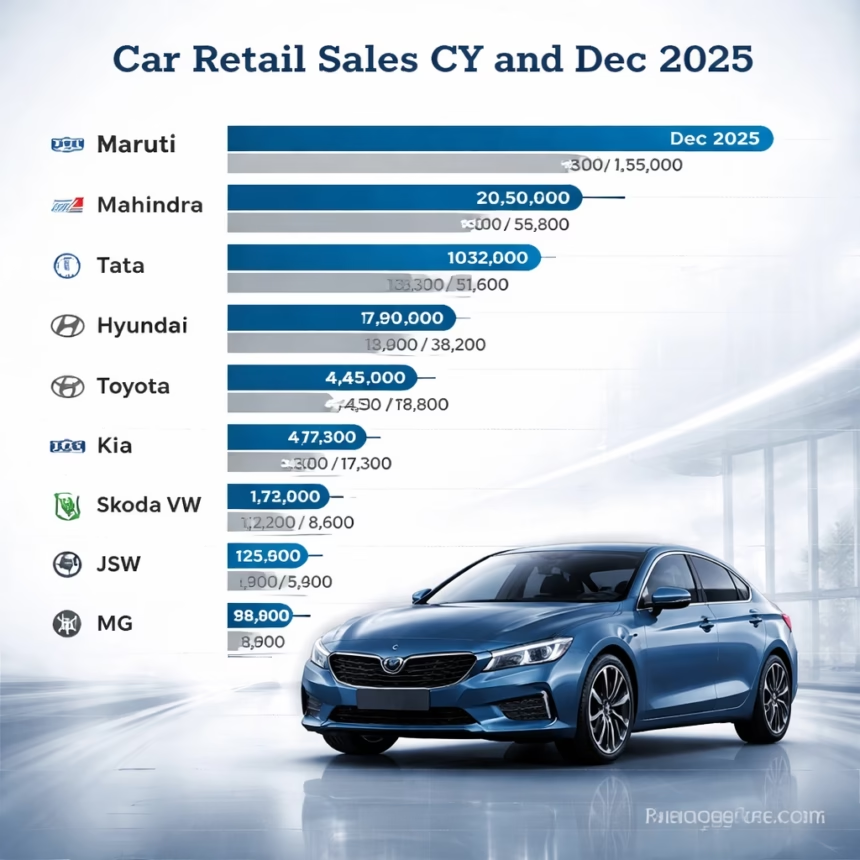
The Indian automotive sector concluded Calendar Year 2025 with a dynamic shift in retail sales, marked by aggressive competition, escalating demand for SUVs, and a significant surge in electric vehicle adoption. As December 2025 figures rolled in, the landscape revealed established giants defending their turf against agile challengers, all vying for dominance in one of the world's fastest-growing car markets. This report delves into the performance of key players like Maruti, Mahindra, Tata, Hyundai, Toyota, Kia, Skoda VW, and JSW MG, analyzing the trends that defined the year.
Background: A Market in Transformation
The period leading up to 2025 saw the Indian automotive market undergo a profound transformation. Economic stability, rising disposable incomes, and a youthful demographic fueled consistent demand for personal mobility. Government initiatives promoting local manufacturing and electric vehicles, coupled with evolving consumer preferences, set the stage for intense competition. The SUV segment, in particular, had become the battleground for market share, while the nascent but rapidly expanding EV sector began to dictate future strategies for all manufacturers. OEMs invested heavily in new product development, expanding dealer networks, and enhancing after-sales service to capture the discerning Indian buyer.
Key Developments: CY 2025 and December Performance
Calendar Year 2025 witnessed robust growth across the passenger vehicle segment, with total retail sales estimated to have crossed 4.8 million units, an increase of approximately 11% over the previous year. December 2025, typically a strong month due to year-end discounts and new year model launches, saw a surge in consumer activity, contributing significantly to the annual tally.
Maruti Suzuki India: Sustaining Leadership Amidst Challenges
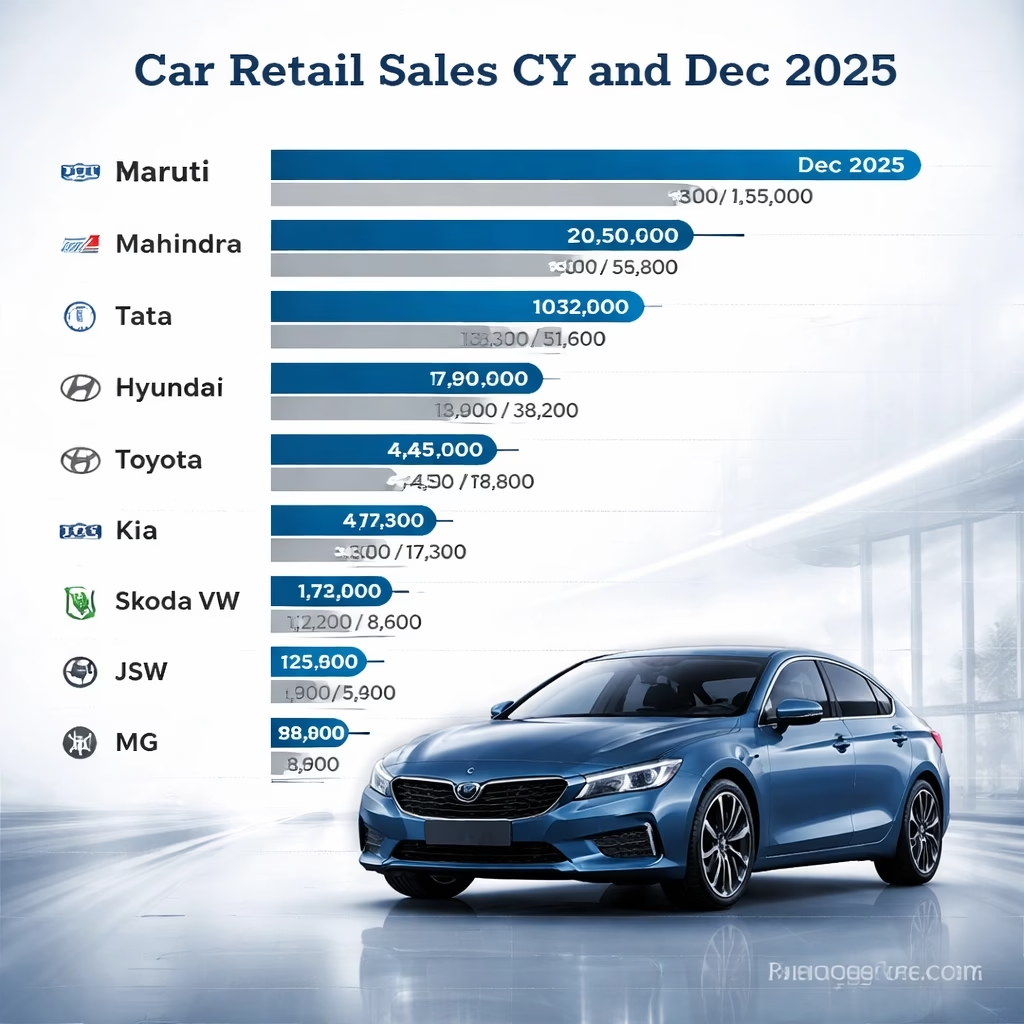
Maruti Suzuki maintained its stronghold, albeit with a slight dip in overall market share compared to its peak. The company strategically bolstered its SUV portfolio with new launches like the "Grand Cruiser" and refreshed its popular models, ensuring it remained competitive. For CY 2025, Maruti retailed an estimated 1.95 million units, capturing roughly 40.6% of the market. December sales saw a strong finish, with approximately 168,000 units retailed as customers capitalized on festive offers and year-end inventory clearance. The brand's extensive service network and focus on fuel efficiency continued to resonate with buyers across tier-2 and tier-3 cities.
Mahindra & Mahindra: SUV Prowess and EV Ambitions
Mahindra & Mahindra cemented its position as a dominant force in the SUV segment. The XUV700, Scorpio-N, and Thar continued to drive significant volumes. The year 2025 also marked Mahindra's aggressive push into the electric SUV space with the launch of its dedicated EV platform vehicles, gaining traction in urban centers like Bengaluru and Pune. Mahindra retailed an estimated 520,000 units in CY 2025, securing approximately 10.8% market share. December sales were strong, reaching nearly 48,000 units, demonstrating consistent demand for its rugged and feature-rich offerings.

Tata Motors: Electric Vehicle Pioneer and SUV Innovator
Tata Motors continued its impressive growth trajectory, primarily driven by its leadership in the EV segment and its strong portfolio of safe and stylish SUVs. The Nexon EV, Tiago EV, and Punch EV dominated electric passenger vehicle sales, while the Harrier and Safari remained strong contenders in the ICE SUV market. Tata Motors sold an estimated 580,000 units in CY 2025, capturing approximately 12.1% market share. Its December performance was particularly noteworthy, with around 53,000 units retailed, underscoring its dual strength in both ICE and EV markets. Tata's commitment to safety ratings also played a crucial role in consumer preference.
Hyundai Motor India: Premium Offerings and Steady Growth
Hyundai Motor India maintained its position as a strong number two player, known for its premium features, sophisticated design, and robust after-sales service. Models like the Creta, Venue, and the new-generation Verna continued to be top performers. Hyundai also expanded its EV line-up, albeit with a more premium focus. The company retailed an estimated 620,000 units in CY 2025, holding approximately 12.9% market share. December sales were healthy at around 55,000 units, reflecting sustained demand for its diverse product range.
Toyota Kirloskar Motor: Hybrid Focus and Reliability
Toyota Kirloskar Motor strategically leaned into its hybrid technology, which gained significant traction amidst fluctuating fuel prices and environmental consciousness. The Hyryder and Innova Hycross were key volume drivers, while the Fortuner maintained its premium SUV dominance. Toyota's reputation for reliability and low maintenance costs continued to attract a loyal customer base. The company retailed an estimated 280,000 units in CY 2025, securing approximately 5.8% market share. December sales stood at about 26,000 units, showcasing steady performance.

Kia India: Design-Led Disruption
Kia India continued its aggressive growth, leveraging its bold design language, feature-rich interiors, and strong SUV focus. The Seltos and Sonet remained popular choices, while the Carens MPV carved out a niche. Kia's quick market response and focus on technology-forward products helped it maintain momentum. Kia retailed an estimated 270,000 units in CY 2025, achieving approximately 5.6% market share. December sales were strong, nearing 25,000 units, demonstrating its continued appeal among young and tech-savvy buyers.
Skoda Auto Volkswagen India: Premium Niche and Localisation
Skoda Auto Volkswagen India, under its India 2.0 strategy, continued to strengthen its position in the premium mid-size segment. The Slavia and Virtus sedans, along with the Kushaq and Taigun SUVs, found a dedicated customer base appreciating European engineering and driving dynamics. Increased localization efforts helped in competitive pricing and better availability. The group retailed an estimated 105,000 units in CY 2025, holding approximately 2.2% market share. December sales were around 9,500 units, indicating consistent performance within its target segment.
JSW MG Motor India: New Partnership, New Horizon
The formation of JSW MG Motor India marked a significant development in 2025. With the JSW Group's strategic investment, the company embarked on an ambitious expansion plan, particularly in the EV space. The Comet EV and ZS EV received updates, and new EV models were introduced to capitalize on the growing electric market. This partnership aimed to enhance localization, expand manufacturing capacity, and broaden the product portfolio. JSW MG retailed an estimated 65,000 units in CY 2025, capturing approximately 1.3% market share. December sales were around 6,000 units, reflecting the initial stages of its renewed strategy.
Impact: Reshaping the Automotive Ecosystem
The dynamic sales performance of CY 2025 and December 2025 had far-reaching implications across the automotive ecosystem.
For Consumers
Consumers benefited from an unprecedented array of choices, cutting-edge technology, enhanced safety features, and competitive pricing. The rise of EVs offered greener mobility options, while the robust SUV segment provided versatility and aspirational value. Dealerships engaged in aggressive marketing and service packages to attract buyers, leading to better overall customer experience.
For Manufacturers
The intense competition forced manufacturers to innovate continuously, invest heavily in R&D, and optimize supply chains. The shift towards EVs necessitated substantial capital expenditure in charging infrastructure development and battery technology. Market share gains became harder-fought, demanding agile strategies and a deep understanding of regional preferences.
More Read

For the Economy
The robust growth in car sales significantly contributed to India's GDP, boosting manufacturing, employment across the value chain (from component suppliers to dealerships), and service sectors. Government revenues from taxes also saw a substantial increase. The push for EVs spurred investment in renewable energy and charging infrastructure, aligning with national sustainability goals.
What Next: The Road Ahead
Looking into 2026, the Indian automotive market is poised for continued expansion, albeit with evolving dynamics.
Continued EV Acceleration
Electric vehicle adoption is expected to accelerate further, driven by improving infrastructure, increasing model availability, and potential government incentives like FAME III. Manufacturers will likely introduce more affordable EV options to tap into a wider consumer base.
SUV Dominance to Persist
The SUV segment is projected to maintain its leadership, with new sub-segments and designs emerging to cater to diverse tastes. Expect more micro-SUVs and premium full-size SUVs to hit the market.
Technological Integration
Advanced Driver-Assistance Systems (ADAS), connected car technologies, and sophisticated infotainment systems will become standard features across more models, enhancing safety and convenience.
Focus on Sustainability and Circular Economy
Beyond EVs, manufacturers are likely to increase their focus on sustainable manufacturing practices, recycling initiatives, and promoting a circular economy within the automotive industry.
New Entrants and Consolidation
While the current players are well-entrenched, the possibility of new global players entering the Indian market or existing brands forming strategic alliances and consolidations remains a significant factor to watch. The next few years promise to be even more exhilarating for India's automotive sector.