National Guard on Alert? Trump Considers Extreme Measures in Minnesota

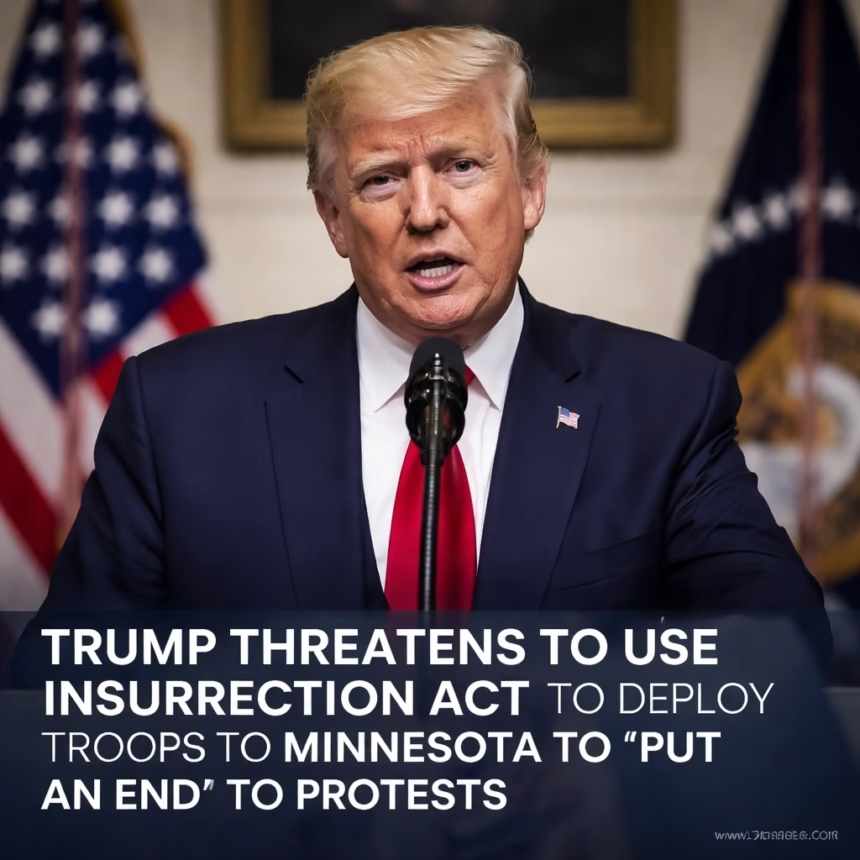
President Donald Trump has indicated he is considering deploying troops to Minneapolis, Minnesota, using the Insurrection Act, in response to ongoing protests following the arrest of George Floyd on May 26, 2020. The potential move has ignited a firestorm of debate about federal authority, civil liberties, and the role of the military in domestic affairs.
Background
The protests in Minneapolis and across the United States began on May 26, 2020, after George Floyd, a Black man, died while in the custody of Minneapolis Police officers. Video of the incident, in which Officer Derek Chauvin knelt on Floyd's neck for nearly nine minutes, sparked widespread outrage and accusations of police brutality and racial injustice. The arrest occurred at a Cup Foods store on 38th Street South in Minneapolis's South Minneapolis neighborhood.
Following Floyd's death, protests erupted in Minneapolis and spread rapidly to cities nationwide. Demonstrators have called for police reform, an end to racial inequality, and accountability for officers involved in Floyd's death. The protests have, at times, included acts of civil disobedience, looting, and clashes with law enforcement.
The Insurrection Act, enacted in 1861, allows the President to deploy U.S. military forces to suppress insurrection, rebellion, or resistance, or to assist state or local authorities in maintaining order during civil disturbances. Historically, its use has been limited and often controversial.
Key Developments
In recent days, President Trump has repeatedly alluded to the possibility of deploying troops to Minnesota. He has tweeted about the need to "bring order" to the protests and has criticized local and state officials for their handling of the situation. On June 3, 2020, Trump stated that he was prepared to deploy the National Guard to Minneapolis if requested by Minnesota Governor Tim Walz.
However, the President also indicated a willingness to consider using the Insurrection Act if he deemed it necessary. He has argued that the protests have escalated into violent riots and that local authorities have been unable to control the situation. This stance contrasts with some governors, including New York Governor Andrew Cuomo, who have refused to deploy National Guard troops, prioritizing de-escalation and dialogue.
The National Guard has already been deployed to Minneapolis and other cities in Minnesota, but its role has primarily been to provide logistical support to local law enforcement and to assist with traffic control. The potential for a larger federal deployment raises concerns about the militarization of protests and the potential for increased conflict.
Impact
The potential deployment of federal troops has far-reaching implications. It could escalate tensions between protesters and law enforcement, potentially leading to more violence and injuries. Civil liberties advocates have raised concerns about the potential for the military to infringe on First Amendment rights, such as freedom of speech and assembly.
Local communities are also bracing for the impact of a federal intervention. Businesses in Minneapolis, already struggling with economic losses due to the protests, could face further damage. Residents are expressing anxiety about the potential for increased militarization and the disruption of daily life. The presence of federal troops could also exacerbate racial tensions and undermine trust between communities and law enforcement.
What Next
The immediate future of the situation in Minneapolis remains uncertain. Governor Walz has stated that he has not requested federal assistance, and local authorities are continuing to attempt to manage the protests through non-violent means. The National Guard remains on standby, but has not been deployed in large numbers.
Potential Scenarios
Several scenarios are possible. The protests could continue to de-escalate, with local authorities successfully managing the situation. The National Guard could be deployed to provide support to local law enforcement, but without the use of the Insurrection Act. Alternatively, President Trump could ultimately invoke the Insurrection Act and deploy federal troops, leading to a significant escalation of the situation. The decision rests with the President and will likely be influenced by the evolving dynamics of the protests and the actions of local and state officials.
Legal Challenges
Any deployment of federal troops under the Insurrection Act would likely face legal challenges. Civil liberties organizations have argued that the Act is overly broad and that its use could violate constitutional protections. The Supreme Court has not ruled extensively on the use of the Insurrection Act in recent decades, making the legal landscape uncertain.