Sudden Stroke? It Could Be Something Else.
A recent surge in patients presenting with stroke-like symptoms is being linked to a previously underdiagnosed condition: cerebral venous sinus thrombosis (CVST). Reports from hospitals across the United States, particularly in major metropolitan areas, have highlighted the challenges in differentiating CVST from traditional ischemic or hemorrhagic strokes. The increased awareness is prompting changes in diagnostic approaches and treatment protocols.
Background: Understanding the Condition
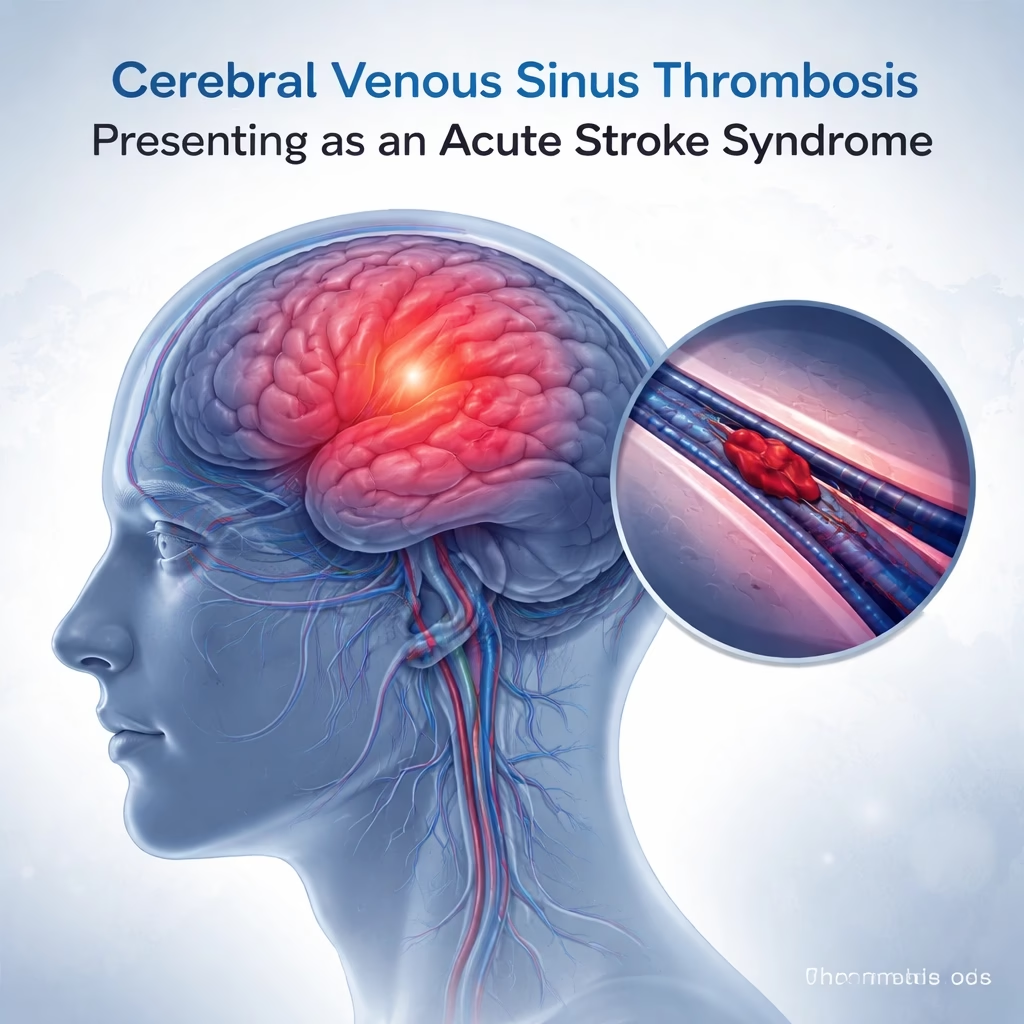
Cerebral venous sinus thrombosis (CVST) is a blood clot that forms in the cerebral venous sinuses, which are channels that drain blood from the brain. Unlike typical strokes caused by blocked arteries (ischemic) or bleeding in the brain (hemorrhagic), CVST involves a blockage in the veins that carry blood *away* from the brain. It’s a relatively rare condition, affecting roughly 0.05% to 0.1% of the population, according to estimates from the National Institutes of Health (NIH). Risk factors include pregnancy, oral contraceptive use, recent surgery, infections, and certain genetic disorders.
Historically, CVST was often overlooked or misdiagnosed, leading to delayed treatment and potentially worse outcomes. Symptoms can mimic those of stroke, making early detection difficult. These symptoms can include severe headache, vision changes, seizures, weakness or numbness, and difficulty speaking. The condition can rapidly progress and, if untreated, can cause permanent brain damage or even death.
Key Developments: A Growing Recognition
Over the past two years, there has been a noticeable increase in the number of CVST cases being identified. This rise is attributed to several factors, including improved diagnostic imaging techniques and increased awareness among healthcare professionals. Specifically, advancements in MRI and CT venography allow for more accurate detection of clots in the cerebral venous sinuses. Furthermore, increased research and clinical case reports have helped to refine diagnostic criteria and treatment strategies.
More Read

A study published in the *American Journal of Neuroradiology* in August 2023 highlighted a cluster of CVST cases observed at Massachusetts General Hospital between January and June 2023. The study noted that several patients initially presented with symptoms strongly suggestive of stroke but ultimately tested positive for CVST after further investigation. This cluster prompted a review of diagnostic protocols and increased training for hospital staff.
Impact: Who is Most Vulnerable?
While anyone can develop CVST, certain populations are at higher risk. Women, particularly those who are pregnant or taking oral contraceptives, are disproportionately affected. Individuals with a history of blood clotting disorders or recent trauma to the head or neck are also considered to be at increased risk. The age range for CVST is broad, occurring in people of all ages, but it is more commonly diagnosed in individuals between the ages of 20 and 40.
The impact of CVST can be significant. Even with prompt treatment, some patients experience long-term neurological deficits, including chronic headaches, seizures, and cognitive impairment. In severe cases, CVST can lead to permanent brain damage, disability, or death. The financial burden on patients and the healthcare system is also substantial, encompassing medical expenses, rehabilitation costs, and lost productivity.

What Next: Refining Diagnosis and Treatment
The ongoing challenge lies in improving the speed and accuracy of diagnosis. Efforts are focused on developing more sensitive and specific diagnostic tests, as well as improving the interpretation of imaging studies. Researchers are also exploring new treatment options, including anticoagulation therapy, thrombolysis (clot-busting drugs), and surgical intervention.
Diagnostic Advancements
Currently, CT angiography and MR venography are the primary imaging modalities used to diagnose CVST. However, research is underway to evaluate the potential of advanced imaging techniques, such as diffusion-weighted MRI, to improve early detection. Biomarker studies are also being conducted to identify potential blood tests that could aid in diagnosis.
Treatment Strategies
The standard treatment for CVST typically involves anticoagulation therapy, often with heparin or warfarin. In severe cases, thrombolysis may be considered to dissolve the clot. Surgical intervention, such as thrombectomy (surgical removal of the clot), may be necessary in certain situations. The optimal treatment approach is individualized based on the severity of the condition, the patient’s overall health, and the presence of any underlying risk factors.
Continued research and clinical trials are crucial to refine treatment protocols and improve outcomes for patients with CVST. Increased awareness among healthcare providers and the public is also essential to ensure that this potentially life-threatening condition is diagnosed and treated promptly. The American Stroke Association is actively working to disseminate information and resources to healthcare professionals and patients, aiming to reduce morbidity and mortality associated with CVST.