The Silent Liver Threat: Millions Unaware of Widespread Condition, JAMA Study Reveals
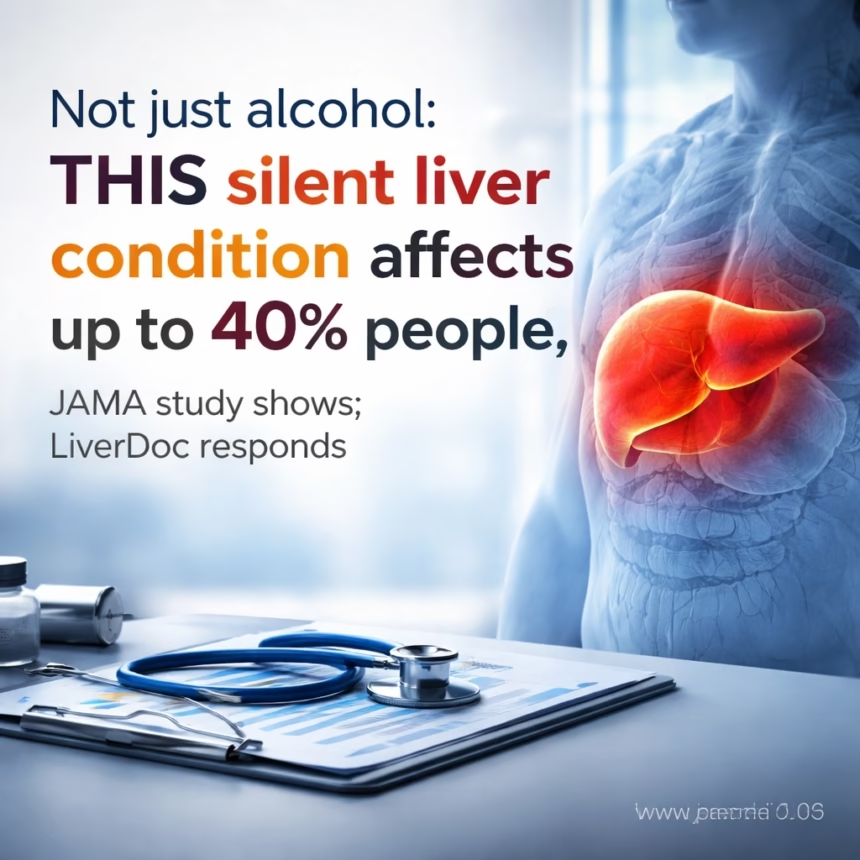
A burgeoning health crisis, largely overshadowed by other chronic diseases, is quietly impacting a significant portion of the global population. Recent findings published in the Journal of the American Medical Association (JAMA) highlight that a silent liver condition, distinct from alcohol-induced damage, now affects up to 40% of people worldwide, prompting urgent calls for increased awareness and intervention from medical experts.
Background: The Rise of a Hidden Epidemic
For decades, liver disease was predominantly associated with excessive alcohol consumption or viral infections like hepatitis. However, a different, insidious threat has been steadily escalating: Non-Alcoholic Fatty Liver Disease (NAFLD). This condition is characterized by the accumulation of excess fat in the liver cells, unrelated to heavy alcohol intake. Its "silent" nature means it often progresses without noticeable symptoms in its early stages, leading to late diagnosis and more severe outcomes.
From NAFLD to MASLD: A Crucial Reclassification
In a significant move reflecting a deeper understanding of its metabolic origins, the medical community recently re-termed NAFLD as Metabolic Dysfunction-Associated Steatotic Liver Disease (MASLD). This reclassification, adopted by leading hepatology associations globally in 2023, aims to better reflect the disease’s strong links to metabolic risk factors such as obesity, type 2 diabetes, high cholesterol, and high blood pressure. The shift in terminology is not merely cosmetic; it underscores the systemic nature of the disease and its interconnectedness with broader metabolic health.
The Disease’s Silent Progression
MASLD typically begins as simple steatosis, where fat accumulates harmlessly in the liver. However, for a subset of individuals, the condition can progress to Metabolic Dysfunction-Associated Steatohepatitis (MASH), an inflammatory form that can lead to liver scarring (fibrosis). If left unchecked, fibrosis can advance to cirrhosis, a severe form of scarring that impairs liver function, and in some cases, liver cancer or liver failure requiring transplantation. This progression can take years, even decades, during which patients remain largely asymptomatic, making early detection a formidable challenge.
More Read

Key Developments: Alarming Prevalence and New Insights
The recent JAMA study serves as a stark warning, consolidating data that points to an alarming prevalence of MASLD globally. The research indicates that the condition affects between 25% and 40% of the adult population in various regions, making it the most common chronic liver disease worldwide. This widespread impact surpasses many other well-known chronic conditions, yet public awareness remains remarkably low.
The JAMA Study’s Findings
Researchers analyzed extensive epidemiological data, revealing consistent trends across diverse populations. The study, published in early 2024, highlighted that while the prevalence varies geographically, it is consistently high in regions experiencing a rise in obesity and type 2 diabetes rates. It also underscored the significant proportion of individuals who are completely unaware they harbor this condition, often discovering it incidentally during unrelated medical examinations or when the disease has already advanced to serious stages.
Advancements in Diagnosis and Management
The diagnostic landscape for MASLD is evolving. Traditionally, a liver biopsy was the gold standard, but it is invasive and carries risks. Newer non-invasive methods, such as transient elastography (FibroScan) and specific blood biomarker panels like FIB-4 and ELF tests, are gaining traction. These tools offer safer and more accessible ways to assess liver fat and fibrosis, enabling earlier identification of individuals at risk of progression to MASH and cirrhosis. This shift is crucial for implementing timely interventions and monitoring disease progression without the need for invasive procedures.
More Read

Impact: Who is Affected and Why it Matters
MASLD is not confined to a single demographic; its reach is broad, affecting individuals across all ages, ethnicities, and socio-economic backgrounds. However, certain populations are disproportionately impacted, particularly those grappling with the interconnected web of metabolic disorders.
High-Risk Populations
- Individuals with Obesity: The strongest risk factor, with an estimated 70-80% of obese individuals having MASLD.
- Type 2 Diabetes Patients: Over 70% of people with type 2 diabetes are believed to have MASLD, and they are at higher risk of progressing to MASH and advanced fibrosis.
- Metabolic Syndrome: A cluster of conditions including high blood pressure, high blood sugar, excess body fat around the waist, and abnormal cholesterol levels, significantly elevates the risk.
- Children and Adolescents: Alarmingly, MASLD is increasingly diagnosed in younger populations, mirroring the global rise in childhood obesity. This trend suggests a potential for earlier onset of severe liver disease in future generations across North America, Europe, and parts of Asia.
Global Health Burden
The global impact of MASLD extends beyond individual health. It contributes substantially to healthcare expenditures, both through direct medical costs for diagnosis and treatment, and indirect costs associated with lost productivity due to illness and disability. As the leading cause of chronic liver disease in many developed countries, MASLD is also becoming the primary indication for liver transplantation, surpassing hepatitis C in some regions like the United States and Western Europe. This places immense pressure on transplant resources and underscores the need for effective preventive and therapeutic strategies.
What Next: A Call to Action and Future Milestones
The revelations from the JAMA study and the ongoing reclassification efforts underscore an urgent need for a multi-pronged approach to tackle the MASLD epidemic. Medical professionals, public health organizations, and policymakers are now focusing on several key areas to mitigate its impact.
Prevention and Early Detection
Increased public awareness campaigns are paramount. Education about healthy lifestyles, balanced nutrition, and regular physical activity can play a crucial role in preventing MASLD onset and progression. For individuals at high risk, routine screening and monitoring, particularly by primary care physicians, will be vital for early diagnosis. LiverDoc, a prominent expert in hepatology, emphasizes that “the liver is remarkably resilient, but early intervention through lifestyle changes is our most powerful tool against MASLD. Waiting for symptoms is often waiting too long.”
Advancing Treatment Options
While lifestyle modifications remain the cornerstone of MASLD management, the pharmaceutical pipeline for specific MASLD/MASH treatments is robust. Several drug candidates are currently in advanced clinical trials, targeting various pathways involved in fat accumulation, inflammation, and fibrosis. The expectation is that within the next few years, potentially by 2025-2026, specific pharmacological therapies will become available, offering new hope for patients who are unable to achieve sufficient improvement through lifestyle changes alone.
Policy and Research Initiatives
Governments and health organizations are being urged to implement policies that support healthier food environments and promote physical activity. Research efforts are intensifying to better understand the genetic and environmental factors contributing to MASLD, identify more precise biomarkers for early detection, and develop personalized treatment approaches. The goal is to move towards a future where MASLD is not just managed, but effectively prevented and cured, reducing its silent, devastating toll on global health.