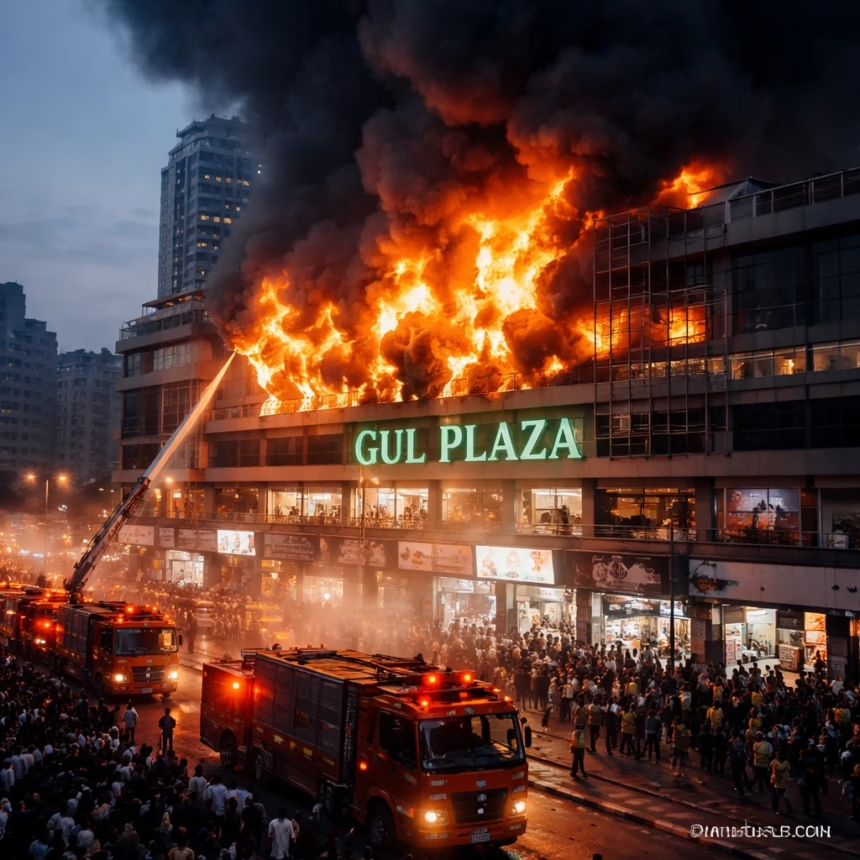
A catastrophic fire ripped through Gul Plaza, one of Karachi's prominent shopping malls, in the early hours of Tuesday, December 5, 2023. The devastating blaze tragically claimed the lives of at least three individuals, with several others sustaining injuries, sending shockwaves through the city's bustling commercial district and raising urgent questions about urban safety protocols.
Background: A City’s Landmark Engulfed
Gul Plaza, located on main Abdullah Haroon Road in Karachi's Saddar area, has been a significant retail hub for decades. Renowned for electronics, mobile phones, and garments, the multi-story complex houses hundreds of shops, forming a critical economic artery. Its dense configuration and older structure presented inherent fire safety challenges.
The alarm was raised around 3: 45 AM by security personnel observing smoke from upper floors. Initial attempts to douse flames failed as the fire rapidly intensified, fueled by combustible retail materials. Within minutes, the blaze spread across multiple levels, generating thick smoke visible city-wide.
The Karachi Fire Department was notified, dispatching its first tenders by 4: 00 AM. However, the fire's scale, structural complexities, and narrow access routes in Saddar hampered initial efforts. A massive operation unfolded, involving over 15 fire tenders, including specialized snorkel units, along with Rescue 1122 teams, police, and district administration officials.
Firefighters battled the inferno for over 12 hours. Challenges included potentially faulty older electrical wiring, near-zero visibility from dense smoke, and concerns over structural integrity as parts of the building collapsed. Reports suggested internal fire suppression systems were quickly overwhelmed or non-operational. This incident echoes previous fires in Karachi's commercial buildings, highlighting systemic fire safety compliance issues.

Key Developments: Rescue, Investigation, and Devastation
As daylight broke, the full extent of the Gul Plaza tragedy became clear. Firefighters, after controlling the main conflagration, initiated cooling operations and a meticulous search. They made the grim discovery of three bodies, identified as security guards Mr. Anwar Khan, Mr. Bilal Ahmed, and Mr. Shahbaz Ali. They were reportedly on night duty and became trapped by the rapidly spreading flames and suffocating smoke. Their bodies were recovered from different sections of the upper floors.

Several individuals, including two firefighters, suffered smoke inhalation and minor injuries, receiving immediate medical attention at nearby hospitals before discharge. The recovery of victims shifted focus to investigation and accountability.

The Sindh provincial government swiftly formed a high-level inquiry committee, headed by Additional Chief Secretary (Home) Mr. Asif Haider. Comprising fire department experts, building control authority officials, police, and engineers, the committee's mandate is to investigate the fire's cause, assess damage, identify negligence, and recommend preventive measures. Preliminary theories point to an electrical short circuit on an upper floor, pending detailed forensic analysis.
The structural integrity of Gul Plaza is a major concern. Sindh Building Control Authority (SBCA) engineers conducted a preliminary assessment, declaring the building unsafe for immediate entry. Extensive damage on at least three floors and partial roof collapse is reported. Estimated financial losses are expected to be in billions of rupees, including destroyed inventory and infrastructure. Adjacent buildings were evacuated as a precaution. The immediate commercial vicinity remains cordoned off, impacting numerous businesses.
Impact: A City Grieves, Livelihoods Shattered
The human cost of the Gul Plaza fire extends beyond fatalities. The families of Mr. Khan, Mr. Ahmed, and Mr. Ali face profound grief. The provincial government announced initial compensation, though it cannot alleviate their suffering. This tragedy highlights risks for night-shift workers in commercial establishments, often with inadequate safety training or escape routes.
For hundreds of shopkeepers, vendors, and employees, the fire represents an economic catastrophe. Many small business owners, operating on limited capital, lost entire inventories and years of work. Rebuilding or relocating is daunting, especially for those without comprehensive insurance. The informal economy, reliant on such hubs, will feel acute ripple effects, impacting countless households.
The incident has deeply shaken public confidence in the safety of Karachi's commercial buildings. Concerns are rising over outdated infrastructure, non-compliant safety measures, and lax enforcement of building codes. It serves as a stark reminder of urban vulnerability to such disasters in densely populated areas with aging infrastructure.
Emergency services, while commended, face renewed scrutiny regarding preparedness and resources. Challenges during the Gul Plaza operation highlight potential gaps in equipment, training, and inter-agency coordination for large-scale urban emergencies. This will prompt a review of existing protocols and resource allocation.
More Read

What Next: Towards Accountability and Enhanced Safety
The path forward for Gul Plaza and Karachi involves accountability, recovery, and prevention. The inquiry committee is expected to expedite its investigation, with preliminary findings within two weeks and a final report within a month. This report is crucial for determining the exact cause, identifying safety lapses, and assigning responsibility. Legal proceedings could follow if negligence is established.
A comprehensive structural assessment of Gul Plaza is paramount to determine if rehabilitation or demolition is viable. This decision will significantly impact the site's future and its businesses. Reconstruction, if feasible, will be lengthy and costly, requiring adherence to modern building codes and fire safety standards.
The provincial government is anticipated to announce a broader rehabilitation package for affected shopkeepers, potentially including low-interest loans, tax relief, and assistance for alternative premises. Civil society organizations and business associations are also mobilizing support for victims and businesses.
Crucially, the Gul Plaza tragedy is expected to catalyze a city-wide review of fire safety regulations and their enforcement. Calls are growing for stricter implementation of the Sindh Building Control Ordinance and the Fire Safety Act, particularly in older commercial structures. This may involve mandatory fire audits for all high-rise and commercial buildings, electrical system upgrades, installation of modern fire suppression systems, and regular emergency drills. Public awareness campaigns on fire safety are also anticipated.
The incident serves as a critical wake-up call for urban planners and policymakers in Karachi. The focus must shift towards proactive measures, ensuring economic development prioritizes human safety. Lessons from the Gul Plaza inferno must translate into concrete, enforceable policies that safeguard lives and livelihoods, preventing future tragedies in Pakistan's largest city.