Israel's Ultimatum: Retaliation and Gaza's Demilitarization
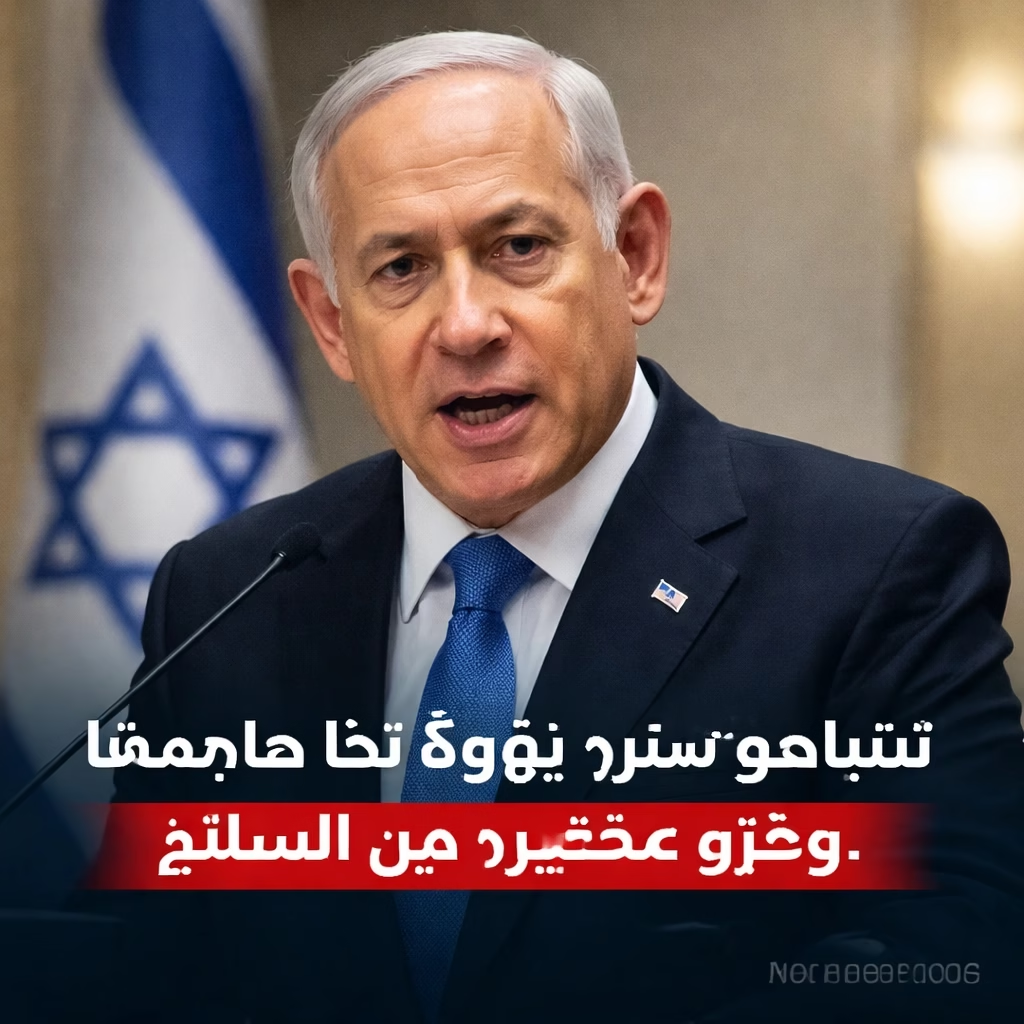
Israeli Prime Minister Benjamin Netanyahu issued a forceful warning to Iran on Tuesday, stating Israel will respond with "decisive force" should Iran launch an attack. The declaration comes amidst escalating tensions following recent Iranian missile tests and heightened rhetoric from both sides. Netanyahu also reiterated his long-standing goal of disarming Gaza.
Background: A History of Escalation
The current spike in tensions follows a period of increasing friction between Israel and Iran, fueled by disagreements over Iran's nuclear program, regional influence, and support for militant groups like Hezbollah. The relationship has been largely adversarial since Iran's 1979 revolution. Recent months have witnessed a series of retaliatory strikes and cyberattacks attributed to both nations, creating a volatile environment. The Israeli government has repeatedly expressed concerns about Iran’s development of advanced weaponry and its potential threat to Israel’s security.
The conflict in Gaza, controlled by Hamas, has further complicated the situation. Israel has maintained a blockade on Gaza since 2007, citing security concerns. Recurring cycles of violence between Israel and Hamas have characterized the region for years, with devastating consequences for civilians on both sides.
Key Developments: Netanyahu’s Strongest Rhetoric Yet
Netanyahu’s warning was delivered during a cabinet meeting in Jerusalem on Tuesday, October 17, 2023. He emphasized Israel's commitment to defending itself and its resolve to deter any aggression from Iran. The Prime Minister stated that Israel is prepared to take "all necessary measures" to protect its citizens. This marks a significant escalation in the tone of Israeli leadership, signaling a potential shift towards a more assertive stance.

Furthermore, Netanyahu reaffirmed his commitment to the complete demilitarization of the Gaza Strip. He stated that this would be a prerequisite for any lasting peace and security in the region. The proposal has been a long-standing position of the Israeli government, but its feasibility remains highly contested.
Recent weeks have seen Iran conducting several missile and drone tests, demonstrating its expanding military capabilities. These tests have been interpreted by Israel and its allies as a direct challenge. The Iranian government has consistently denied any hostile intentions, characterizing its military exercises as defensive measures.
Impact: Regional Instability and Humanitarian Concerns
Netanyahu’s statements have triggered a wave of concern across the Middle East and internationally. The heightened rhetoric raises the specter of a wider regional conflict, with potentially catastrophic consequences. The potential for direct military confrontation between Israel and Iran is a major cause for alarm.

The situation also has significant humanitarian implications for the residents of Gaza. A military escalation would likely lead to renewed fighting and further displacement, exacerbating the already dire humanitarian crisis in the territory. International aid organizations have warned of a worsening food and medicine shortage in Gaza. The potential for civilian casualties is a major concern.
Economically, the escalating tensions are impacting regional markets, particularly oil prices. Investors are becoming increasingly cautious about the stability of the Middle East.
What Next: A Delicate Balance
Diplomatic Efforts
International efforts are underway to de-escalate the situation. The United States, European Union, and United Nations are urging both sides to exercise restraint and engage in dialogue. However, direct communication between Israel and Iran remains limited.
Military Posturing
Israel has increased its military presence along its borders with Iran and Syria. The Israeli Defense Forces (IDF) are reportedly on high alert, preparing for a potential attack. The IDF has also conducted several military exercises in recent weeks.
Potential Flashpoints
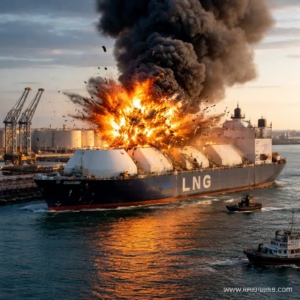
The Red Sea and the Strait of Hormuz are considered potential flashpoints. Disruptions to shipping in these vital waterways could have a significant impact on global trade. Hezbollah, the Iranian-backed militant group in Lebanon, remains a concern, with potential for cross-border attacks.
The coming days and weeks will be critical in determining whether the current tensions can be contained or whether they will escalate into a full-blown conflict. The world is watching closely.
More Read