Shifting Power: Damascus Gains Control of Key Syrian Territories
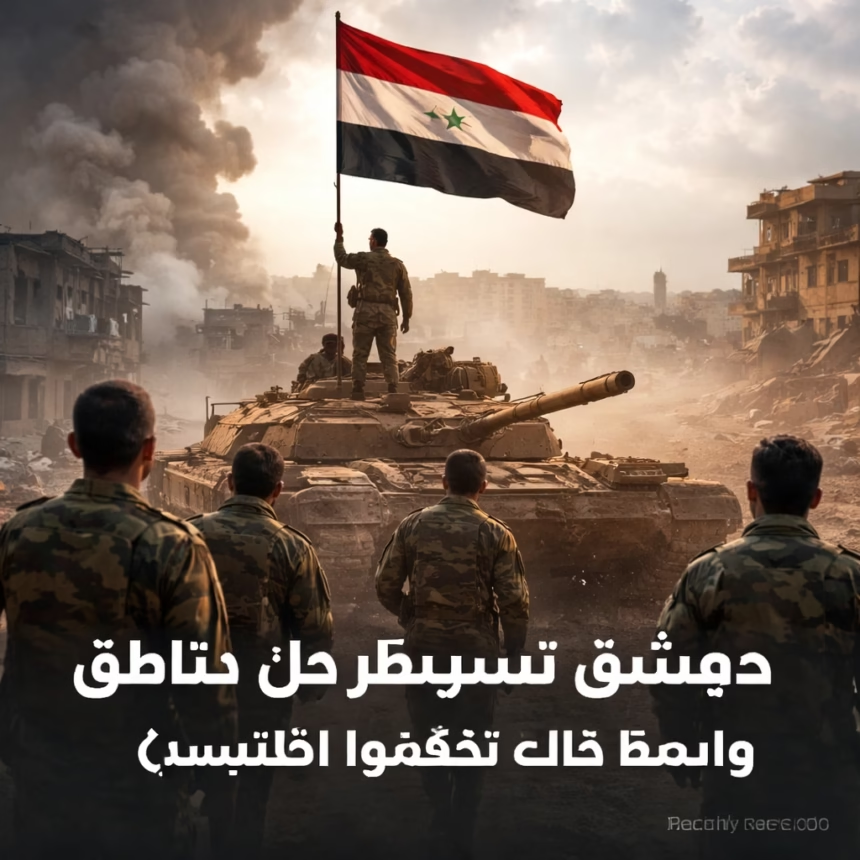
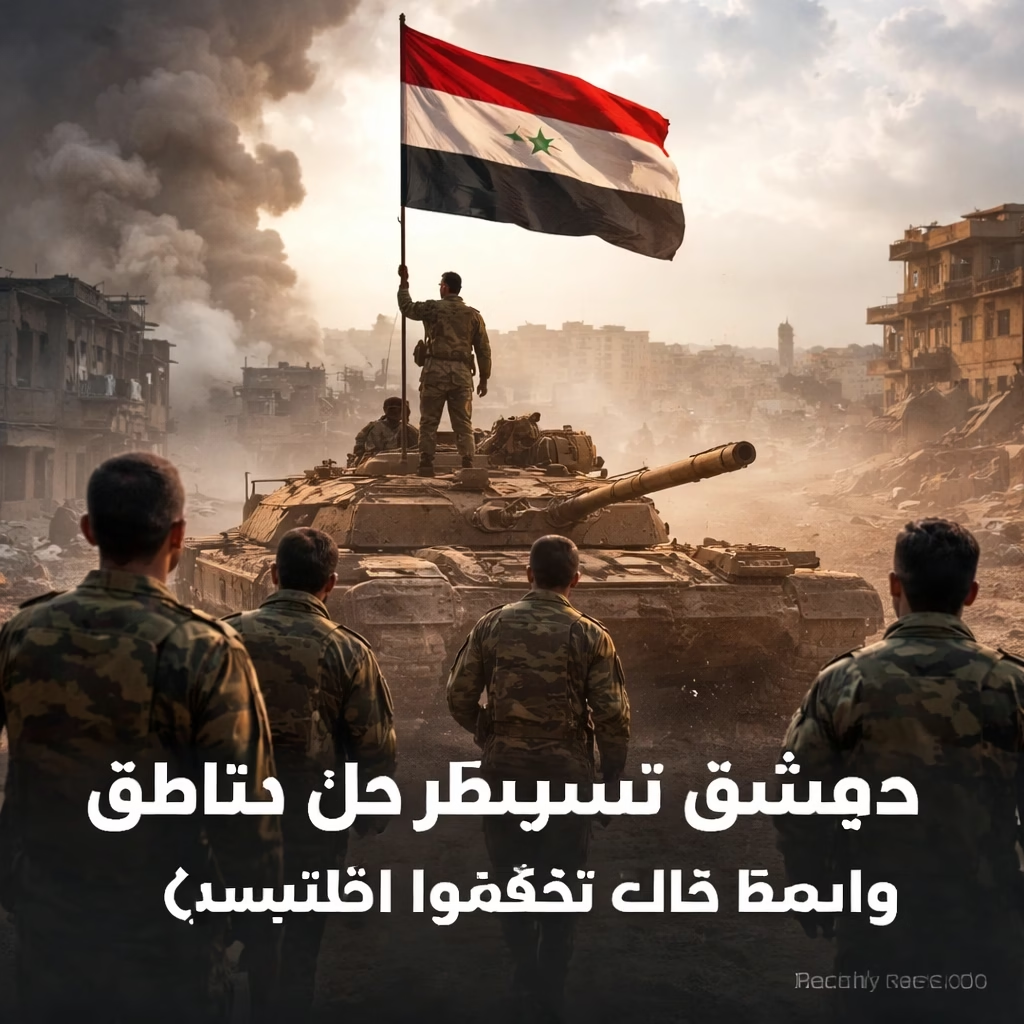
In recent weeks, the Syrian government has significantly expanded its control over areas previously held by the Syrian Democratic Forces (SDF), a Kurdish-led coalition. The advances, primarily in the Hasakah and Raqqa governorates, mark a notable escalation in the ongoing Syrian civil war and raise questions about the future of Kurdish autonomy in the region.
Background: A Complex History of Control
The Syrian civil war, erupting in 2011, has created a fragmented political landscape. The SDF, formed in 2015, gained control of a significant swathe of northeastern Syria following years of battling ISIS. This territory, often referred to as "Rojava," has enjoyed a degree of self-governance, with a focus on democratic principles and a multi-ethnic administration. However, the presence of the SDF has been a point of contention for the Syrian government, backed by Russia and Iran, which views the Kurdish control as a violation of Syrian sovereignty.
The United States has supported the SDF in its fight against ISIS, providing air support and equipment. This support has complicated the situation, leading to tensions between the US and Russia, and impacting the ongoing efforts to resolve the Syrian conflict.
Key Developments: A Rapid Advance
The most recent phase of the Syrian government’s offensive began in late October 2023, with military operations concentrated in the villages of Ain al-Malek and Jalula in the Raqqa governorate. Reports indicate that Syrian government forces, supported by allied Syrian National Army (SNA) fighters, have pushed the SDF out of these areas. Further gains were reported in the Hasakah governorate during November, with the recapture of several towns and villages, including al-Marsouf.

The speed of the advance has surprised many observers. While sporadic clashes have occurred previously, the current offensive represents a more coordinated and sustained effort by the Syrian government. Military analysts attribute this to improved coordination between Syrian government forces and their allies, and potentially, a shift in US policy regarding the SDF.
Military Tactics and Equipment
The Syrian government’s offensive has reportedly utilized heavy artillery, airstrikes (conducted by Russian forces), and armored vehicles. The SNA fighters, known for their combat experience, have played a crucial role in securing captured territories. The SDF, while possessing advanced weaponry, appeared to be caught off guard by the intensity and speed of the government’s push.
Impact: Displacement and Uncertainty
The recapture of these areas has resulted in the displacement of thousands of civilians. Many residents of the captured towns have fled to nearby areas under SDF control, seeking refuge from the fighting. Humanitarian organizations are working to provide aid to those displaced, but access remains challenging in some areas.

The shift in control also raises concerns about the future of the SDF and the autonomy of the Kurdish population in northeastern Syria. The Syrian government has stated its intention to eventually bring all of Syria under its control, and the recent advances suggest that this goal is becoming increasingly attainable.
The situation also impacts the international community. The US has expressed concern over the displacement of civilians and has called for a ceasefire. The potential for renewed conflict between Syrian government forces and Kurdish groups remains a significant risk.
What Next: Consolidation and Future Negotiations
The Syrian government is expected to continue its offensive in the coming weeks and months, aiming to consolidate its control over more territory in northeastern Syria. The focus will likely be on securing key strategic locations and infrastructure.
The future of the SDF remains uncertain. While the group has vowed to continue resisting the government’s advances, its ability to do so is limited. Negotiations between the Syrian government and Kurdish representatives are considered unlikely in the immediate future, given the current state of hostilities.
The international community will be closely watching the developments in northeastern Syria, with potential implications for regional stability and the ongoing effort to resolve the Syrian civil war. The long-term consequences of this power shift are still unfolding, but it is clear that the balance of power in Syria is undergoing a significant transformation.
More Read

Potential for Further Conflict
Escalation remains a significant risk. Increased clashes could lead to a wider conflict involving regional and international actors. The presence of Turkish forces in northern Syria also adds another layer of complexity to the situation, as Turkey has its own concerns regarding Kurdish groups.