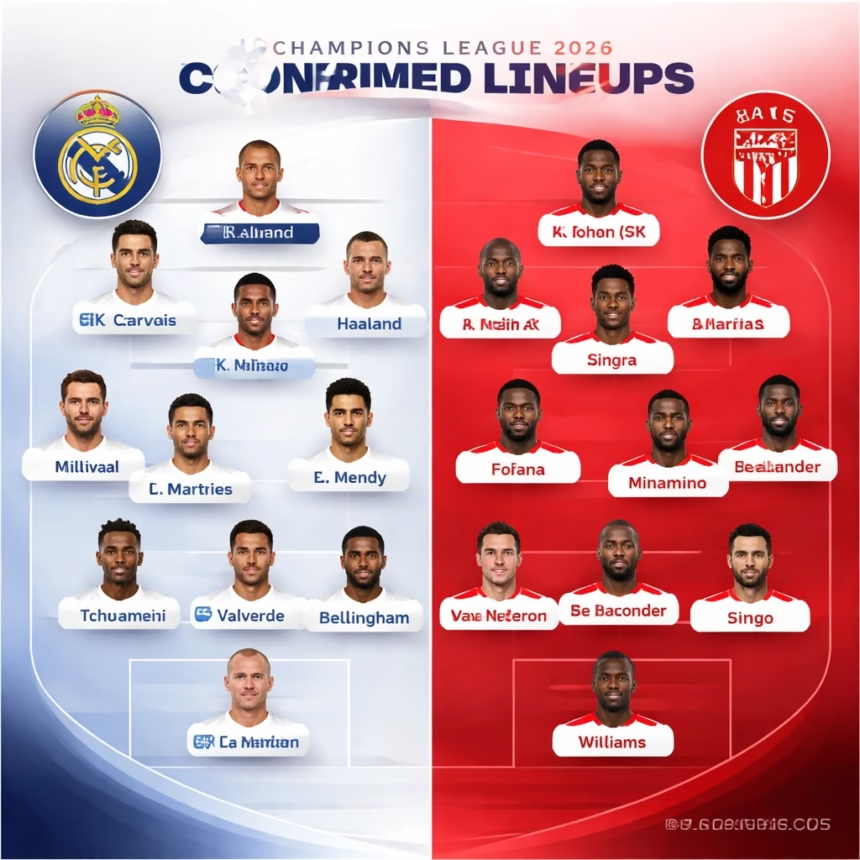
The highly anticipated 2026 Champions League Quarter-Finals are set to ignite on March 12, 2026, as European titans Real Madrid host a resurgent AS Monaco at the iconic Santiago Bernabéu in Madrid. Both clubs have officially released their starting lineups, confirming the tactical battles and star-studded encounters fans have eagerly awaited for this crucial first leg.
Background to a Continental Clash
Real Madrid, perennial contenders for Europe's most coveted trophy, enter the 2026 Champions League campaign with an unwavering ambition to secure their record-extending sixteenth title. Their journey through the group stages and the Round of 16 has been marked by a blend of dominant performances and tactical resilience, showcasing a squad depth forged over several successful seasons. The club's recent history has seen a strategic blend of retaining established world-class talent and integrating prodigious young stars, maintaining their status at the pinnacle of European football. Their last Champions League triumph in 2025 solidified their dynasty, and they are now focused on an unprecedented back-to-back success.
AS Monaco, on the other hand, represents one of the most compelling narratives of the current tournament. After several seasons of rebuilding and strategic investment, the principality club has engineered a remarkable resurgence, capturing the Ligue 1 title in 2025 and demonstrating formidable prowess on the continental stage. Their path to the Quarter-Finals has been characterized by an exciting, high-energy style of play, upsetting several established giants along the way. This fixture marks their deepest run in the Champions League since their semi-final appearance in 2017, and there is a palpable sense of determination within the squad to challenge the established order. The historical head-to-head between these two clubs has been limited, adding an extra layer of intrigue to this fresh encounter between a seasoned champion and an ambitious challenger.
Key Developments: Lineups and Tactical Shifts
The official confirmation of both starting elevens has sent ripples across the footballing world, revealing strategic choices from both coaching staffs. The selections underscore each team's approach to this critical first leg.
Real Madrid’s Expected XI
Manager Carlo Ancelotti, renowned for his pragmatic yet effective approach, has opted for a formidable 4-3-3 formation designed to control possession and unleash devastating attacks.

Goalkeeper: Thibaut Courtois continues as the undisputed number one, his experience and shot-stopping ability vital for high-stakes matches.
* Defenders: A back four featuring Achraf Hakimi at right-back, providing both defensive solidity and attacking width. Éder Militão and Ronald Araújo form a powerful central defensive partnership, offering pace and aerial dominance. Ferland Mendy retains his spot at left-back, valued for his defensive discipline.
* Midfielders: The engine room is anchored by Aurélien Tchouaméni, providing defensive cover and dictating tempo. Eduardo Camavinga's dynamism and ball-carrying ability complement Jude Bellingham, who operates in a more advanced role, linking midfield with attack and contributing crucial goals.
* Forwards: A fearsome attacking trident consisting of Rodrygo on the right, the prolific Endrick through the middle – having fully blossomed into a world-class striker by 2026 – and the electrifying Vinicius Jr. on the left, ready to exploit spaces with his pace and dribbling.
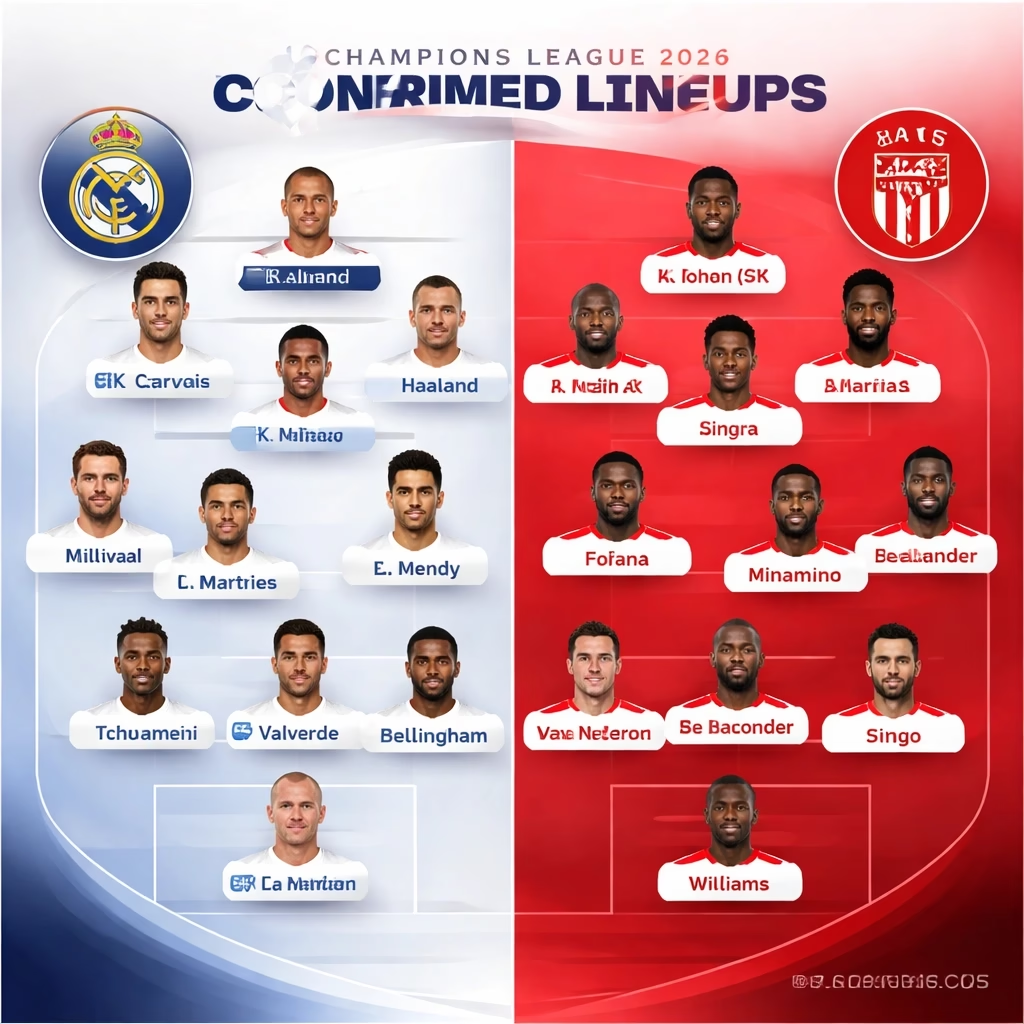
This lineup suggests Real Madrid will aim for early dominance, leveraging their individual brilliance and collective understanding to break down Monaco's defense. The inclusion of Endrick over a more traditional number nine indicates a desire for fluidity and quick transitions in the final third.

Monaco’s Strategic Selection
Monaco's manager, Adi Hütter, known for his high-pressing and counter-attacking philosophy, has chosen a 4-2-3-1 setup, aiming to absorb pressure and strike quickly.
Goalkeeper: Philipp Köhn, a consistent performer, starts between the posts, tasked with neutralizing Real Madrid's potent attack.
* Defenders: Vanderson occupies the right-back position, offering pace and attacking impetus. Guillermo Maripán and Axel Disasi form the central defensive pairing, relied upon for their physicality and organizational skills. Caio Henrique provides balance and delivery from the left-back spot.
* Midfielders: A robust double pivot of Denis Zakaria and Youssouf Fofana will be crucial in disrupting Real Madrid's midfield flow and launching counter-attacks. Their defensive tenacity and ability to recycle possession will be key.
* Attacking Midfielders: Aleksandr Golovin, the creative fulcrum, operates centrally behind the striker, tasked with unlocking defenses. He is flanked by the rapid Myron Boadu on the right and the technically gifted Maghnes Akliouche on the left, both expected to provide width and direct runs.
* Striker: Folarin Balogun leads the line, his pace and clinical finishing a constant threat on the break.
Monaco's lineup emphasizes defensive solidity in midfield, quick transitions, and exploiting the pace of their wide players and striker. The tactical battle in the center of the park, particularly how Monaco's double pivot contends with Real Madrid's creative midfielders, will be decisive.
Tactical Battlegrounds
The match promises several key tactical duels. Real Madrid's wide players, Vinicius Jr. and Rodrygo, will test Monaco's full-backs, Vanderson and Caio Henrique. The midfield contest between Tchouaméni, Camavinga, and Bellingham against Zakaria, Fofana, and Golovin will dictate the tempo and control of the game. Furthermore, Monaco's ability to contain Endrick and the late runs of Bellingham will be paramount for their defensive success.
Impact of the Lineups
The chosen lineups carry significant implications for various stakeholders, from the players themselves to the global football community.
Individual Player Spotlight
For players like Endrick, this match is a significant test of his mettle on the biggest European stage, validating his growth into a crucial attacking asset for Real Madrid. Similarly, Monaco's young talents, such as Akliouche and Balogun, have an opportunity to further enhance their burgeoning reputations against world-class opposition, potentially attracting interest from top clubs. A strong performance could elevate their status and future career trajectories.
More Read

Club Ambitions and Financial Stakes
For Real Madrid, progression to the semi-finals is not just about prestige but also significant financial gain through prize money, increased sponsorship visibility, and merchandise sales. For Monaco, a strong showing, even if they don't advance, would solidify their return to the European elite, boost their brand, and potentially increase player valuations, offering a strong foundation for future investments. The outcome of this tie will heavily influence both clubs' strategic planning for the upcoming summer transfer window.
Fan Engagement and Media Narrative
The confirmed lineups have already fueled intense discussions among fans worldwide, with social media platforms buzzing with predictions and analyses. The match is expected to draw colossal viewing figures globally, further cementing the Champions League's status as the pinnacle of club football. Media narratives will heavily revolve around the performance of key individuals and the tactical masterclass (or missteps) of the managers.
What Next: The Road Ahead
Following this highly anticipated first leg at the Santiago Bernabéu, the focus will immediately shift to the return fixture. The second leg is scheduled for March 19, 2026, at Monaco's Stade Louis II, where the aggregate winner will secure a coveted spot in the Champions League Semi-Finals.
The result of this first leg will undoubtedly shape the approach for the reverse fixture. A comfortable lead for Real Madrid would allow them to manage the game more conservatively, while a tight scoreline or a Monaco victory would set up a thrilling, high-stakes encounter in the Principality. Beyond this tie, the winner will face either Manchester City or Bayern Munich in the semi-finals, based on the draw, setting up another colossal clash on the path to the final. The performances in these Quarter-Finals will also have long-term implications, influencing player market values, coaching philosophies, and club strategies for the 2026-2027 season. All eyes are now on Madrid as the stage is set for a monumental European evening.