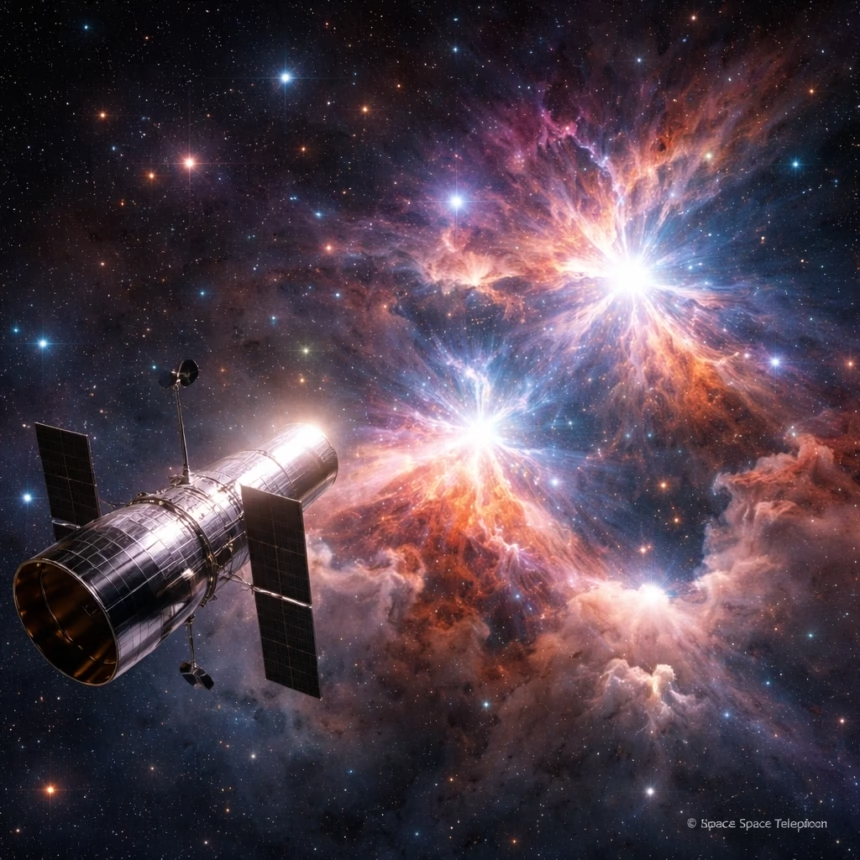
Cosmic Nursery: Hubble Captures Stunning Starbirth in Distant Galaxy
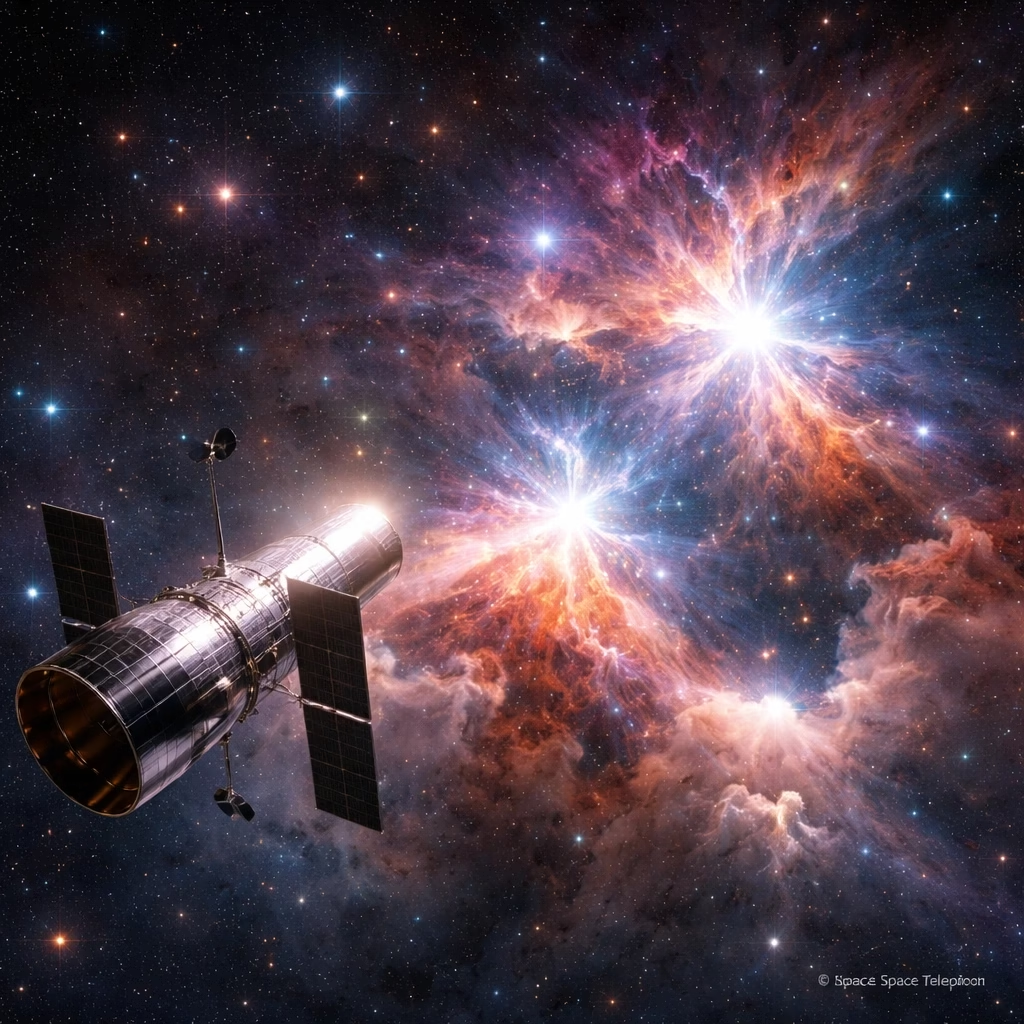
The Hubble Space Telescope has once again delivered breathtaking images, this time revealing vibrant new star formations within the NGC 604 galaxy, located approximately 200 million light-years from Earth. The stunning visuals, captured in recent observations, offer unparalleled insights into the process of stellar birth and the evolution of galaxies.
A Legacy of Discovery: Hubble’s Journey
Launched on April 24, 1990, the Hubble Space Telescope revolutionized astronomy. It's a joint project of NASA and the European Space Agency (ESA). Initially plagued by a flawed primary mirror, a servicing mission in 1993 corrected the optics, unlocking its full potential. Over its operational lifetime, Hubble has provided countless images and data, contributing significantly to our understanding of the universe, from measuring the expansion rate to identifying distant galaxies. It continues to operate, albeit with reduced capabilities due to age, and is expected to remain functional until at least 2030.
Witnessing Stellar Birth: New Insights from NGC 604
NGC 604, also known as the "Butterfly Nebula," is a star-forming region within a spiral galaxy. Recent Hubble images, released in early October 2023, showcase bright, dusty pillars and glowing gas clouds – the nurseries where stars are born. These pillars, composed primarily of molecular hydrogen, are dense regions where gravity is pulling in surrounding material, causing it to collapse and eventually ignite nuclear fusion, marking the birth of a new star. The images reveal intricate details of these processes, providing astronomers with a clearer understanding of how stars form in different galactic environments.
More Read

The Role of Dust
Dust plays a crucial role in star formation. Dense dust clouds shield the developing stars from external radiation, allowing them to coalesce without being disrupted. Furthermore, dust reflects and scatters starlight, contributing to the nebula’s colorful appearance. The Hubble images highlight the complex interplay between light and dust in these stellar nurseries.
Protostars and Stellar Jets
Within the pillars, astronomers have identified numerous protostars – stars in their earliest stages of development. These protostars often exhibit powerful jets of gas and plasma shooting out from their poles. These jets, driven by the protostar’s magnetic field, help to clear away surrounding material and regulate the star’s growth. Hubble’s high-resolution imaging allows researchers to observe these jets in unprecedented detail.
Why This Matters: Understanding Our Origins
Studying star formation is fundamental to understanding the evolution of galaxies and the origins of planetary systems. The stars born in NGC 604 are likely to be similar to our Sun in mass and composition. By observing these processes in distant galaxies, astronomers can gain insights into the conditions that led to the formation of our own solar system and the potential for life to exist elsewhere in the universe.
More Read

The discovery of new star-forming regions like NGC 604 also helps astronomers understand how galaxies change over time. Star formation rates fluctuate, and understanding these fluctuations is crucial for modeling the evolution of galaxies from their early stages to their present forms.
Looking Ahead: Future Observations and Missions
The James Webb Space Telescope (JWST), launched in December 2021, is providing even more detailed observations of star-forming regions than Hubble. JWST's infrared capabilities allow it to peer through dust clouds that obscure visible light, revealing even more hidden starbirth events. Future observations with both Hubble and JWST are expected to further refine our understanding of star formation and galaxy evolution.
JWST’s Complementary Role
While Hubble excels at capturing detailed images in visible and ultraviolet light, JWST’s infrared vision allows it to see through dust clouds, revealing stars and galaxies that are otherwise hidden. The two telescopes complement each other, providing a more complete picture of the universe.
Planned Hubble Operations
NASA and ESA are planning several servicing missions to Hubble to extend its operational life. These missions will include upgrades to its instruments and software, ensuring that Hubble remains a valuable tool for astronomical research for years to come. The exact schedule of these missions is still being determined.
The ongoing observations of NGC 604 and other star-forming regions promise to yield even more exciting discoveries in the years to come, furthering our knowledge of the universe and our place within it.