Apple's AI Gamble: A New Siri Era?
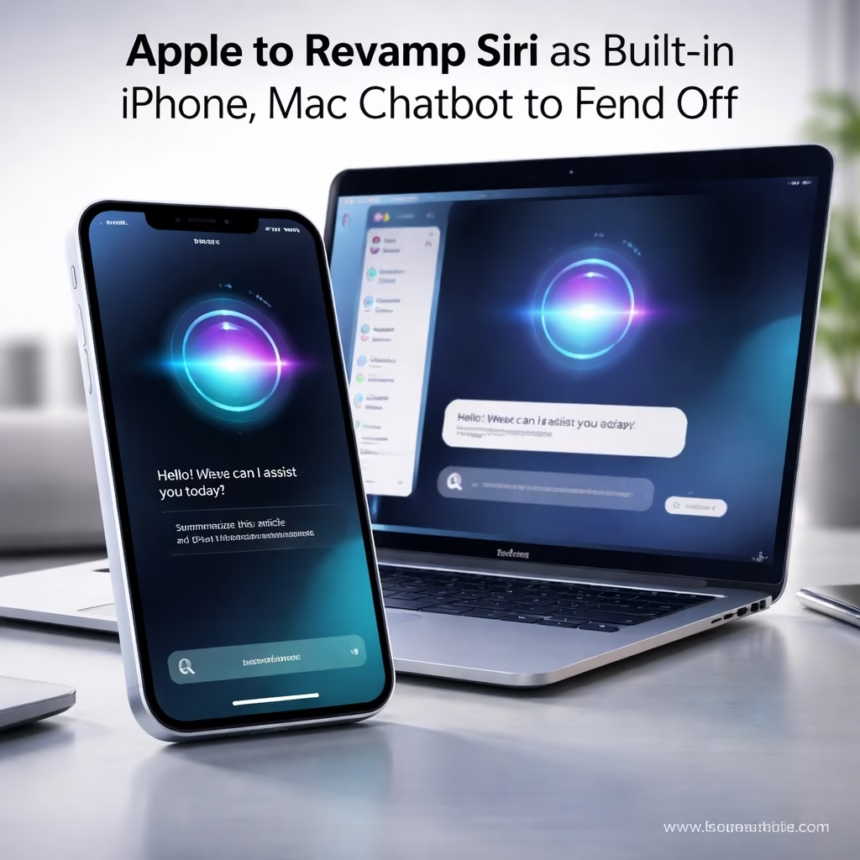
Apple is reportedly planning a significant redesign of its Siri virtual assistant, aiming to integrate it more deeply into the iPhone and Mac operating systems. The changes, expected to roll out in the latter half of 2024, represent a strategic move to compete with the rapid advancements in conversational AI, particularly from OpenAI's ChatGPT.
Background: Siri’s Evolution and Challenges
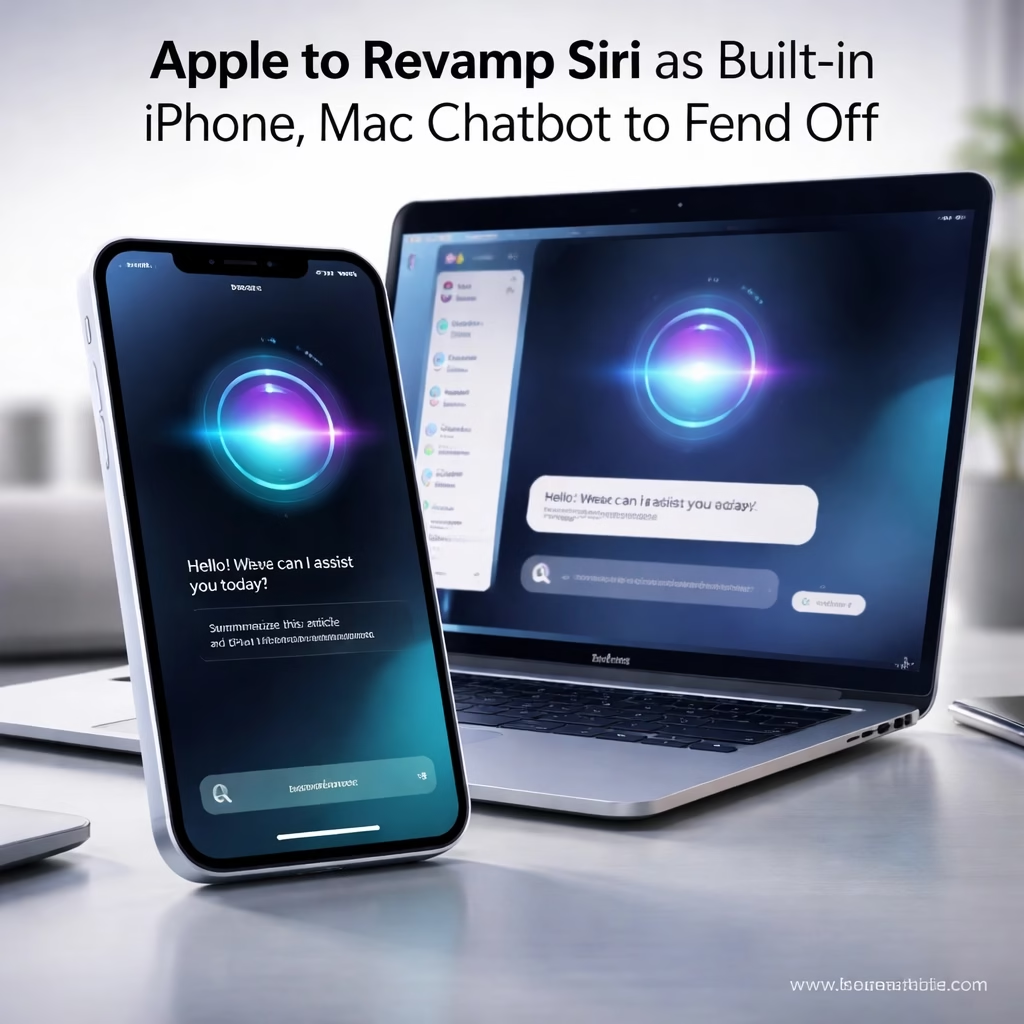
Siri, launched in 2011 with the iPhone 4S, has been a core feature of Apple’s ecosystem. Initially, it offered basic voice commands for tasks like setting reminders and making calls. Over the years, Apple has steadily added functionality, incorporating Siri into Apple Watch, HomePod, and CarPlay. However, Siri has consistently lagged behind competitors like Google Assistant and, more recently, ChatGPT in terms of natural language understanding, accuracy, and overall usefulness.
Apple's approach to AI has traditionally been more cautious than some rivals. While investing heavily in machine learning research, the company has been hesitant to fully embrace generative AI in its core products. This cautious stance has arguably left Siri struggling to keep pace with the evolving landscape of virtual assistants and AI chatbots.

Key Developments: A Focus on Proactive Assistance
Recent reports indicate Apple is shifting its focus from reactive command execution to proactive, context-aware assistance. The revamped Siri will leverage on-device processing power, particularly from the A17 Bionic chip in the iPhone 15 Pro and upcoming devices, to improve speed and privacy. This means more tasks can be handled directly on the device without relying on cloud connectivity.
Apple is reportedly integrating more advanced natural language processing (NLP) models into Siri. This aims to allow for more complex and nuanced conversations. The goal is to enable Siri to understand the intent behind user requests even if they are phrased in less-than-perfect ways, mimicking the conversational fluency of models like ChatGPT.
Furthermore, Apple is exploring tighter integration with third-party apps and services. This would allow Siri to perform a wider range of tasks, such as controlling smart home devices, managing calendars, and providing personalized recommendations, all within a more seamless user experience. Early tests have shown Siri offering suggestions based on user routines and location data.

Impact: Users, Developers, and the AI Market
The revamped Siri will directly impact Apple users, offering a potentially more helpful and intuitive virtual assistant experience. Improved accuracy and proactive assistance could make everyday tasks easier and more efficient.
Developers will benefit from a more robust and versatile Siri platform. The increased integration with third-party apps will open up new possibilities for app functionality and user engagement. Apple is expected to release updated developer tools and APIs to facilitate this integration.
The changes also have broader implications for the AI market. Apple’s renewed focus on Siri signifies a direct challenge to OpenAI and other AI companies dominating the conversational AI space. Success for Apple could reshape the competitive dynamics of the industry, pushing other players to innovate and improve their own virtual assistant offerings.
What’s Next: Timeline and Future Features
Release Date
While an official announcement hasn’t been made, industry analysts predict the new Siri will debut with the release of iOS 18 in September 2024, coinciding with the introduction of the new iPhone models. The redesigned Siri for macOS is anticipated to follow later in 2024 or early 2025.
Key Features Expected
Beyond improved NLP, Apple is rumored to be incorporating features like:
- Contextual Awareness: Siri will better understand the user’s current activity and environment to provide more relevant responses.
- Personalized Recommendations: Siri will offer proactive suggestions based on user preferences and usage patterns.
- Enhanced Multitasking: Siri will be able to handle more complex and multi-step tasks.
- Improved Integration with Apple Ecosystem: Seamless interaction with all Apple devices and services.
The success of this revamped Siri will depend on Apple's ability to overcome the challenges of balancing privacy, security, and functionality. The company is walking a fine line, aiming for a more powerful assistant without compromising its core principles of user privacy and data protection. The next few months will be crucial in determining whether Apple can successfully reclaim its position in the AI landscape.