India's Diagnostic Drive: New Tests to Fight Disease Delays
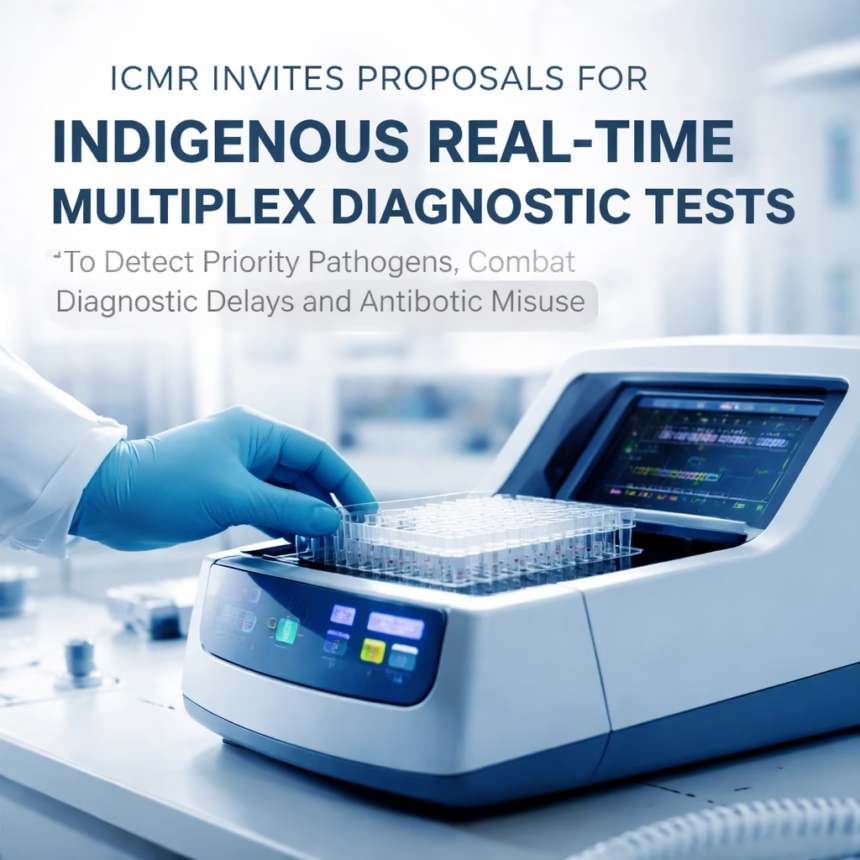
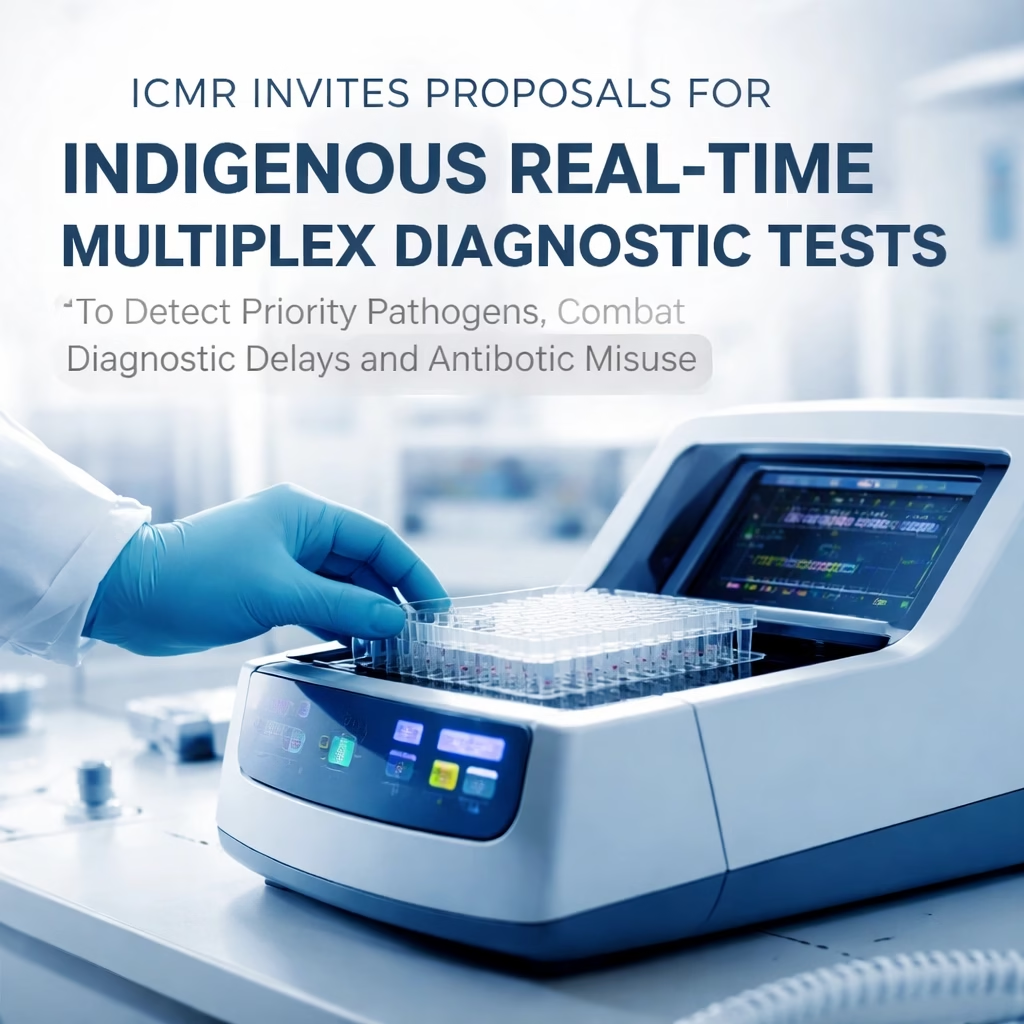
The Indian Council of Medical Research (ICMR) has announced a call for proposals aimed at developing homegrown, real-time multiplex diagnostic tests. This initiative, launched on October 26, 2023, seeks to improve detection of priority pathogens and ultimately reduce diagnostic delays and the overuse of antibiotics across India.
Background
India has long grappled with challenges in timely and accurate disease diagnosis, particularly for infectious diseases. Diagnostic delays often lead to delayed treatment, increased morbidity, and higher healthcare costs. The reliance on imported diagnostic kits also presents logistical and economic vulnerabilities. Recognizing this, the ICMR has been actively promoting indigenous research and development in medical diagnostics for several years.
Prior to this recent initiative, the ICMR focused on bolstering existing diagnostic capabilities through technology transfer and capacity building. Efforts included supporting the development of point-of-care testing (POCT) devices and expanding laboratory infrastructure across the country. The COVID-19 pandemic highlighted the critical need for self-reliance in diagnostic solutions, accelerating the current push for indigenous innovation.

Key Developments
The recent call for proposals marks a significant escalation in the ICMR's efforts. Unlike previous initiatives focused on specific diseases, this program aims for a broader spectrum of pathogens. "Multiplex" tests are particularly important, as they can simultaneously detect multiple pathogens from a single sample, offering a more efficient and comprehensive diagnostic approach.
The ICMR is prioritizing the development of tests for a range of priority pathogens, including bacterial infections, viral infections, and fungal infections prevalent in India. Specific pathogens of interest include those causing tuberculosis, malaria, dengue fever, and emerging infectious diseases. The call for proposals emphasizes the development of tests suitable for use in resource-constrained settings, such as rural hospitals and primary healthcare centers.
The funding for these projects will be provided through a competitive grant scheme, with a total budget yet to be fully disclosed. The ICMR expects to award grants to promising proposals within the next six months, with project implementation expected to begin shortly thereafter.

Impact
This initiative has the potential to significantly impact healthcare delivery across India. Faster and more accurate diagnostics will enable quicker treatment initiation, leading to improved patient outcomes. The development of indigenous tests will reduce reliance on foreign suppliers, enhancing national health security and promoting economic self-sufficiency.
The initiative will particularly benefit patients in remote and underserved areas, where access to advanced diagnostic facilities is limited. Point-of-care tests, in particular, will empower healthcare workers to make informed decisions at the point of care, reducing the need for costly and time-consuming laboratory analyses.
Furthermore, improved diagnostic capabilities will help address the growing problem of antibiotic misuse. Rapid and accurate diagnosis of infections will enable clinicians to prescribe the most appropriate antibiotics, minimizing the development of antibiotic resistance – a major public health threat.
What Next
The ICMR anticipates a strong response to its call for proposals. The evaluation process will be rigorous, focusing on scientific merit, technical feasibility, and potential impact. Successful proposals will be awarded funding to support research and development, clinical validation, and regulatory approval of their diagnostic tests.
Timeline for Implementation
The ICMR expects initial prototype development within 12-18 months of grant award. Clinical validation studies will follow, with the aim of obtaining regulatory approvals from the Central Drugs Standard Control Organization (CDSCO) within 2-3 years. Wider deployment of the tests in public healthcare facilities is projected to occur within 3-5 years.
Focus Areas
Beyond the broad spectrum of pathogens, the ICMR is particularly interested in innovative technologies such as lateral flow assays, PCR-based tests, and biosensors. Proposals demonstrating a strong emphasis on affordability, ease of use, and sustainability will be highly favored. Collaboration between academic institutions, research organizations, and industry partners is strongly encouraged.
More Read

The success of this initiative hinges on fostering a robust ecosystem for indigenous diagnostic innovation. By investing in research, development, and regulatory support, the ICMR aims to transform India into a global hub for the development and manufacturing of high-quality, affordable diagnostic tools.