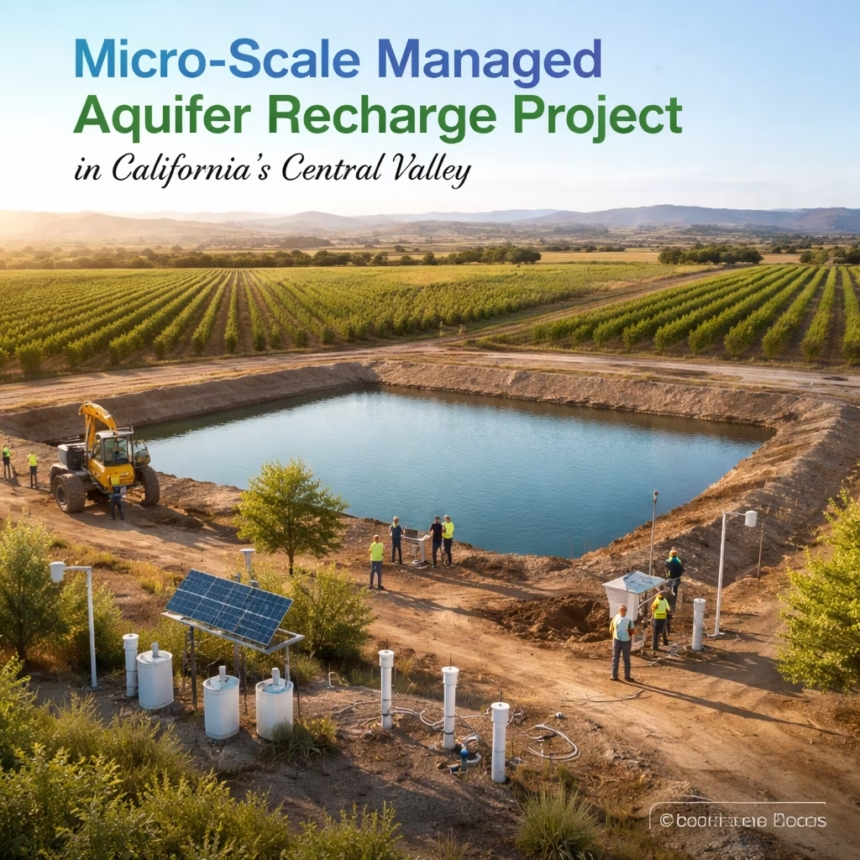
Boosting California's Water Supply: A Tiny Project, Big Potential
A micro-scale managed aquifer recharge (MAR) project is underway in the San Joaquin Valley, California, aiming to replenish groundwater supplies impacted by prolonged drought. The project, initiated in 2022 near Fresno, is being closely monitored by state agencies and local water districts.
Background
California's Central Valley, a vital agricultural region, has faced severe water shortages for decades. Over-pumping of groundwater has depleted aquifers, leading to land subsidence and impacting agricultural productivity. Managed Aquifer Recharge (MAR) is an increasingly popular strategy to address this issue, involving intentionally replenishing groundwater supplies through various methods.
The concept of MAR in California dates back several years, but widespread implementation has been relatively recent. California’s Sustainable Groundwater Management Act (SGMA), passed in 2016, mandates local agencies to develop and implement groundwater sustainability plans by 2022. This has spurred interest in innovative recharge techniques to meet these mandates.
Key Developments
The project in the San Joaquin Valley represents a significant step forward. It utilizes a shallow infiltration basin constructed on private farmland. Water diverted from the San Joaquin River during periods of surplus is infiltrated into the aquifer, effectively recharging it.
More Read

A key innovation is the use of a permeable reactive barrier (PRB) within the basin. The PRB, installed in early 2023, helps filter the diverted water, removing sediment and contaminants before it enters the aquifer. This ensures the recharged water meets stringent quality standards.
Recent monitoring data, released by the California Department of Water Resources in October 2023, indicates promising results. Groundwater levels in the vicinity of the recharge basin have shown a gradual increase since the project began, though further data is needed for conclusive assessment.
Impact
The potential benefits of this project extend to multiple stakeholders. Farmers in the region stand to gain increased water availability, bolstering agricultural operations and potentially allowing for expansion of crop production.

Local communities also benefit from more reliable water supplies, reducing the risk of water restrictions and supporting economic growth. Environmental groups are closely watching the project, hopeful that it can contribute to restoring groundwater health and mitigating land subsidence.
The project serves as a model for other communities facing similar water challenges. The data and experience gained from this pilot project will inform future MAR initiatives across the state.
Community Engagement
The project has involved significant community engagement. Local residents and farmers were consulted during the planning stages, and regular updates are provided through community meetings and online platforms. This collaborative approach is seen as crucial for project success and long-term sustainability.
What Next
The project is currently in its monitoring phase, with data collection continuing throughout 2024 and 2025. Researchers are analyzing water quality, groundwater levels, and aquifer characteristics to assess the project's effectiveness and identify areas for improvement.
Future plans include expanding the recharge capacity of the basin and exploring the use of additional recharge techniques. The long-term goal is to create a sustainable and resilient water supply system for the San Joaquin Valley. A comprehensive report summarizing the project’s findings is expected in late 2025.
Long-Term Sustainability
The success of the project hinges on consistent monitoring and adaptive management. The team is working to integrate the MAR project with existing groundwater management practices to ensure long-term sustainability. This includes collaborating with local water districts to optimize water diversions and minimize environmental impacts.
More Read