Kidney Hope Unveiled: Staging and PLA2R Predict Membranous Nephropathy Treatment Success
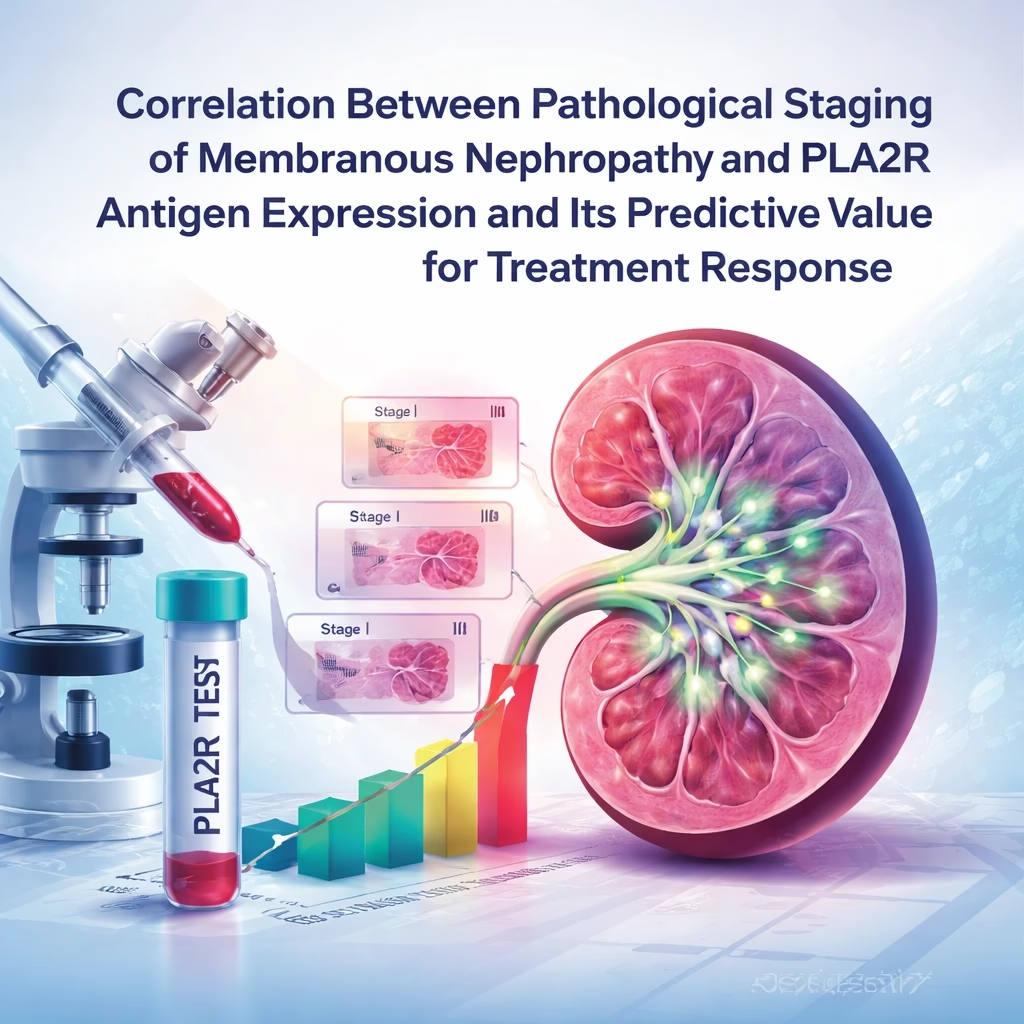
A groundbreaking study recently published in the Journal of Clinical Nephrology has revealed a significant correlation between the pathological staging of Membranous Nephropathy (MN) and the expression levels of the PLA2R antigen. Conducted by researchers at the Mount Sinai Health System in New York City, the findings, released in late May 2024, offer a promising new avenue for predicting treatment response and personalizing care for patients battling this chronic kidney disease.
Background: Understanding Membranous Nephropathy
Membranous Nephropathy is a leading cause of nephrotic syndrome in adults, characterized by damage to the tiny blood vessels in the kidneys (glomeruli) that filter waste from the blood. This damage often leads to protein leakage into the urine, swelling, and, if left untreated, can progress to end-stage renal disease, requiring dialysis or a kidney transplant.
Historically, MN diagnosis has relied heavily on kidney biopsy, where pathologists examine tissue samples under a microscope. This examination allows for pathological staging, typically classified into stages I through IV, based on the severity and appearance of subepithelial immune deposits and glomerular basement membrane changes.
The Discovery of PLA2R
A pivotal moment in MN research occurred in 2012 with the identification of the phospholipase A2 receptor (PLA2R) as the primary target antigen in approximately 70-80% of primary MN cases. This discovery, spearheaded by a team at the University of North Carolina, revolutionized understanding of the disease's autoimmune nature.
More Read

Since then, measuring anti-PLA2R antibodies in the blood has become a standard diagnostic tool, often allowing for diagnosis without an invasive biopsy in specific clinical scenarios. Furthermore, declining anti-PLA2R antibody levels are frequently used as a biomarker for treatment response.
However, despite these advances, predicting which patients will respond best to specific immunosuppressive therapies, and at what stage, has remained a significant challenge. Treatment often involves a trial-and-error approach, exposing patients to potent drugs with potential side effects.
Key Developments: The Latest Research
The new study, led by Dr. Anya Sharma and her team at Mount Sinai, investigated 150 patients diagnosed with primary MN between 2018 and 2023. The research focused on correlating the established pathological stages (I-IV) from initial kidney biopsies with both serum anti-PLA2R antibody levels and the immunohistochemical expression of PLA2R antigen within the kidney tissue itself.

Unpacking the Correlations
The researchers observed distinct patterns. Patients in earlier pathological stages (I and II) generally exhibited higher levels of both circulating anti-PLA2R antibodies and intense PLA2R antigen staining within their glomerular deposits. As the disease progressed to later stages (III and IV), serum antibody levels tended to be more variable, and tissue PLA2R antigen expression often appeared less robust or more fragmented, indicative of chronic changes and potential "burnout" of the immune response.
Crucially, the study found that patients with high baseline serum anti-PLA2R antibody titers combined with strong tissue PLA2R antigen expression at pathological stage II showed the highest rates of complete or partial remission following a standardized regimen of rituximab-based therapy. Specifically, 78% of these patients achieved remission within 12 months, compared to only 45% of patients in stage IV with lower or absent tissue PLA2R expression, even with aggressive treatment.
Predictive Power for Treatment
This dual assessment—integrating biopsy-derived pathological staging with quantitative PLA2R antigen expression—offers a more refined prognostic tool. The study suggests that patients presenting with earlier-stage disease and high PLA2R activity are more likely to respond favorably to targeted immunosuppression, particularly B-cell depleting agents like rituximab.
Conversely, patients in advanced pathological stages (III and IV) with diminished tissue PLA2R expression might represent a population less responsive to therapies targeting the initial autoimmune attack. For these individuals, alternative or more aggressive treatment strategies, potentially focusing on mitigating fibrosis and preserving kidney function, might be more appropriate from the outset.
Impact: Who is Affected?
The implications of these findings are far-reaching for several key groups.
Patients with Membranous Nephropathy
For individuals diagnosed with MN, this research brings the promise of truly personalized medicine. By understanding their specific pathological stage and PLA2R status, patients could receive tailored treatment plans designed to maximize efficacy and minimize exposure to unnecessary or ineffective medications. This could lead to fewer side effects, faster remission, and a better overall quality of life.

Nephrologists and Clinicians
Nephrologists will gain a more powerful set of tools for risk stratification and treatment decision-making. The ability to predict treatment response more accurately at diagnosis could streamline therapy protocols, potentially avoiding prolonged courses of steroids or other broad immunosuppressants in non-responsive patients, and guiding clinicians toward the most effective interventions sooner.
Healthcare Systems and Research
Healthcare systems could benefit from more efficient resource allocation, as effective initial treatment reduces the likelihood of progression to end-stage renal disease, which incurs significant costs. Furthermore, the study opens new avenues for pharmaceutical research, encouraging the development of drugs specifically targeting different stages or PLA2R expression profiles of MN.
What Next: Expected Milestones
While promising, the findings from Mount Sinai represent an important step, not the final word. Several critical milestones are anticipated in the coming years.
Validation and Multi-Center Trials
The immediate next step involves large-scale, multi-center validation studies. Researchers will need to replicate these findings across diverse patient populations and geographical regions to confirm their generalizability and robustness. Collaborative efforts involving major nephrology centers across North America and Europe are already being discussed.
Refinement of Clinical Guidelines
If validated, these insights could lead to significant updates in international clinical guidelines for the management of Membranous Nephropathy. Such updates would incorporate combined pathological staging and PLA2R assessment as a standard component of diagnostic workup and treatment stratification, potentially within the next three to five years.
Development of Enhanced Diagnostics
The demand for precise and standardized methods for assessing tissue PLA2R expression will likely drive innovation in diagnostic pathology. This could include the development of automated immunohistochemistry platforms or more quantitative imaging techniques to provide consistent and reliable results across different laboratories.
Further Exploration of Non-PLA2R MN
The study also indirectly highlights the ongoing need for better understanding and predictive markers for the 20-30% of MN cases that are not associated with PLA2R. Future research will undoubtedly continue to explore other antigenic targets and their correlation with pathological changes and treatment outcomes.
The integration of pathological staging with PLA2R antigen expression marks a significant stride in the personalized treatment of Membranous Nephropathy, bringing renewed hope for improved patient outcomes worldwide.