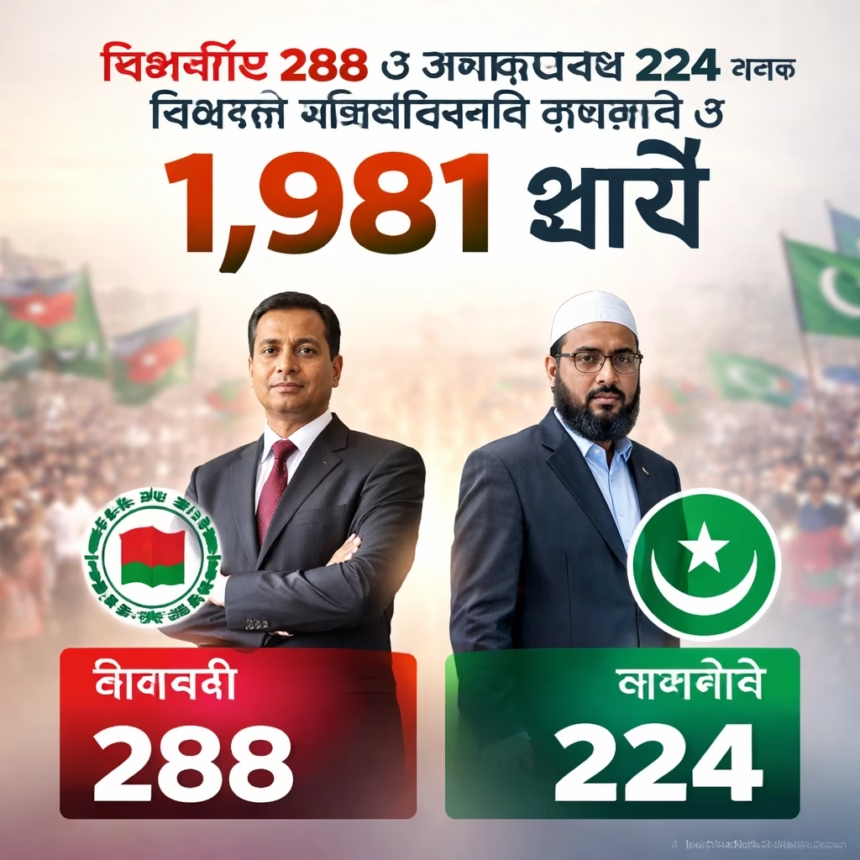
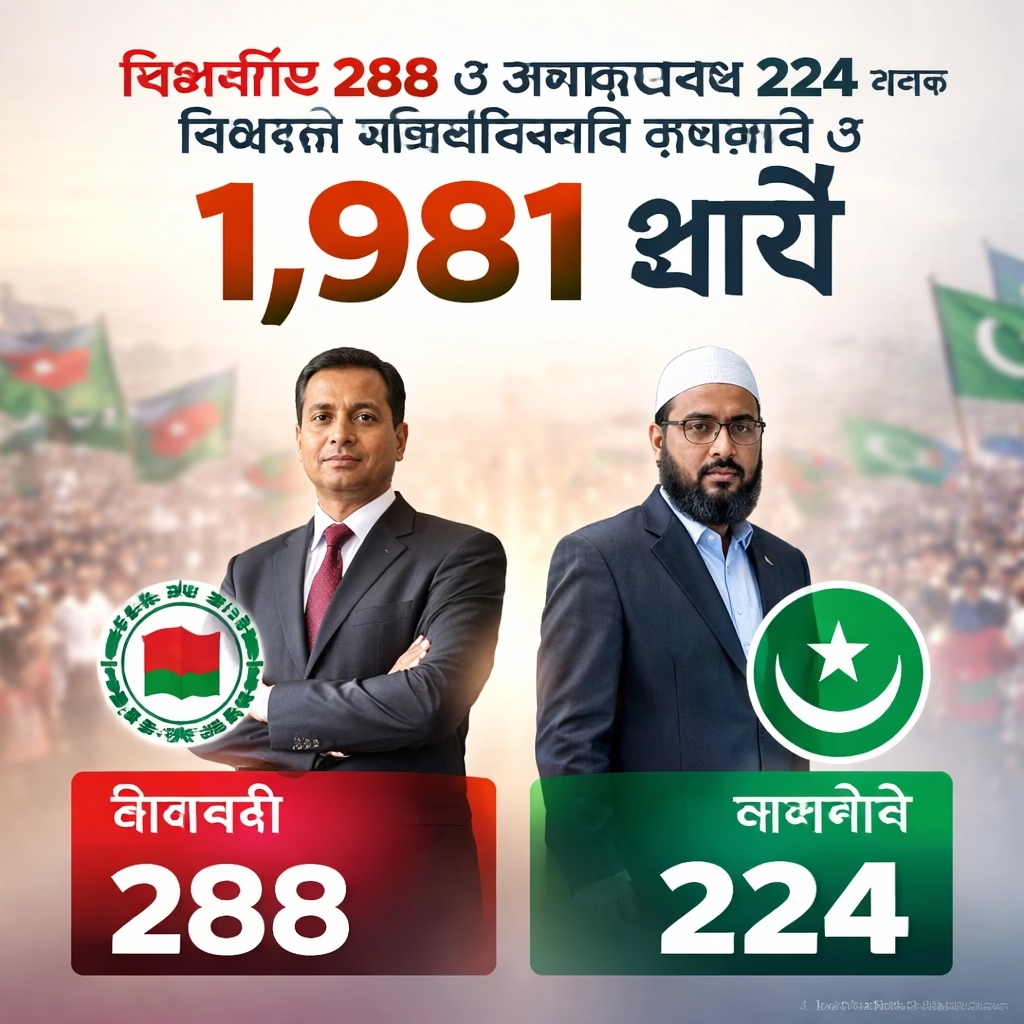
As Bangladesh gears up for its upcoming general election, the political arena is buzzing with the finalization of candidate lists, revealing a robust field of 1,981 contenders. This diverse pool includes a notable presence of 288 individuals affiliated with the Bangladesh Nationalist Party (BNP) and 224 linked to Jamaat-e-Islami, even as both parties have officially called for a boycott of the polls. The Election Commission's recent announcement sets the stage for a complex and closely watched electoral battle across the nation.
Background: A Contested Political Landscape
The 12th Jatiya Sangsad Election, slated for early January, emerges from a deeply polarized political environment. The ruling Awami League, led by Prime Minister Sheikh Hasina, is seeking another term amidst persistent calls from the opposition for a caretaker government to oversee the elections, a demand consistently rejected by the government. This disagreement has been a central point of contention, leading to widespread protests and political unrest in recent months. The BNP, a major opposition force, along with its allies, declared an official boycott of the election, arguing that free and fair polls are impossible under the current administration.
Historically, Bangladesh's electoral cycles have often been marked by intense rivalry and strategic maneuvers from all political factions. Previous elections have seen varying levels of participation from opposition parties, with boycotts not being entirely unprecedented. The current situation, however, presents a unique dynamic: while the top leadership of BNP maintains its boycott stance, a significant number of its members have chosen to participate, largely as independent candidates. Similarly, Jamaat-e-Islami, which has been deregistered as a political party and cannot contest under its own symbol, has also seen many of its members enter the fray, primarily as independents or under the banners of smaller, allied parties. This complex interplay of official party lines and individual aspirations underscores the multifaceted nature of Bangladeshi politics.
Key Developments: Final List and Strategic Nuances
The Election Commission (EC) formally published the final list of candidates following the conclusion of the withdrawal period, solidifying the contenders for all 300 parliamentary constituencies. This crucial phase, which followed nomination submissions and scrutiny, saw a significant number of aspirants initially, with many later withdrawing or being rejected. The final figure of 1,981 candidates represents a consolidation of the electoral battleground.
A striking aspect of this election is the participation of candidates associated with the BNP. Despite the party's official declaration of non-participation, 288 individuals known to be BNP members or sympathizers have filed nominations and remained in the race. These candidates are largely contesting as independents, foregoing the party's traditional "sheaf of paddy" symbol. This move has sparked considerable debate within BNP circles, with some viewing it as a defiance of party directives, while others see it as a pragmatic attempt to maintain a political presence and engage with the electoral process at a grassroots level. The party leadership has reportedly warned against such participation, yet the sheer number suggests a significant internal dynamic at play.
More Read

Similarly, 224 individuals linked to Jamaat-e-Islami are also contesting. Given Jamaat's deregistered status by the High Court, which stripped it of the right to participate in elections as a political party, its members are unable to use their traditional " तराजू" (scales) symbol. Consequently, these candidates are primarily running as independents or have secured nominations from other minor parties not directly affiliated with the BNP-led alliance. This strategic pivot allows Jamaat to retain a foothold in the political landscape, leveraging its organizational strength and voter base despite legal constraints. The ruling Awami League and its allies have also put forward a robust number of candidates, ensuring a competitive race in most constituencies. Additionally, a substantial number of genuinely independent candidates, without overt links to major parties, have also made it to the final list, further diversifying the electoral options for voters.
Impact: Legitimacy, Voter Engagement, and Party Dynamics
The broad participation of nearly 2,000 candidates, including those associated with boycotting parties, is expected to have a multifaceted impact on the upcoming election. One of the most significant implications concerns the legitimacy of the electoral process. The presence of a wide array of candidates, even if some are contesting independently despite their party's boycott, could lend a degree of perceived competitiveness and choice to the polls. This might help to counter criticisms from international observers and civil society groups regarding the inclusivity of the election. However, the official boycott by major opposition parties still raises questions about the overall fairness and representativeness of the government that will emerge.
More Read

For voters, the increased number of candidates means a more diverse set of options on the ballot. While some voters might feel disenfranchised by their preferred party's official boycott, the availability of candidates from their political leanings, even as independents, could encourage greater turnout. The campaign period is likely to be vibrant, with numerous candidates vying for attention, potentially leading to a more dynamic public discourse on local and national issues.
Internally, the participation of BNP and Jamaat-e-Islami affiliated individuals poses a significant challenge to their respective party leaderships. For BNP, it highlights a potential fracture between the central command's boycott strategy and the desire of local leaders and activists to remain politically active. This could lead to internal disciplinary actions post-election, or conversely, it might force the party to reassess its strategy for future electoral engagements. For Jamaat, whose very existence as a political party is contested, the independent participation of its members is a testament to its enduring grassroots presence and a strategic way to maintain influence despite legal hurdles. The outcome of these independent bids will undoubtedly influence the future direction and strategies of both parties.
What Next: The Road to Polling Day
With the final candidate list confirmed, the electoral machinery is now in full swing, moving towards the critical phases leading up to polling day. The official campaign period has commenced, allowing candidates and their supporters to actively engage with voters across the country. This period, typically marked by rallies, public meetings, door-to-door canvassing, and media outreach, will be crucial for candidates to articulate their platforms and sway public opinion. The Election Commission is tasked with ensuring a level playing field, monitoring campaign expenditures, and enforcing the electoral code of conduct to prevent violations.
Polling day, set for early January, will see millions of Bangladeshi citizens cast their votes at thousands of polling stations nationwide. The EC is responsible for deploying security personnel, election officials, and observers to ensure the smooth conduct of the voting process. Following the conclusion of polling, ballot counting will commence, and results will be progressively announced, culminating in the declaration of the winning candidates for each constituency.
The period immediately following the election will be pivotal. The formation of the new government will depend on which party or coalition secures a majority of the 300 parliamentary seats. Potential challenges to the election results, either through legal petitions or political protests, could also emerge, especially given the current polarized environment. The Election Commission will play a crucial role in addressing any grievances and upholding the integrity of the electoral outcome. The actions and reactions of the participating candidates, as well as those who boycotted, will shape Bangladesh's political trajectory in the months and years to come, influencing governance, policy-making, and the broader democratic landscape.