The Scarred Heart of Ukraine: Why Donbas is Putin's Enduring Obsession
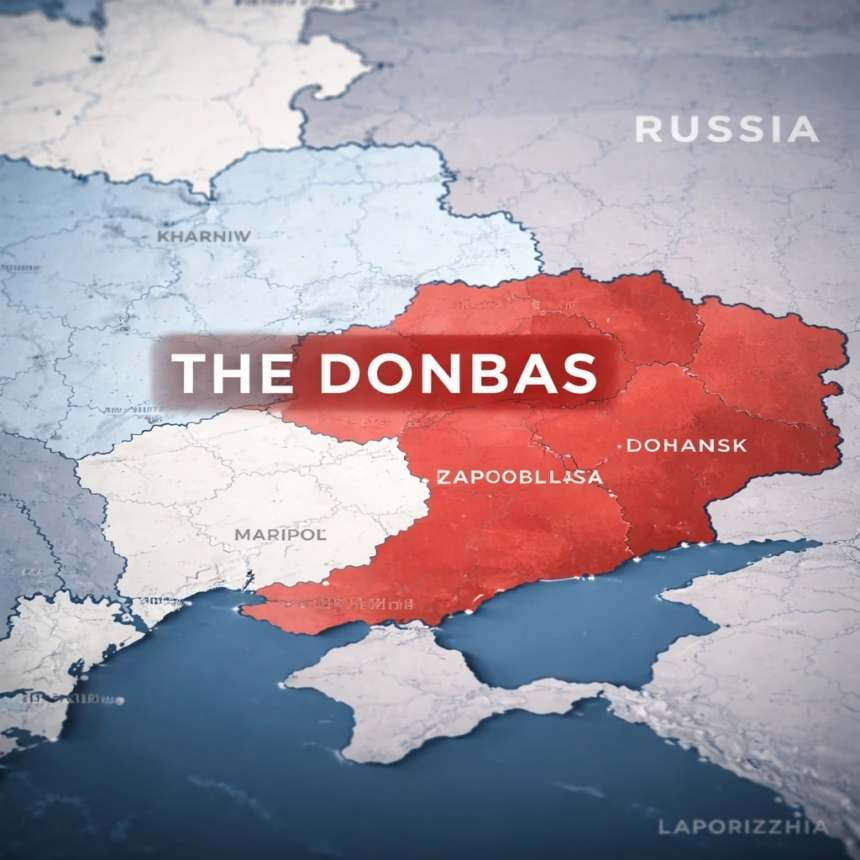
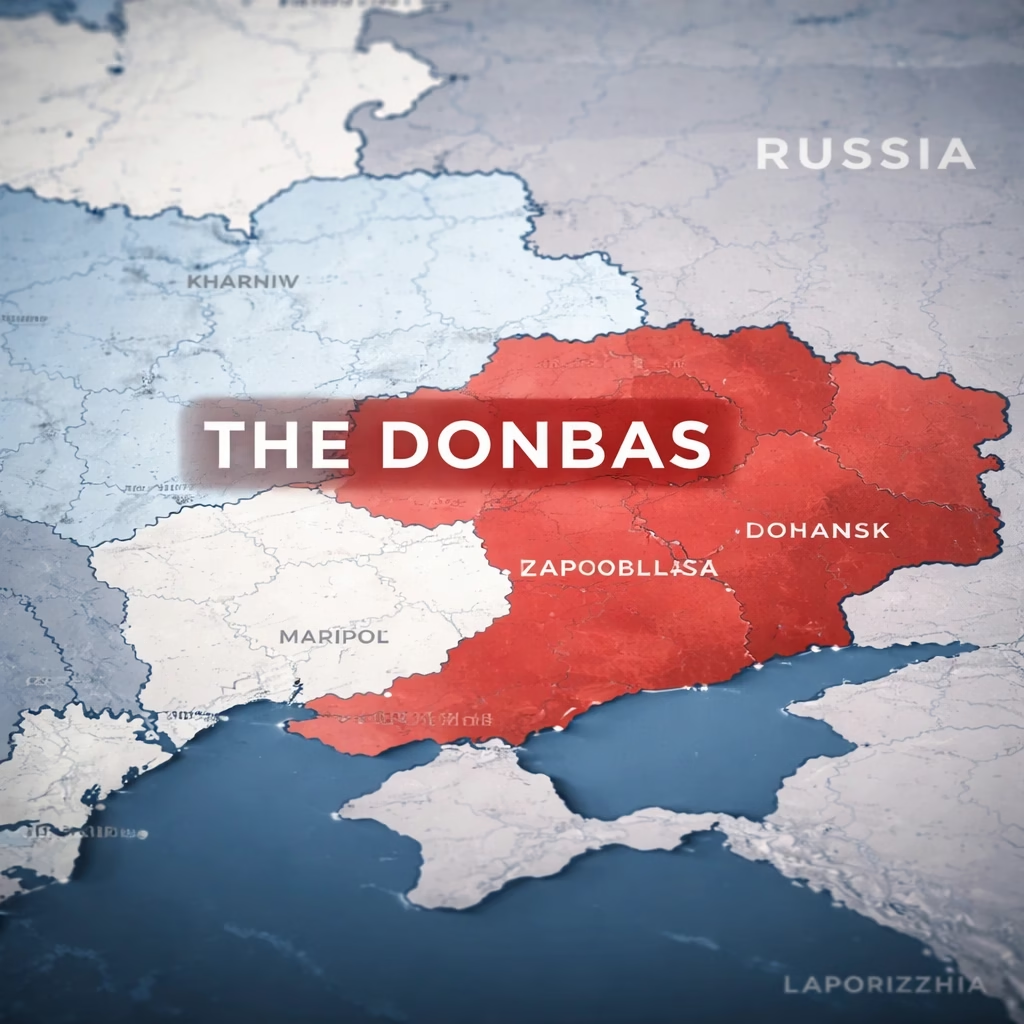
The Donbas, a sprawling industrial heartland in eastern Ukraine, has become the epicentre of a brutal conflict and a key prize in Russia's war against its neighbour. This resource-rich region, comprising the Donetsk and Luhansk oblasts, has been a flashpoint since 2014 and the primary focus of Russia's full-scale invasion launched in February 2022, illuminating Moscow's deep-seated strategic and ideological ambitions.
Background: A Century of Industry and Shifting Identities
Historically known for its extensive coal reserves and heavy industry, the Donbas was a cornerstone of the Soviet Union's economic might. Its cities, like Donetsk and Luhansk, grew rapidly with an influx of workers from across the Soviet republics, creating a diverse but predominantly Russian-speaking population with strong cultural and economic ties to Russia.
Following Ukraine's independence in 1991, the region navigated a complex path. While officially part of Ukraine, a distinct regional identity persisted, often leaning towards Moscow culturally and politically. Economic challenges in the post-Soviet era, coupled with political shifts in Kyiv towards European integration, created a fertile ground for dissent and external influence.
The pivotal year was 2014. After the Euromaidan Revolution in Kyiv and Russia's subsequent annexation of Crimea, pro-Russian separatists, reportedly backed by Moscow, seized government buildings in Donetsk and Luhansk. They declared the formation of the self-proclaimed "Donetsk People's Republic" (DPR) and "Luhansk People's Republic" (LPR), triggering an armed conflict with Ukrainian forces.

Attempts to resolve the conflict diplomatically led to the Minsk Agreements in 2014 and 2015. These protocols, brokered by France and Germany, aimed for a ceasefire, withdrawal of heavy weaponry, and political decentralization within Ukraine, alongside amnesty for fighters. However, continuous violations from both sides, particularly by the separatists and their Russian backers, meant the agreements were never fully implemented, leading to a "frozen conflict" along a volatile "line of contact" for eight years.
Key Developments: From Frozen Conflict to Full-Scale War
The simmering conflict in Donbas dramatically escalated in early 2022. On February 21, Russia formally recognized the independence of the DPR and LPR. Three days later, on February 24, President Vladimir Putin announced a "special military operation," framing it as an effort to "demilitarize" and "denazify" Ukraine, and specifically to "protect" the people of Donbas from alleged Ukrainian aggression.
More Read

The initial phase of the invasion saw Russian forces attempt to capture Kyiv, but after failing to achieve their objectives, Moscow refocused its efforts heavily on the Donbas. The goal became to fully occupy the Donetsk and Luhansk oblasts, which Russia claimed as sovereign territories of the "People's Republics."
Intense fighting ensued across the region. The city of Mariupol in Donetsk Oblast, a strategic port on the Sea of Azov, endured a brutal siege for months, resulting in catastrophic destruction and immense civilian casualties before falling to Russian forces in May 2022. Battles raged in cities like Severodonetsk and Lysychansk in Luhansk, which eventually also fell to Russia.
In September 2022, Russia orchestrated what it called "referendums" in the occupied parts of Donetsk, Luhansk, Kherson, and Zaporizhzhia regions. These votes, widely condemned as shams by the international community, purported to show overwhelming support for joining Russia. Following these referendums, President Putin formally declared the annexation of these four Ukrainian regions, including the entirety of Donbas, into the Russian Federation, despite not having full control over them.
Impact: A Region Shattered, A World Transformed
The war in Donbas has inflicted an unimaginable toll on its people and landscape. Millions have been displaced, becoming internally displaced persons within Ukraine or refugees in neighbouring countries. Thousands of civilians have been killed or injured, and countless homes, schools, hospitals, and critical infrastructure have been reduced to rubble.
Economically, the region, once Ukraine's industrial heartland, is devastated. Coal mines are flooded, factories lie in ruins, and agricultural lands are contaminated with unexploded ordnance. Ukraine's overall economy has been severely crippled by the loss of its industrial base and the ongoing cost of war, while the global economy grapples with disrupted supply chains, soaring energy prices, and food insecurity.
The conflict has also had profound geopolitical ramifications. It has solidified international condemnation of Russia, leading to unprecedented sanctions from Western nations. NATO has strengthened its eastern flank, and countries like Sweden and Finland have sought membership, fundamentally altering the European security landscape. The humanitarian crisis has prompted a massive international aid effort, highlighting the global impact of the conflict.
More Read

Demographically, the region faces a severe crisis. Beyond displacement, there are reports of forced deportations to Russia, and Moscow has implemented policies aimed at Russification in occupied areas, including introducing Russian curricula in schools and facilitating the issuance of Russian passports.
What Next: An Uncertain Future on the Front Lines
The future of the Donbas remains deeply uncertain and tied directly to the trajectory of the broader war. Russia continues to assert its claim over the entirety of Donetsk and Luhansk oblasts and is actively fighting to secure the remaining Ukrainian-controlled territories, particularly in Donetsk, where fierce battles continue around cities like Bakhmut and Avdiivka.
Ukraine, conversely, has vowed to reclaim all its internationally recognized territories, including the annexed Donbas. This commitment means the region is likely to remain a primary theatre of conflict for the foreseeable future, with ongoing large-scale military operations and potential counteroffensives.
For the occupied areas, the prospects are bleak. Without international recognition, their legal and administrative status is precarious. Any long-term Russian occupation would face significant challenges, including potential partisan resistance and the immense task of reconstruction and governance in a war-torn zone. The international community maintains that Russia's annexation is illegal and will not be recognized, further complicating any potential peace settlement.
Reconstruction, whenever possible, will be a monumental and decades-long undertaking, requiring massive international investment and expertise. The human cost will continue to mount, and the scars of war, both physical and psychological, will endure for generations. The Donbas, once a symbol of Soviet industrial might, now stands as a stark testament to the devastating consequences of geopolitical ambition and conflict.