Global Economic Shift: Nigeria's Path to Self-Reliance?
Abuja, Nigeria – In a significant move to reshape its economic landscape, Nigeria is considering strategies to reduce import dependency and stimulate job creation, following advice from Dr. Ngozi Okonjo-Iweala, Director-General of the World Trade Organization (WTO). The proposal gained traction during discussions leading up to the World Economic Forum (WEF) in Davos, Switzerland, scheduled for January 2026.
Background: A History of Import Reliance
Nigeria's economy has historically relied heavily on imported goods, particularly manufactured products and certain agricultural commodities. This dependence has exposed the nation to fluctuations in global markets and hindered the growth of domestic industries.
Over the past decade, successive Nigerian governments have expressed concerns about the economic implications of this reliance. Various policies, including import restrictions and incentives for local production, have been implemented, but with limited success. The country’s import dependency has consistently remained above 70% of its total imports, contributing to a persistent trade deficit.
Key Developments: Davos Sparking New Ideas
Dr. Okonjo-Iweala, a prominent economist and former Finance Minister of Nigeria, emphasized the need for a concerted effort to shift this paradigm during recent discussions with the Nigerian government. Her advice, articulated during a virtual meeting in late November 2025, centered on attracting global investors who are willing to invest in local manufacturing and value-added industries.

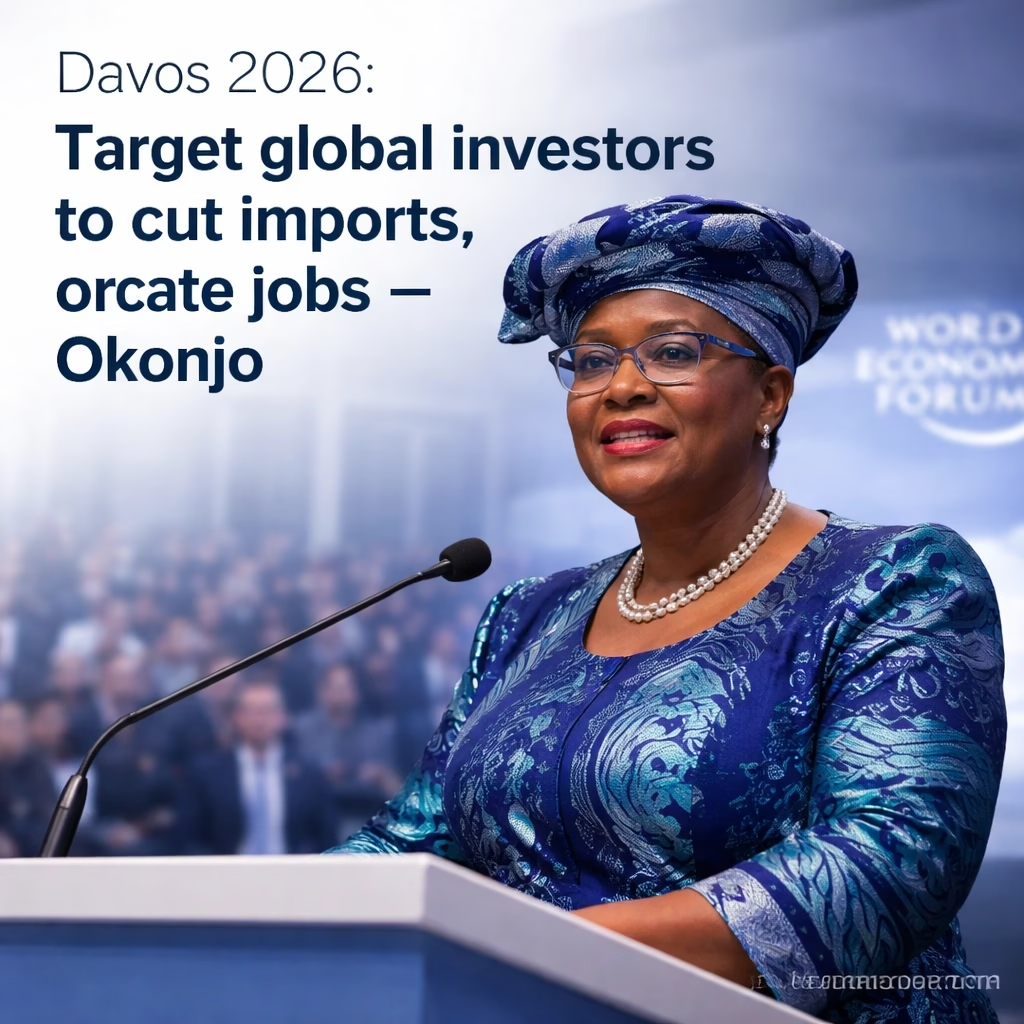
The core of her recommendation involves offering incentives to investors who commit to reducing imports by sourcing components and raw materials locally. She specifically advocated for a tiered system of tax breaks and streamlined regulatory processes for companies demonstrating a commitment to local production.
The Nigerian government, led by President Bola Ahmed Tinubu, has expressed keen interest in exploring these suggestions. The National Bureau of Statistics (NBS) is currently analyzing trade data to identify key sectors for import substitution.

Impact: Winners and Potential Challenges
Potential Winners
Local manufacturers stand to benefit significantly from this initiative. Increased demand for locally sourced components and raw materials could spur expansion and job creation within the manufacturing sector. Small and medium-sized enterprises (SMEs), which often struggle to compete with imports, could receive a boost through targeted support programs.
Potential Challenges
The transition will not be without its challenges. Import-dependent industries could face initial disruptions, and the cost of production for some goods may increase in the short term. Concerns have also been raised about the availability of skilled labor and the need for further investment in infrastructure to support local manufacturing.
Furthermore, some international investors might be hesitant to commit to long-term investments without clear guarantees regarding regulatory stability and a predictable business environment. Addressing these concerns will be critical to attracting the necessary capital.
What Next: Road Ahead for Nigeria
The Nigerian government is expected to develop a detailed implementation plan for Dr. Okonjo-Iweala’s recommendations within the next six months. This plan will likely involve consultations with industry stakeholders, financial institutions, and regulatory bodies.
A key milestone will be the establishment of a dedicated investment fund to support local manufacturers and facilitate technology transfer. The government is also planning to review existing trade policies to create a more favorable environment for domestic production. A public awareness campaign will be launched to encourage local consumption of domestically produced goods.
The WEF in Davos in January 2026 is anticipated to provide a platform for Nigeria to present its revised economic strategy to a global audience of investors and policymakers. The success of this initiative will be closely watched as a potential model for other developing nations seeking to strengthen their domestic economies.