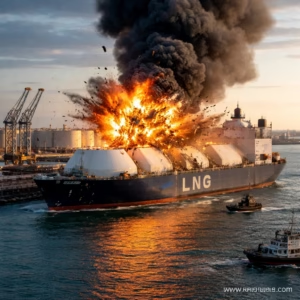
EU-India Trade Deal Sparks Fury: Is Europe Fueling Putin's War Machine?
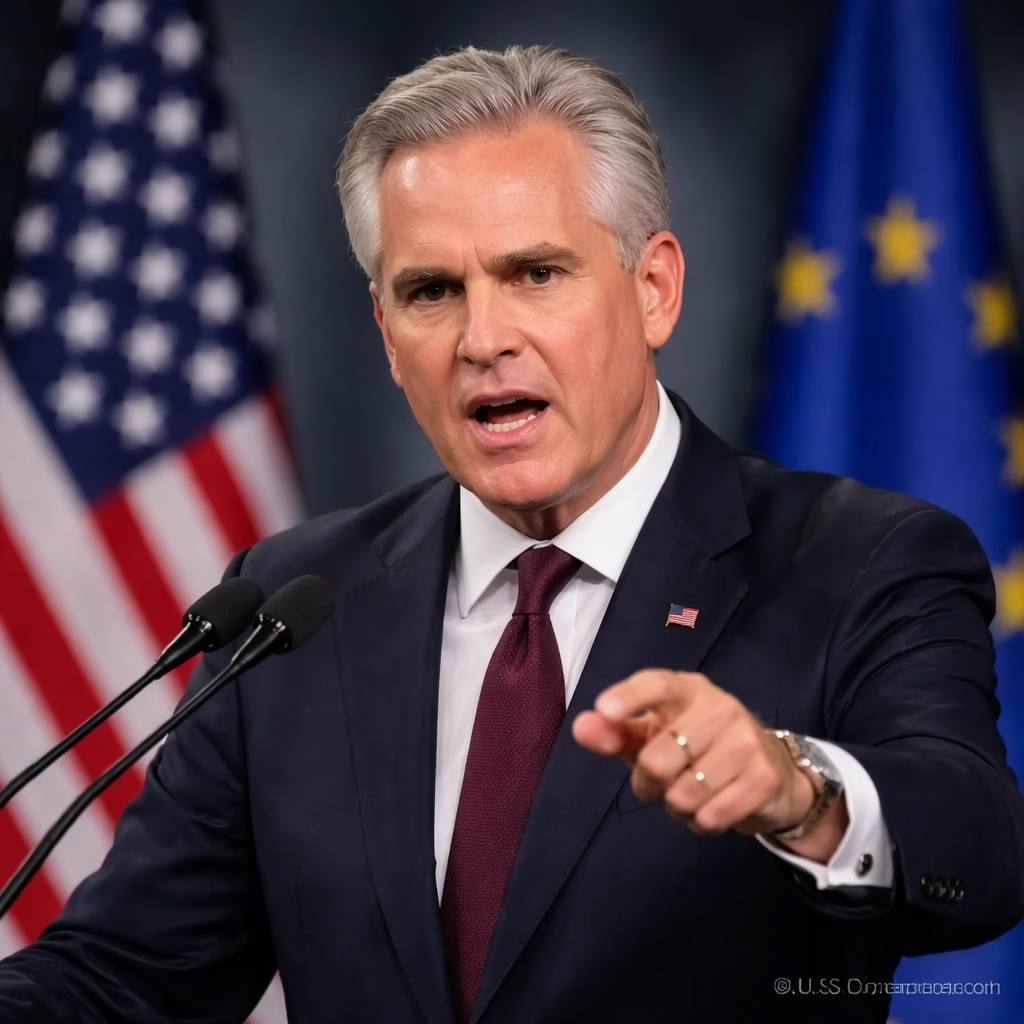
Brussels, Belgium – The European Union's recent trade agreement with India has drawn sharp criticism from the United States, with US Secretary of Commerce Gina Raimondo accusing the EU of inadvertently financing Russia’s war in Ukraine. The controversy centers on potential increased demand for Russian oil as India seeks to meet growing energy needs.
Background: A Deal in the Making
Negotiations for a comprehensive trade deal between the EU and India have been ongoing for over seven years. Discussions intensified in 2019, with the aim of reducing tariffs on a wide range of goods and boosting trade between the two economic powerhouses. The agreement, officially titled the EU-India Comprehensive Agreement on Trade and Investment (CATI), was finalized on July 27, 2023, following several rounds of talks and political maneuvering. The deal is projected to increase trade between the EU and India by approximately €79 billion annually.
The CATI covers areas including trade in goods, services, investment, and digital trade. Key aspects include reduced tariffs on automobiles, alcohol, and dairy products. It also establishes a framework for cooperation on issues such as climate change, sustainable development, and infrastructure.
Key Developments: Raimondo’s Criticism
The recent escalation in tensions began with comments from Secretary Raimondo. Speaking at a hearing before the US Senate Committee on Commerce, Science and Transportation on August 28, 2023, she stated that the EU's trade deal with India could "have unintended consequences." Raimondo's primary concern is that the agreement could lead to increased demand for Russian oil, particularly if India prioritizes energy security in its trade relationship with the EU.

“Europe is financing the war against themselves by buying Russian oil,” Raimondo asserted. She argued that increased economic ties with India, coupled with the EU's reliance on Russian oil, could create a scenario where Russia benefits financially from the war in Ukraine.
The US government has repeatedly urged European nations to reduce their dependence on Russian energy sources. The EU has been actively seeking alternative energy supplies since the Russian invasion of Ukraine in February 2022, but has struggled to fully replace Russian oil and gas.
Impact: Energy Security and Geopolitical Implications
The potential impact of the EU-India trade deal is multifaceted. For India, the agreement offers significant economic benefits, including increased market access for its exports and greater investment opportunities. It is expected to boost India's economic growth and create jobs.

However, the deal has also created geopolitical friction. The disagreement between the US and the EU highlights differing approaches to dealing with Russia. The US has emphasized the need for strict sanctions and a complete embargo on Russian energy, while the EU has adopted a more nuanced approach, balancing energy security concerns with the need to pressure Russia economically.
The controversy could strain transatlantic relations. The US has repeatedly expressed concerns about the EU's energy policy and its potential to undermine sanctions against Russia.
What Next: Navigating the Trade and Energy Landscape
The immediate focus is on how the EU and India will manage the energy implications of the trade deal. The EU is actively exploring alternative energy sources, including LNG from the US, Qatar, and Australia. The bloc is also investing in renewable energy projects to reduce its long-term reliance on fossil fuels.
India is also diversifying its energy sources, increasing imports of oil and gas from various countries, including the US, Saudi Arabia, and Iran. The country has increased its investments in renewable energy, including solar and wind power.
The coming months will be crucial in determining the long-term impact of the EU-India trade deal on the global energy market and the geopolitical landscape. Ongoing dialogue between the US and the EU is expected to address concerns about potential unintended consequences and to find common ground on energy security and sanctions against Russia.
More Read

EU’s Energy Diversification Efforts
Following Russia's invasion of Ukraine, the European Union has implemented various measures to reduce its reliance on Russian energy. These include the establishment of a joint gas purchasing platform, the diversification of gas supply routes, and investments in LNG import terminals. The EU has also set ambitious targets for renewable energy deployment, aiming to achieve 42.5% renewable energy in its overall energy mix by 2030.
India’s Energy Strategy
India's energy strategy focuses on balancing energy security with economic growth and environmental sustainability. The country is increasing its domestic oil and gas production while also diversifying its import sources. India is also investing heavily in renewable energy, with plans to achieve 500 GW of non-fossil fuel capacity by 2030. The government is promoting the use of electric vehicles and energy efficiency measures to reduce its carbon footprint.